
How to Evaluate Multiple Offers Without Regret
Receiving multiple offers is the scenario most sellers hope for — and it's more stressful than many expect. When you have two, three, or more offers in front of you, the decision feels high-stakes in both directions. Accept the wrong one and you may regret it. Overthink it and you may lose the best buyer you had.
The sellers who navigate multiple offer situations most confidently are the ones who evaluate offers against a clear framework rather than a gut feeling — and who understand that the highest price isn't always the strongest offer.
What's Really Going On in a Multiple Offer Situation
Multiple offers typically arrive in one of two ways. Either the home generated enough early interest that several buyers submitted independently within a similar timeframe, or the seller — often with their agent's guidance — set a deadline and invited all interested parties to submit their best offer by a specific date and time.
Both situations are genuine multiple offer scenarios, but they feel different. Organic multiple offers often arrive with varying terms and timelines, requiring the seller to evaluate offers that weren't designed to compete directly with each other. Deadline-driven multiple offers are more structured — buyers know they're competing and typically submit stronger terms than they would in a one-on-one negotiation.
In either case, the seller's job is the same: evaluate what's actually on the table, understand the tradeoffs between offers, and make a decision they can feel confident in — not just on price, but on the full picture of each offer.
What This Looks Like in Bellingham and Whatcom County
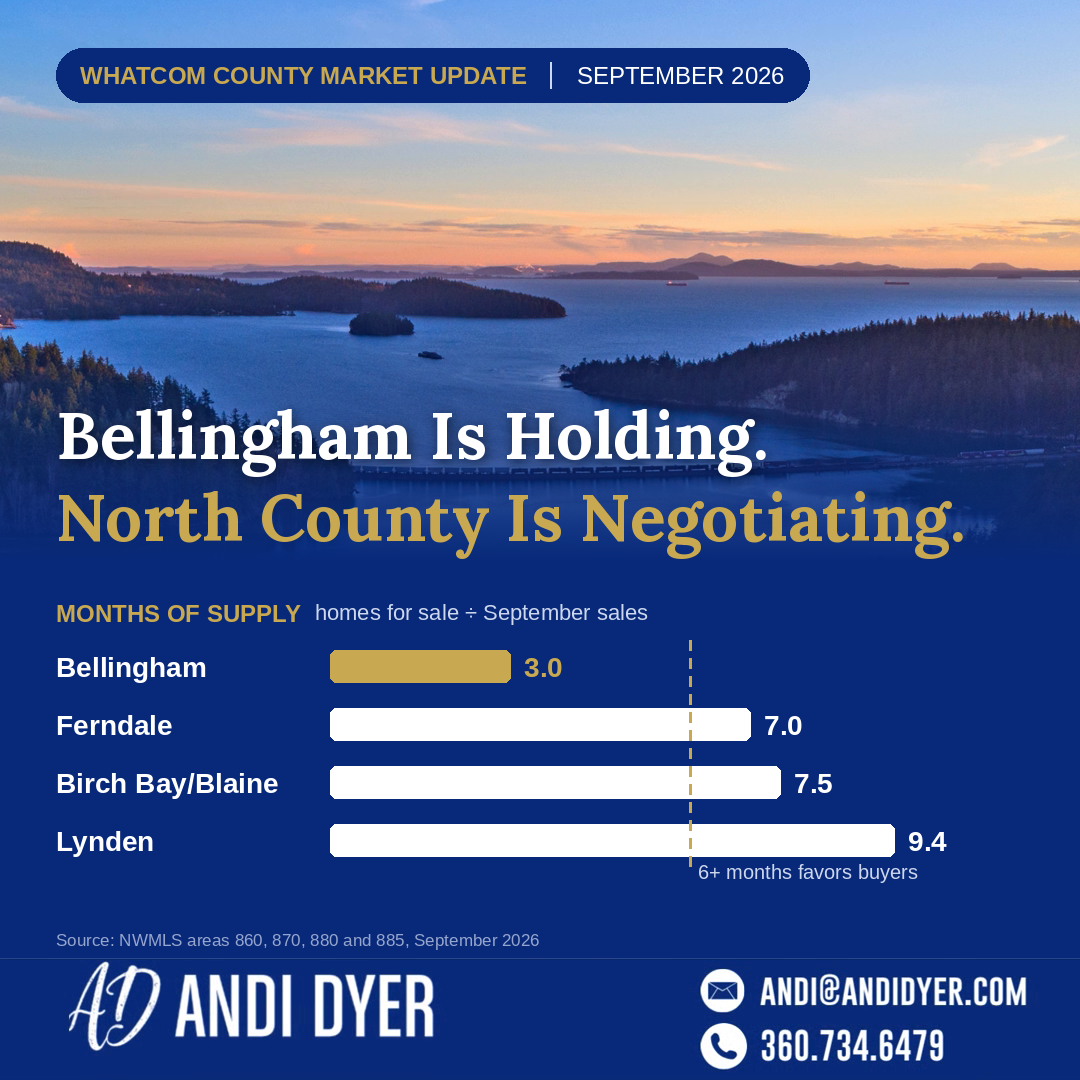
In the current Bellingham market, multiple offer situations are most common for well-priced, well-prepared homes in active price ranges — particularly move-in ready homes in the $650,000–$800,000 range and accurately priced homes in neighborhoods with consistent buyer demand like Barkley, Fairhaven, and established areas near amenities.
In smaller Whatcom County communities, multiple offers are less frequent but not unusual for homes that are genuinely well-positioned. When they do occur in markets like Lynden or Ferndale, the offers are sometimes fewer in number but can be equally competitive in terms.
Understanding the local context — how common multiple offers are in your specific price range and neighborhood right now — helps calibrate expectations and strategy before offers arrive.
The Framework for Evaluating Offers
Price is the most visible component of any offer, but it's not the only one that matters — and in some cases it's not even the most important one.
Net proceeds matter more than gross price. An offer at $720,000 with the buyer requesting $10,000 in closing cost assistance produces the same net as an offer at $710,000 with no concessions. Evaluating offers on a net basis rather than a headline price basis gives you a clearer picture of what each offer is actually worth.
Financing strength is a critical variable. A buyer with a large down payment and a fully underwritten pre-approval is a meaningfully lower risk than one with a minimum down payment and a standard pre-qualification letter. Cash offers carry the least financing risk of all. In a multiple offer situation, financing strength is often what separates offers that look similar on price.
Contingencies affect certainty. An offer with an inspection contingency, a financing contingency, and an appraisal contingency gives the buyer multiple exit ramps. An offer that waives the appraisal contingency — meaning the buyer will cover any gap between the appraised value and the purchase price — removes one of the most common sources of post-contract complications. Understanding what each offer's contingency structure means for the transaction's likelihood of closing successfully is part of a complete evaluation.
Closing timeline matters for sellers who have specific needs on their end. A buyer who can close in twenty-one days may be more or less valuable to you than one offering forty-five days, depending on your situation. Sellers who need time to find their next home often find more value in a longer closing or a rent-back offer than in a marginally higher price with a compressed timeline.
When the Decision Is Genuinely Difficult
Sometimes two offers are close enough in every meaningful dimension that there's no obvious right answer. In those cases, it's reasonable to go back to the top one or two buyers and ask for their highest and best — giving them one opportunity to improve their offer knowing they're in competition.
This should be done carefully and consistently — the same communication to each buyer, with the same deadline. Handled well, it can improve the terms of the best offer. Handled poorly, it can feel like a shakedown to buyers who submitted strong offers in good faith, and it occasionally causes the best buyer to withdraw.
It's also worth remembering that no evaluation framework eliminates uncertainty entirely. Real estate transactions involve people, and people's circumstances change. The strongest offer on paper can still fall apart if the buyer's financing changes, their inspection concerns are serious, or their life situation shifts mid-transaction. The goal of thorough offer evaluation is to reduce that risk — not to eliminate it.
What I Advise Clients
When multiple offers arrive, I create a side-by-side comparison that shows each offer's key terms in a consistent format — net price after concessions, down payment and financing type, contingencies, proposed closing date, and any other terms that affect the seller's situation.
That comparison takes the emotion out of the evaluation and makes the tradeoffs visible. Sellers who can see the offers laid out clearly alongside each other almost always reach a confident decision faster than those who are trying to hold multiple offer documents in their heads simultaneously.
I also help sellers think through their specific priorities before the offers arrive if possible. What matters most to you — the highest net, the most certain close, the most flexible timeline? Knowing your priorities in advance makes the evaluation faster and the decision cleaner.
Why Planning and Timing Matter
Multiple offer situations reward sellers who have done their pricing and preparation work thoroughly. A home that is accurately priced and well-presented is more likely to generate the kind of early, concentrated interest that produces multiple offers. And a seller who understands their market clearly is better positioned to evaluate those offers confidently — knowing whether the offers on the table are genuinely strong or merely the best of a weak field.
The preparation that produced the multiple offer situation is also what gives the seller the confidence to evaluate and decide without second-guessing. A seller who knows their home is well-priced and well-prepared approaches the decision from a position of strength rather than anxiety.
The Bottom Line
Evaluating multiple offers without regret requires looking beyond the headline price to the full picture of each offer — net proceeds, financing strength, contingency structure, and closing timeline. The highest price isn't always the strongest offer, and the strongest offer isn't always the most obvious one.
Sellers who approach this moment with a clear framework and a good understanding of their own priorities consistently make decisions they feel confident in — not because the outcome is guaranteed, but because the decision was made thoughtfully.
If you're trying to balance patience with smart action, start here:
👉 Start with a low-pressure home value and seller planning tool: https://www.andidyerrealestate.com/seller/valuation/
About the Author
Andi Dyer is a Bellingham-based real estate broker with REMAX Whatcom County, specializing in helping longtime homeowners and sellers make confident, well-informed decisions. With a calm, data-driven approach and strong negotiation expertise, Andi focuses on protecting equity, reducing stress, and guiding sellers through the process with clarity and care.
📍 Serving Bellingham and all of Whatcom County 📞 Call or text: 360 • 734 • 6479 📧 Email: andi [at] andidyer [dot] com
Zillow · Realtor.com · Homes.com · Google Business · Facebook · Instagram