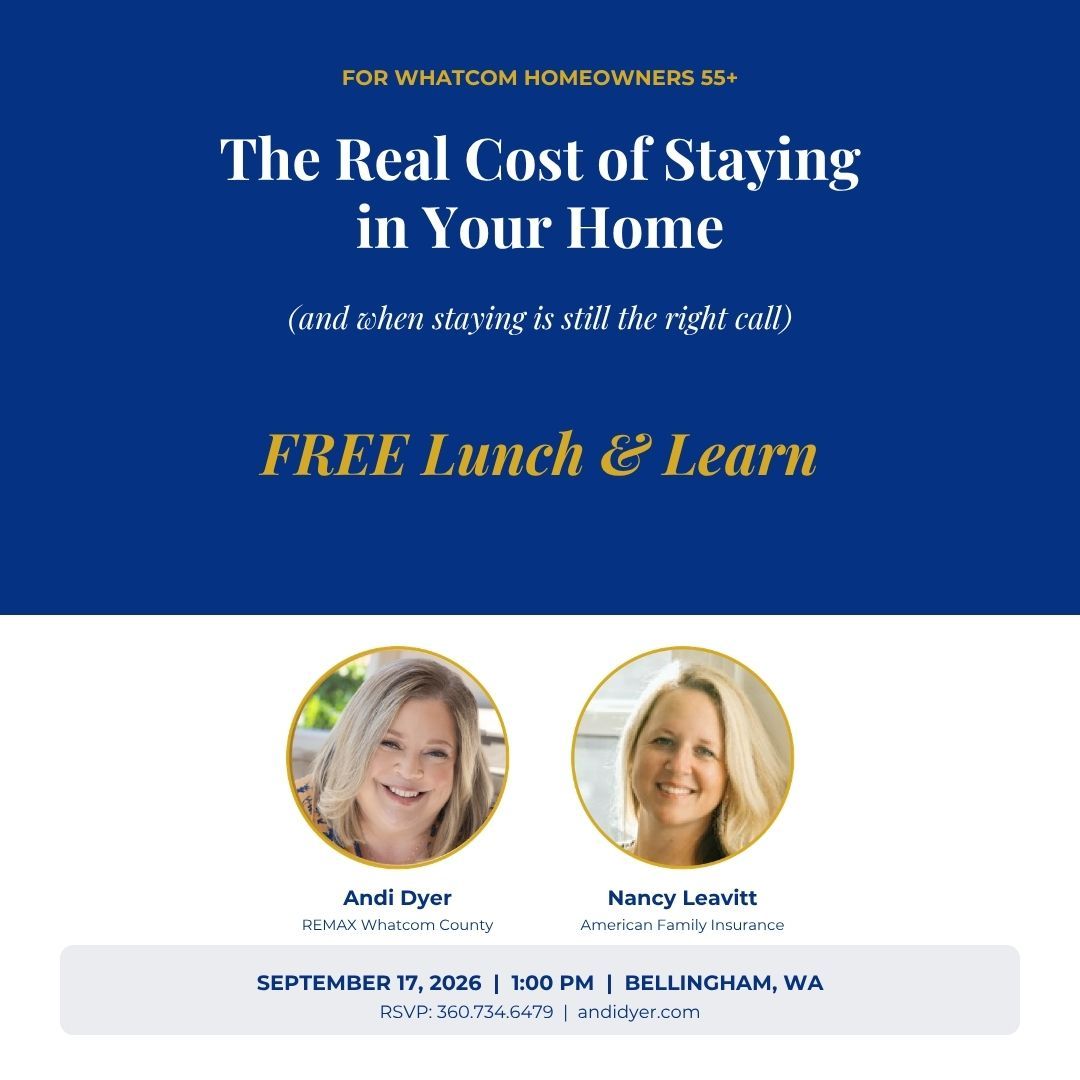
By Andi Dyer
•
August 28, 2026
Deciding whether to sell your home, downsize, or stay where you are comes down to more than your home's value. For Whatcom County homeowners, the right decision should consider your equity, monthly housing costs, maintenance, insurance, accessibility, lifestyle, and what it would actually cost to move. Sometimes selling and right-sizing makes sense. Sometimes staying in your current home is the better financial decision. The important thing is knowing the numbers before you decide. Should I Sell My Home or Stay? If you're wondering whether it's time to sell your home, start with one question: Does my home still fit the way I live today? A home that was perfect 10 or 20 years ago may now have unused bedrooms, stairs you don't enjoy, a large yard to maintain, or repairs you would rather not tackle. On the other hand, a home that's paid off or has a low mortgage payment can be difficult to replace affordably. That's why I encourage homeowners to look at the entire picture before assuming downsizing will save money. Is It Cheaper to Stay in Your Home or Downsize? Not necessarily. A smaller home can reduce utilities, maintenance and property upkeep, but moving comes with its own costs. A replacement home may have a higher price per square foot, HOA dues, increased property taxes or a new mortgage at today's interest rates. When comparing staying versus selling, consider: Mortgage payment and remaining loan balance Property taxes Homeowner's insurance Utilities Landscaping and property maintenance Upcoming repairs or renovations HOA dues at a potential replacement property Cost of buying or renting your next home Moving and selling expenses Your estimated proceeds and available equity after a sale The better question isn't simply, "Would a smaller house cost less?" It's "Which housing choice makes the most financial and practical sense for the next stage of my life?" What Does Right-Sizing Your Home Mean? Right-sizing means choosing a home that fits your current lifestyle, rather than simply moving into a smaller house. For some homeowners, that means fewer bedrooms and less yard work. For others, it might mean one-level living, a primary bedroom on the main floor, fewer stairs, better accessibility, or living closer to family, medical care, shopping and friends. And sometimes right-sizing means staying exactly where you are and making your current home easier to live in. Is Aging in Place a Better Option? For many Bellingham and Whatcom County homeowners, aging in place can be an excellent option if the home can safely and affordably meet their long-term needs. Consider whether your current home has: A bedroom and full bathroom on the main level Manageable stairs and entryways A reasonable amount of property to maintain Access to transportation, shopping and healthcare Space that could be modified for future accessibility Maintenance and repair costs that fit comfortably within your budget You may find that a few thoughtful improvements make staying in your home far more practical than moving. How Much Is My Whatcom County Home Worth? Knowing your home's current market value is one of the most important pieces of the stay-or-sell decision. Your estimated equity can help determine what choices are realistically available to you. Online home-value estimates are a useful starting point, but they may not accurately account for your home's condition, renovations, neighborhood, view, acreage, outbuildings or other features that affect buyer demand. A local real estate market analysis can provide a more detailed estimate based on recent comparable sales and current competition in the Bellingham and Whatcom County real estate market . And getting that information doesn't mean you've decided to sell. Sometimes knowing what your home is worth gives you the information you need to confidently decide not to sell. What Should I Consider Before Downsizing? Before putting your home on the market, ask yourself these questions: 1. What would I realistically net from selling my home? Your home's sale price and the amount you walk away with are two different numbers. Consider your mortgage balance, selling expenses and other potential costs. 2. What will my next home cost? Look at actual homes that meet your needs rather than assuming smaller automatically means cheaper. 3. Will moving improve my daily life? Consider maintenance, stairs, location, accessibility, transportation and proximity to the people and activities important to you. 4. Are major home expenses coming? A roof, siding, heating system, septic system or other major project can change the financial comparison. 5. Could I modify my current home instead? Sometimes remodeling a bathroom, improving accessibility or hiring help with landscaping costs considerably less than moving. Should I Review My Homeowner's Insurance Before Deciding? Yes. Even if you aren't planning to sell, periodically reviewing your homeowner's insurance is worthwhile. Home values, construction costs and personal circumstances change. A policy you've carried for years may no longer reflect the cost of rebuilding your home or the coverage you actually need. An insurance professional can help identify whether you're adequately insured, potentially over-insured in certain areas, or missing coverage you assumed you had. When Is the Right Time to Sell a Home in Whatcom County? There isn't one perfect age, season or life event that tells you it's time to sell. The right time is when your finances, home, lifestyle and future plans point in the same direction. For some Whatcom County homeowners, selling creates greater financial flexibility and a simpler lifestyle. For others, staying in a familiar home and community provides greater value than moving. Neither decision is inherently better. A good real estate professional should help you understand both options, not convince you that selling is automatically the answer. Frequently Asked Questions About Staying, Selling and Right-Sizing Is downsizing always cheaper? No. Smaller homes can have lower maintenance and utility costs, but purchase price, interest rates, HOA dues, property taxes and moving expenses can offset those savings. Compare the total cost of both choices. What is the difference between downsizing and right-sizing? Downsizing focuses primarily on moving to a smaller property. Right-sizing focuses on finding a home that better fits your lifestyle, finances and future needs. That home isn't necessarily smaller. Should I get a home valuation even if I'm not ready to sell? Yes. Knowing your approximate home value and equity can be useful for retirement planning, estate planning and evaluating future housing options. Requesting a market analysis does not obligate you to sell. Can I stay in my home as I get older? Many homeowners can. The answer depends on the home's layout, accessibility, maintenance requirements, location and your financial circumstances. Sometimes relatively modest improvements can make aging in place more practical. How do I decide whether to sell my home in Whatcom County? Start by comparing your current housing costs and future maintenance needs with your estimated home equity and the actual cost of your next housing option. Then consider lifestyle factors such as accessibility, location, family and how you want to spend your time. Free Bellingham Lunch & Learn: The Real Cost of Staying in Your Home If you're thinking about these questions, I'm hosting a free educational Lunch & Learn with Nancy Leavitt of American Family Insurance : The Real Cost of Staying in Your Home And when staying is still the right call Thursday, September 17, 2026 | 1:00–2:00 p.m. 913 Lakeway Dr, Bellingham, WA We'll discuss how to evaluate staying versus right-sizing, how to understand your home's current value in the Whatcom County market, and why your homeowner's insurance deserves another look. Lunch is complimentary. Seating is limited so we can keep the group small and leave plenty of time for questions. Call or text Andi Dyer at 360.734.6479 to reserve your seat. Need Help Deciding Whether to Stay or Sell? You don't need to be ready to list your home to start planning. I can help you understand your home's potential market value, estimated equity and what comparable replacement homes are selling for around Whatcom County. From there, you can make the decision that works best for you. Andi Dyer Managing Broker, REALTOR® | Seniors Real Estate Specialist RE/MAX Whatcom County 360.734.6479 | andi@andidyer.com | andidyer.com