
How to Move Past Student Debt — and Into a Home

Andi • August 31, 2023

You’ve got options, like repayment help from your employer and coaching from a mortgage broker.

You want to buy a house. But you’re worried you won’t qualify for a mortgage because of your student loan debt. You’re not alone. Half of non-homeowners (51%) say student loan debt is delaying them from buying a home, according to a survey from the National Association of REALTORS ® . That number jumps to 60% for millennials.

The numbers tell an ugly story of a generation paying for its education long after graduation.  As a result, they’re having to make hard life choices for decades. The average public university student borrows $30,000 in student loans to get a bachelor’s degree, according to the Education Data Initiative. The average student loan payment is $460 a month. And nearly 48 million people have student loans. 
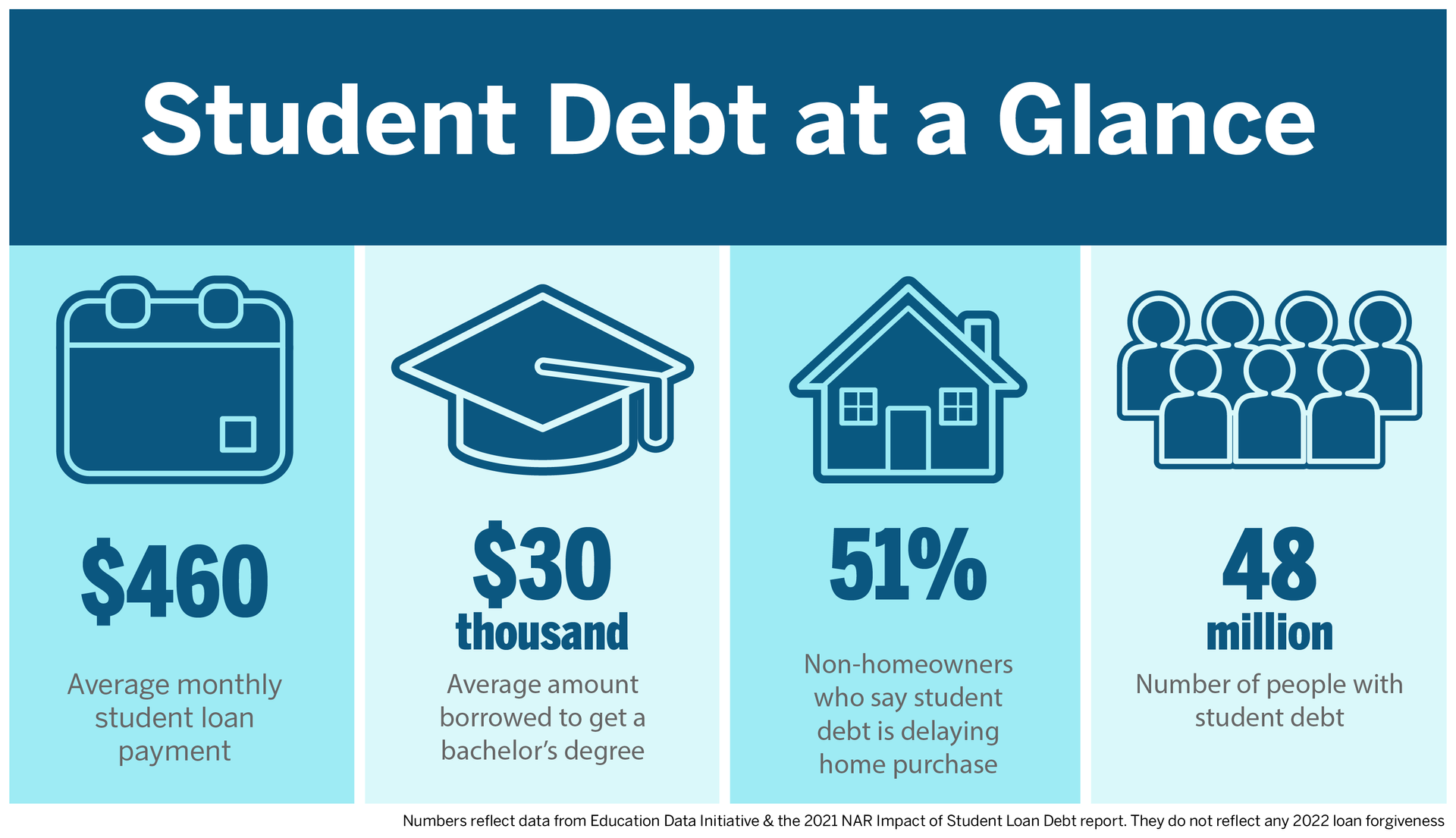
student loan debt payoff buy a house infographic of 4 points of student debt facts
Image: HouseLogic

Student debt is no longer just a first-time home buyer problem, says Cale Iorg, a loan officer at Supreme Lending in Alpharetta, Ga. “We get people in their 40s and 50s who are still paying off student loans. They went back for a master’s degree, or they are parents who cosigned their children’s student loans.”

President Biden provided some relief (not reflected in the previous numbers) when he announced in late August 2022 that he would cancel $10,000 in student loan debt for those earning less than $125,000 per year. The relief includes an additional $10,000 for those who received Pell grants for low-income students.

Before the pandemic, more than 8 million people — one in five borrowers with a payment due — had defaulted on their loans, the “New York Times” reported. But because many of them carried relatively small balances, they’ll now be eligible for loan cancellation.

Student loan payments have been paused since March 2020, but are scheduled to resume in January 2023.

Despite uncertainty about debt cancellation timing and impact, you can get a mortgage while you have student debt. Here are  eight tips  for making it happen.

#1 Lower Your Debt-to-Income Ratio.
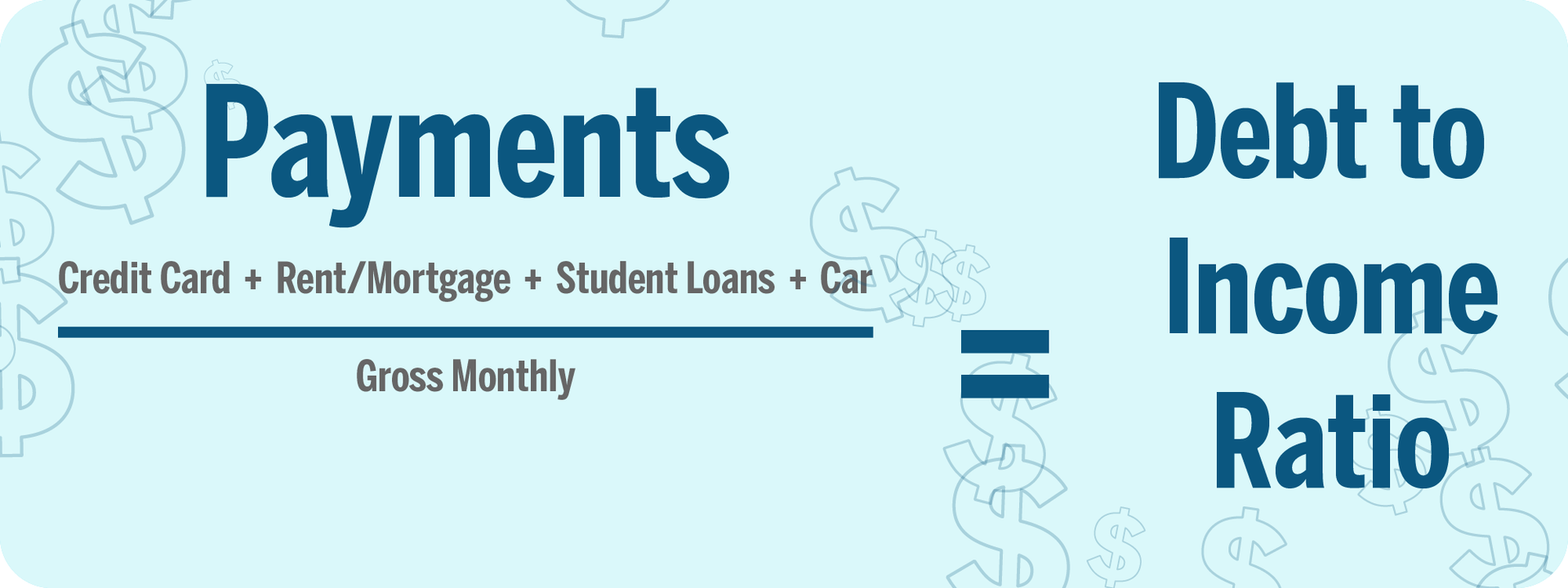
studen loan debt payoff buy a house infographic with debt to income ratio equation for payments
Image: HouseLogic

Your debt-to-income ratio, or score, is one of the most impactful numbers on your life since your ACT score. It measures the percentage of your monthly income that goes to pay your debts. You  calculate  it by adding all your monthly debts – credit card minimums, rent or mortgage, car payments, and, yes, student loan payments. Then, you divide the total by your monthly gross income (take-home pay before taxes and other monthly deductions).

Your debt-to-income ratio should be no more than 45% of your gross monthly income, Iorg says. Many lenders consider the ideal debt-to-income ratio, including a mortgage payment, to be 36% or less. Depending on your credit score, savings, assets, and down payment, lenders may accept higher ratios, according to Bankrate. It depends on the type of loan you’re applying for.

You can improve your debt-to-income ratio three ways: Make more money, spend less money, and pay down your debt, Iorg says. “Not everybody can wake up tomorrow and say, ‘Oh, well, I’m going to get a job that pays $4,000 more a month,’” he adds. Sure, there are always side hustles to bring in extra bucks to help you pay down bills. “But the surest way to improve your debt-to-income ratio is to live within your means.”  

And pay down those student loans.

#2 Increase Your Credit Score.

Your credit score is the other number that profoundly affects your financial fortune. It’s basically a grade for what kind of a job you do paying your bills. The simplest ways to boost your credit score include paying your bills on time, using less than 30% of the credit limit on your credit cards, and paying off debts. There’s a lot of help out there, including free webinars, to guide you on improving your score. Generally, these tips involve paying off bills and spending less money. Yes, frugality.

#3 Look for Down Payment Assistance.

When you’re paying off student loans, saving for a down payment can be tough. The down payment  can range from 3.5% to 20% of the home purchase price. If you don’t have a relative who can dump a chunk of cash on you – known in the mortgage biz as gift money – there’s other help.  Down payment assistance programs offer loans or grants that pay the down payment on a house. Some DPA funds can be used toward closing costs, too.

Most DPAs require you to be a first-time home buyer with a credit score of 640 or higher and a moderate source of income. DPAs are usually offered at the local level, and their eligibility rules  vary by state, city, or even ZIP code.  In Seattle, for instance, you can get up to $55,000 in down payment assistance in the form of a low interest loan, depending on your household size and income. The buyer must pay just 1% down out of pocket, and the DPA pays the rest. In Georgia, a DPA offers loans of $7,500 for most buyers. Teachers, health care providers, active duty service members, and public employees are eligible for $10,000.

#4 Get a Co-Borrower.

Want to instantly improve your chances of getting a mortgage? Put a co-borrower on your mortgage. Their income counts toward the debt-to-income ratio, and their credit history bolsters yours. You’re combining forces to strengthen your financial qualifications, and that can offset the dead weight of your student loan debt.

“Co-borrowers are not uncommon,” Iorg says. “It’s a good way to go for a buyer who just doesn’t have enough money from their monthly income to qualify for a mortgage.” Iorg says the co-borrowers he sees are usually parents, siblings, or grandparents. Most co-borrowers are family members or someone with whom the homeowner has a personal relationship. But lenders don’t require a co-borrower to produce proof they know you or are related to you. They just want proof the co-borrower can pay your mortgage if you don’t.

Remember, a co-borrower will share title on the home. If that’s not your cup of joint ownership, consider a co-signer. Their income will boost your financial profile, but they won’t be a co-owner of the house.

#5 Look into Student Loan Protection Programs.

You could be eligible for loan forgiveness if you’re a teacher, attended a for-profit school that went out of business, or have a total and permanent disability. Here are the programs erasing student debt:

  • Public Service Loan Forgiveness:  This program has been around since 2007 to grant debt relief to teachers, social workers, firefighters, employees of nonprofits, and other public servants. But the Biden administration loosened the rules to make more people eligible. According to the U.S. Department of Education, the PSLF has forgiven $2 billion in student loans and is still going.
  • Borrower Defense and Closed School Discharge:  You may also be eligible for debt relief if you attended a school that turned out to be scamming you. Hello, ITT Tech, DeVry University, and Corinthian Colleges. Thanks to rules under the Biden administration, defrauded students who got only partial debt relief under the Trump administration can now get the rest of their student loans wiped out.
  • Total and Permanent Disability Discharge : Borrowers with permanent disabilities that prevent them from working can shed their student debts, thanks to changes to an existing program that the Education Department says will help at least 370,000 borrowers drop more than $6.5 billion in student debt.

#6 Get Help from Your Employer to Repay Student Debt.

Some companies are offering student loan repayment assistance as a benefit. Google matches employee payments up to $2,500 a year; Aetna matches up to $2,000 a year with a lifetime cap of $10,000; and Fidelity Investments pays up to $10,000 of an employee’s student loans. Other companies that offer payment assistance include Carvana, Chegg, Hulu, Lockheed Martin, New York Life, and PwC (PricewaterhouseCoopers).

Employer-sponsored student loan repayment may become more common. The Coronavirus Aid, Relief and Economic Security (CARES) Act of 2021 gives a tax break to companies that offer student loan repayment assistance. From now till Dec. 31, 2025, employers can contribute up to $5,250 a year tax-free to an employee for repayment of student loans. So, if your boss gets on board this year, you could get as much as $15,000 of your loans paid off before the program ends.

#7 Lower Your Student Loan Payments.

You can do this in one of two ways:

  • Opt for an income-based repayment plan for federal student loans. You can apply for loan repayment plans that will lower your monthly payment on a federal student loan based on your income and family size. The basic income-based repayment plan caps your payments at 10% of your discretionary income. It also forgives your remaining loan balance after 20 years of payments. That can go a long way toward lowering monthly debt payments and your debt-to-income ratio.
  • Refinance your private student loans. This is a good idea if you have private student loans that aren’t eligible for federal loan forgiveness or have variable rates. If you can get a lower interest rate, you can change your life. For example, if you have $30,000 in private student loans with an 8% interest rate, you’ll pay $364 for 10 years. Refinance that to a 15-year loan at 4% interest, and your payment drops by $142 a month. You’ll also save around $3,735 in interest over the life of the loan.

#8 Get a Mortgage Broker Who Will Coach You.

Look for someone who is experienced at working with borrowers who have more student debt than they’d like.  Get a broker  who will work with you to find DPA programs; steer you through the ins and outs of  FHA,  conventional,  and VA loans ;  and help you get your finances in order so you become a better mortgage candidate. Iorg says his office has a credit analyst whose job is to help clients improve their credit scores and debt-to-income ratios.

The Bottom Line

There’s no quick fix to buying a house when you have student loans.

The good news is there’s more public support for student debt forgiveness. Many economists say forgiving student loans, such as the Biden plan for debt cancellation, would put money back into Americans’ pockets. That would boost the economy and encourage the formation of more businesses and households. More businesses means more jobs, and more households means more spending. And spending fuels the U.S. economy.

Recent events have reinforced that changes are the norm for student loan debt and relief. Changes to the PSLF program have made more people and more types of federal loans eligible for forgiveness. Add to that the raft of assistance programs that help renters become first-time home buyers, and you may be able to afford it all: a college education, a mortgage, and a 401(k) contribution. You just may not be able to do it all at once. It will take planning and time.

student loan debt payoff buy a house infographic of a summary of the 8 points on how to get it done
Image: HouseLogic

LEANNE POTTS

Leanne Pottsis an Atlanta-based journalist and serial home remodeler. She’s tackled five fixer-uppers and is working on a sixth. She’s written about everything from forest fires to dog-friendly decor and spent a decade leading the digital staff of HGTV.
By Andi Dyer December 3, 2025
If you've been wondering whether this is the right moment to sell your home in Bellingham, you're not alone. The short answer: it depends on your personal situation more than the market itself. Right now, Bellingham WA has low inventory, which means qualified buyers are actively looking and good homes tend to sell relatively quickly. If your timeline, finances, and next chapter align, this could be an excellent time to list your house in Whatcom County. Let me walk you through what's actually happening in our local market and help you figure out if selling makes sense for you. What's Really Happening in the Bellingham Real Estate Market Right Now? The Bellingham and Whatcom County housing market has been anything but ordinary over the past few years. We've seen rapid appreciation, shifting interest rates, and inventory that's still tighter than we'd like. Here's what matters most if you're thinking about selling: Inventory is still relatively low. There simply aren't enough homes on the market to meet demand, especially well-maintained properties in desirable locations throughout Bellingham and Whatcom County. When a good home hits the market, it often attracts multiple showings quickly. Buyers are still out there. Yes, interest rates are higher than they were a couple years ago, but serious buyers have adjusted. Many are looking to put down roots in Bellingham, drawn by the quality of life, outdoor access, and community feel. Others are relocating for work or want to be closer to medical services and amenities. Home values have held strong. While we're not seeing the wild appreciation of 2020-2021, most neighborhoods in Whatcom County have maintained their value well. If you've owned your home for more than five years, chances are you're sitting on significant equity. How Do I Know If It's the Right Time for Me to Sell? Forget what the headlines say for a second. The real question isn't whether it's a good time to sell in general—it's whether it's a good time for you to sell. Here are some signs it might make sense: You're ready for your next chapter. Maybe you're simplifying, relocating closer to services or community, or moving out of state to be near loved ones. Life changes, and your home should support where you're headed. Your home no longer fits your lifestyle. Whether it's too much space, too much maintenance, stairs that feel like a workout, or a yard that's become a part-time job, your home should make your life easier, not harder. You have significant equity to protect or use. If you've owned your home in Bellingham for a decade or more, you likely have substantial equity. Selling now lets you capture that value and put it toward your next move—whether that's downsizing locally, relocating, or building financial cushion. Maintenance is piling up. Our Bellingham weather is beautiful, but it's tough on roofs, siding, and foundations. If you're facing expensive repairs (think new roof, septic work, or foundation issues), selling before those costs hit can make financial sense. You want to sell before you have to. There's something to be said for selling on your timeline, when you can prepare your home properly and negotiate from a position of strength, rather than waiting until circumstances force a rushed sale. What Are the Challenges of Selling Right Now in Whatcom County? Let's be honest—there are always trade-offs. Here's what sellers should know: You'll probably need to buy or rent next. If you're staying in Whatcom County, you'll be competing in the same tight market you're selling into. That said, with the equity you've built, you may have more flexibility than first-time buyers. Some sellers choose to rent temporarily while they figure out their next move. Preparation matters more than ever. Buyers today have high expectations. They've seen the pristine photos online, and they're comparing your home to everything else available. A little strategic updating—fresh paint, deep cleaning, decluttering, and addressing obvious maintenance—goes a long way. Pricing needs to be smart, not emotional. Overpricing can backfire, even in a low-inventory market. Homes that sit too long start to feel stale, and buyers wonder what's wrong. A REALTOR® who knows Bellingham and Whatcom County can help you price competitively from day one. Should I Wait for a "Better" Market? I hear this question a lot, and I get it. It's tempting to think that if you just wait a little longer, conditions will improve, rates will drop, or prices will climb even higher. But here's the thing: nobody has a crystal ball. Timing the market perfectly is nearly impossible, and waiting can sometimes cost you more than you think. Here's what I've seen over the years: Maintenance doesn't wait. That roof isn't getting younger, and neither is your furnace. Life doesn't wait. If your circumstances are telling you it's time to move, postponing the decision often just adds stress. Equity is real money now. If you have it, you can use it. Waiting to see if you'll have more equity means missing out on what you could do with what you already have. If your situation is right, the market is workable, and you're mentally ready, that's usually a better signal than trying to predict interest rate movements or seasonal trends. What About Selling in Winter vs. Spring in Bellingham? Bellingham's weather does influence the market, but probably less than you think. Spring and summer are traditionally busier. The weather's nicer, gardens look great, and buyers with flexible timelines prefer to move when it's sunny. You might see more competition from other sellers, but you'll also see more buyers. Fall and winter tend to be quieter, but the buyers who are looking during these months are often more serious. They're not casually browsing—they need to move. Plus, there's less competition from other listings, so your home stands out more. Bottom line: if you're ready to sell, don't let the season hold you back. A well-marketed home can sell any time of year in Whatcom County. How Long Does It Take to Sell a Home in Bellingham Right Now? It varies, but well-priced, well-prepared homes in Bellingham and Whatcom County are typically under contract within 30 to 60 days. Some sell in a week or two, especially if they're in highly sought-after neighborhoods near trails, the bay, or convenient to services. Homes that linger usually have one or more of these issues: Overpriced for the current market Deferred maintenance that's obvious to buyers Poor photos or marketing Limited access for showings Work with a REALTOR® who understands the local nuances—like how our weather affects showing schedules, or how to market a hillside property with a steep driveway—and you'll set yourself up for a smoother, faster sale. How Can I Maximize My Home's Value Before Selling? You don't need to renovate your entire house, but a little effort can make a noticeable difference in how quickly you sell and what you net. Focus on these high-impact areas: Curb appeal: First impressions matter. Trim overgrown shrubs, power wash the driveway, and make sure the entrance feels welcoming. In Bellingham's wet climate, check for moss buildup on walkways and siding. Deep clean everything: Baseboards, windows, light fixtures, and especially bathrooms and kitchens. A clean home signals that it's been cared for. Declutter and depersonalize: Buyers need to envision themselves in your space. Pack up personal photos, collections, and excess furniture. Less is more. Fix the obvious stuff: Leaky faucets, squeaky doors, chipped paint, missing cabinet knobs—buyers notice these things, and they start doing mental math on what they'll need to fix. Consider a pre-listing inspection: This can help you identify issues before buyers do, giving you control over how and whether to address them. Your REALTOR® can give you specific advice based on your home and neighborhood. Sometimes a $500 investment in paint and cleaning returns thousands in sale price. What Should I Look for in a REALTOR® in Whatcom County? This is one of the most important decisions you'll make in the selling process, and it's worth taking your time to get it right. First, understand the difference: not every real estate agent is a REALTOR®. A REALTOR® is a member of the National Association of REALTORS® and is held to a strict Code of Ethics that goes beyond state licensing requirements. This means they're committed to treating all parties honestly, advocating for their clients' interests, and operating with transparency and integrity. Here's what else matters when choosing your REALTOR®: Local expertise that runs deep. They should know Bellingham and Whatcom County inside and out—the neighborhoods, what buyers are looking for in this area, how our local market cycles work, and have recent sales to back up their knowledge. Someone who lives and works here, not just licenses here. Master-level negotiation skills. Look for a REALTOR® who holds a Master Certified Negotiation Expert (MCNE) designation, not just a Certified Negotiation Expert (CNE). The difference matters. An MCNE has completed advanced training in negotiation strategy, psychology, and tactics—skills that can mean thousands of dollars more in your pocket when offers come in and terms are being negotiated. Full dedication to you throughout the entire process. You want a REALTOR® who will be your point of contact from start to finish—not someone who farms out different parts of the transaction to various team members. When you call with a question, you should get your REALTOR®, not a transaction coordinator you've never met. When an offer comes in at 8 PM, you should hear from the person who knows your situation and your goals, not a team member reading notes. Marketing that actually reaches buyers. Professional photography, virtual tours, compelling listing descriptions, strategic online advertising, and a plan for reaching both local and relocating buyers. In today's market, most buyers start their search online, so your REALTOR®'s digital presence matters. Honest communication about pricing and strategy. You want a REALTOR® who'll tell you the truth, even if it's not what you hoped to hear. Overpricing to "test the market" usually backfires. A great REALTOR® will explain their pricing strategy, back it up with data, and be upfront about what to expect. A plan for your entire transition. If you're selling and then buying, relocating out of the area, or need time to find your next place, your REALTOR® should help you think through the logistics and timing, not just focus on getting your current home sold. Take the time to interview at least two or three REALTORS®. Ask about their designations and continuing education. Ask how they handle multiple clients—will you be working directly with them, or will you be passed off to team members? Ask about their recent sales in Bellingham and what they think your home is worth. You'll know pretty quickly who gets it and who's genuinely committed to representing your best interests. The right REALTOR® doesn't just list your home—they become your advocate, your strategist, and your guide through what can be an emotional and complex process. Choose someone who takes that responsibility seriously. FAQ: Common Questions About Selling a Home in Bellingham WA Q: How much is my house worth in Bellingham right now? A: It depends on your location, size, condition, and recent sales in your neighborhood. The best way to know is to request a personalized home value analysis from a local REALTOR® who can compare your home to recent sales and current listings in Whatcom County. Q: Do I need to make repairs before selling, or can I sell as-is? A: You can sell as-is, but it often means accepting a lower price. Buyers will either ask for credits or factor repair costs into their offers. Strategic repairs—especially ones that improve safety or curb appeal—usually pay off. Q: What if I need to sell but don't know where I'm moving yet? A: That's more common than you think. Some sellers arrange a rent-back agreement, where they stay in the home for a month or two after closing while they figure out their next step. Others move into a short-term rental. A good REALTOR® can help you structure a sale that gives you flexibility. Q: How do I avoid capital gains taxes when selling my home? A: If you've lived in your home as your primary residence for at least two of the last five years, you can exclude up to $250,000 in gains if you're single, or $500,000 if you're married filing jointly. Consult a tax professional for advice specific to your situation, especially if your gains exceed those thresholds. Q: What's the difference between working with a broker and a REALTOR®? A: In Washington State, all real estate agents work under a broker's license. However, a REALTOR® is a broker or agent who's also a member of the National Association of REALTORS® and follows a strict Code of Ethics. This extra layer of accountability means they're committed to professional standards that go beyond state licensing requirements. Ready to Explore Your Options? If you've read this far, you're clearly thinking seriously about your next move. That's a good thing. Whether you sell this spring, next fall, or a year from now, the best decision is an informed one. I'd be happy to sit down with you—no pressure, no obligation—and walk through a personalized equity review and market analysis for your specific home in Bellingham or Whatcom County. We'll talk about: What your home is worth in today's market What you'd likely net after expenses How the timing fits with your plans What your options look like, both locally and beyond My goal isn't to push you into anything. It's to give you the information you need to make a confident decision that supports your next chapter, whatever that looks like. And you'll be working directly with me throughout the entire process—from our first conversation to closing day and beyond. Let's start the conversation. Reach out whenever you're ready. ~ Andi  360.734.6479
By Andi Dyer November 25, 2025
The Bellingham real estate market in 2025 has found a steadier rhythm. It’s more balanced, less frenzied, and far friendlier to buyers who come prepared. After several years of bidding wars and lightning-fast decisions, inventory has increased and prices have leveled, creating room for strategy and nuance again. That’s where a thoughtful negotiation plan makes all the difference. Understand the Current Market Landscape Buyers today have more leverage than they’ve had in years. With homes spending longer on the market and sellers adjusting expectations, understanding current pricing trends and comparable sales is key. I guide my clients through real-time Whatcom County data — reviewing price per square foot, recent closings in their preferred neighborhoods, and seasonal patterns — so every offer is rooted in fact, not emotion. Knowing what homes are actually selling for helps buyers negotiate confidently without overpaying. Leverage Increased Inventory With more listings available, buyers finally have room to slow down and make informed choices. Take the time to conduct thorough inspections, ask questions, and request repairs or credits when they’re justified. Still, timing matters. Desirable homes can move quickly, even in a calmer market. Having a pre-approval letter ready and showing flexibility with contingencies can set you apart. Sellers appreciate serious, prepared buyers who make the process smoother and more predictable. When I negotiate for clients, I focus on solutions, not standoffs — framing each request as a way for both sides to move forward comfortably. Craft Strategic, Seller-Friendly Offers Strong offers in a balanced market are built on precision, not pressure. A winning offer often combines fair pricing, flexibility, and professionalism. Smart buyers should: Land near fair market value to attract attention without sparking a bidding war. Use escalation clauses only when true competition exists. Match the seller’s preferred timeline for closing or possession. Limit or waive contingencies only when fully confident in the home’s condition. Small touches matter. Adjusting possession dates, offering to cover a minor fee, or writing a sincere personal note can make your offer stand out — without adding cost. Partner With Skilled, Local Negotiators Negotiation in Bellingham isn’t just about price; it’s about relationships. Local insight matters — from understanding micro-trends in neighborhoods like Fairhaven, Sunnyland, or Ferndale, to reading seller motivations and knowing how individual agents operate. My background in contract strategy and community leadership helps me structure offers that feel collaborative and professional — the kind that make sellers comfortable saying yes. The Bottom Line In Bellingham’s 2025 market, the best advantage for buyers comes from preparation, patience, and partnership. Clear communication, realistic expectations, and data-backed strategy turn negotiation from a guessing game into a confident, collaborative process. This new, more balanced market rewards buyers who understand timing, value, and the human side of real estate — securing the right home at the right price without the chaos of years past. Andi Dyer, REALTOR® RE/MAX Whatcom County 📞 Call: 360.734.6479 🌐 AndiDyer.com/schedule Expert Guidance to Buy, Invest, and Sell in Bellingham and Whatcom County Frequently Asked Questions 1. Is 2025 a good year to buy a home in Bellingham? Yes. The market is more balanced, giving buyers more negotiating power and time to make informed decisions without constant bidding wars. 2. Are home prices dropping in Bellingham? Prices have leveled slightly but remain steady. The market has transitioned from rapid growth to sustainable stability. 3. How long are homes staying on the market now? Most homes are spending longer on the market than in previous years, typically between 30 and 45 days, depending on price and condition. 4. What can buyers negotiate in 2025? Repairs, closing costs, or flexible timelines are common negotiation points. Sellers are often more open to conversation than they were in past years. 5. Why work with a local REALTOR®? Local agents understand neighborhood nuances, market trends, and the personalities behind listings — insight that can make or break a negotiation.
By Andi Dyer November 17, 2025
More Seattle buyers are choosing Bellingham right now primarily because of affordability, lifestyle, and the flexibility of remote work. With Seattle’s median home price around $766,000 in 2025, many buyers see Bellingham’s median price near $625,000 as a major opportunity to get more home for their money, often with larger lots, quieter streets, and the same Pacific Northwest charm. Bellingham offers the best of both worlds: a welcoming, small-town atmosphere paired with urban conveniences like a vibrant downtown, strong local arts, and steady employment sectors in healthcare, higher education, and technology. That mix helps sustain a healthy economy and keeps the area appealing for long-term living. Remote Work Opens the Door The ongoing rise of remote and hybrid work has changed how people think about “location.” Many Seattle-area professionals now realize they can keep their jobs and stay in Washington while escaping the high costs, traffic, and stress of city living. Bellingham makes that trade easy. It’s close enough to Seattle for visits or meetings but far enough away to enjoy a slower pace and a stronger connection to nature. Between Mount Baker, the San Juan Islands, and endless hiking and biking trails, it’s easy to see why people looking for balance are heading north. A Balanced and Competitive Market Nearly one in four Seattle-area buyers are exploring moves outside the metro area, and Bellingham is near the top of that list. The local market remains active but is far more balanced than Seattle’s, giving buyers more time and flexibility to find the right property. While desirable homes still attract competition, bidding wars are less intense, and inventory levels have improved. This creates a healthier environment for both buyers and sellers — a market where thoughtful preparation and realistic pricing matter more than speed. The Appeal Is Clear Seattle buyers are drawn to Bellingham because it delivers more value, space, and lifestyle without sacrificing access to the city’s cultural and professional connections. It’s affordable enough to feel like a smart investment, beautiful enough to feel like an escape, and connected enough to make the move practical. For many, it’s not about leaving Seattle — it’s about redefining what home looks like in the Pacific Northwest. Andi Dyer, REALTOR® RE/MAX Whatcom County 📞 Call: 360.734.6479 🌐 AndiDyer.com/schedule Expert Guidance to Buy, Invest, and Sell in Bellingham and Whatcom County Frequently Asked Questions  1. Is Bellingham more affordable than Seattle? Yes. With a median home price around $625,000 compared to Seattle’s $766,000, Bellingham offers noticeably more space and value for the money. 2. How far is Bellingham from Seattle? Bellingham is roughly 90 miles north of Seattle, about an hour and a half by car, making it close enough for business trips, family visits, or weekend plans. 3. What types of jobs are common in Bellingham? Major employment sectors include healthcare, higher education, small business, tourism, and a growing tech and remote-work community. 4. Is Bellingham a good place for remote workers? Absolutely. The area offers reliable internet access, quiet workspaces, and the freedom to enjoy outdoor recreation before or after the workday. 5. What makes Bellingham attractive for Seattle buyers? Lower prices, natural beauty, and a relaxed lifestyle top the list, but staying within Washington while maintaining career flexibility makes it even more appealing.
By Andi Dyer November 17, 2025
What I’m Listening To This Month Between showings, coffee stops, and scenic drives around Whatcom County, I love a good podcast to keep me company. Here are a few that have caught my ear lately—equal parts inspiring, hilarious, and a little mysterious. 🎧 Taskmaster: The Podcast If you love British humor, this one’s a treat. Each episode dives into the wonderfully chaotic world of Taskmaster, where comedians face absurd challenges with equal parts brilliance and questionable judgment. 🌍 Women Who Travel This series celebrates the ways women explore the world—blending candid storytelling, cultural insight, and pure wanderlust. Perfect listening for travel lovers and daydreamers alike. 🐾 Trained to Kill: The Dog Trainer, the Heiress, and the Bodyguard A true crime story rooted in Anacortes, this gripping series unravels a tangled web of loyalty, manipulation, and danger—each episode more surprising than the last. Have a favorite podcast to recommend? I’d love to hear it, especially something that pairs well with a drive along Chuckanut or a stroll through Fairhaven.
By Andi Dyer November 14, 2025
This is a subtitle for your new post
By Andi Dyer November 13, 2025
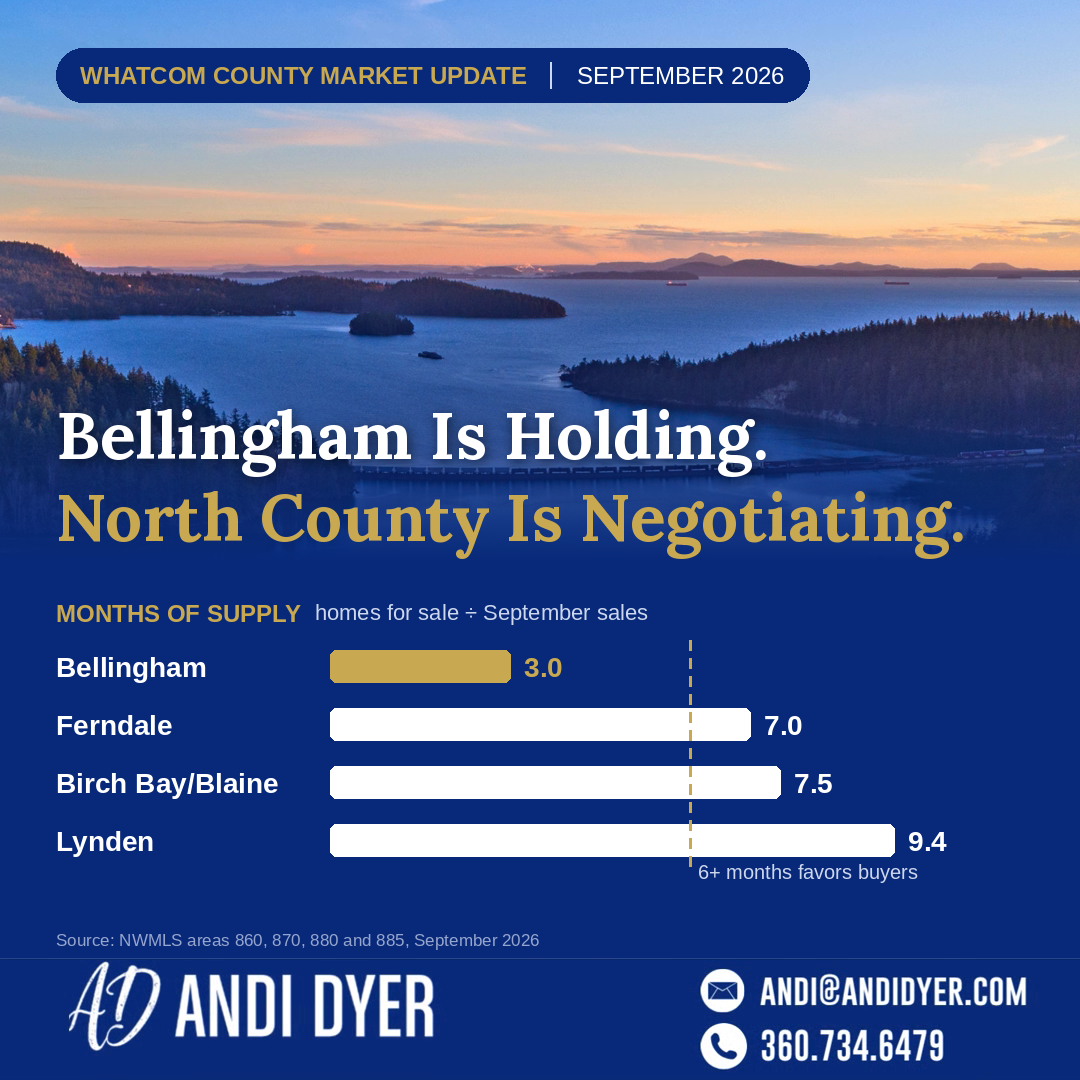
Despite the perception of a “slow market,” winter 2025 in Whatcom County actually represents a real opportunity for sellers who adapt their approach strategically. After several years of rapid home price growth and extremely tight inventory, the market has entered a more balanced phase marked by higher inventory, steady buyer demand, and stable pricing across the region. Inventory Is Up — and So Is Competition Inventory has increased significantly over the past year. In Bellingham, active listings are up 41% year-over-year , with similar trends seen in Ferndale, Lynden, Blaine, and Birch Bay. This growth gives buyers more choices than they’ve had in years, but it also means sellers are competing for attention. Homes that stand out with professional staging, high-quality photos, and competitive pricing continue to sell quickly, even as the overall pace slows. Sellers who approach listing preparation thoughtfully are still seeing strong offers and solid closing timelines. Prices Remain Steady Home prices across Whatcom County have softened only slightly from their 2024 peaks but remain stable overall. The median home price currently hovers between $615,000 and $625,000 , with detached homes averaging around $620,000 . Average days on market have increased modestly, giving buyers a bit more breathing room — but that shift also highlights the importance of realistic pricing. Homes priced too aggressively tend to linger, while those aligned with current market data still attract steady interest. Ferndale continues to appeal to buyers seeking affordability and newer developments, while Bellingham holds its value thanks to its waterfront access, cultural amenities, and strong local economy. A Balanced Market Creates Strategic Openings With roughly 3.5 to 4 months of inventory , Whatcom County has reached a level of balance not seen in years. Buyers have more time to make decisions, but sellers who present their homes well and price strategically are still rewarded. This isn’t the frantic, multiple-offer market of 2021—but it’s also not a downturn. It’s a recalibration. Sellers who see it that way are the ones finding success. The Seller’s Advantage: Preparation and Precision Winter markets tend to filter out casual buyers. The ones shopping now are typically motivated—relocating, upsizing, or taking advantage of improved selection. That’s why preparation matters so much. Well-staged homes that photograph beautifully online and are priced in line with recent sales continue to capture attention. Sellers who invest a little time in presentation and flexibility in negotiation are often the ones walking away with strong results. The Bottom Line Winter 2025 in Whatcom County isn’t a “slow” market—it’s a smarter one. With rising inventory, stable pricing, and buyers who are still active but more deliberate, it’s a season where strategy counts more than speed. Sellers who adapt to these changes—by pricing realistically, presenting their homes thoughtfully, and staying patient—can take advantage of this moment to move forward successfully. Andi Dyer, REALTOR® RE/MAX Whatcom County 📞 Call: 360.734.6479 🌐 AndiDyer.com/schedule Expert Guidance to Buy, Invest, and Sell in Bellingham and Whatcom County  Frequently Asked Questions 1. Is winter a bad time to sell a home in Whatcom County? Not at all. Serious buyers stay active through winter, and less overall competition can make your home stand out. 2. Are home prices dropping in Whatcom County? Prices have softened slightly from their 2024 highs but remain steady. The market is balanced, not declining. 3. How long are homes taking to sell? Most homes are taking slightly longer—typically 30 to 45 days—but well-prepared listings can still go pending within two to three weeks. 4. Should sellers wait until spring 2026? Waiting isn’t always better. Listing now can mean less competition and a pool of serious buyers who want to move before spring. 5. What’s the key to selling successfully right now? Realistic pricing, strong presentation, and working with a REALTOR® who understands the shifting local market dynamics.
By Andi Dyer November 11, 2025
The body content of your post goes here. To edit this text, click on it and delete this default text and start typing your own or paste your own from a different source.
By Andi Dyer November 10, 2025
To make my traditional Swedish Glögg (mulled wine), you gently heat red wine and spirits with a blend of spices, orange zest, and sugar. The mixture is then strained and served warm with blanched almonds and raisins. Ingredients 1 bottle (750ml) dry red wine (e.g., Cabernet Sauvignon, Pinot Noir, or a Cotes du Rhone) 1/2 to 1 cup sugar (caster or granulated, to taste) 1/2 to 1 cup vodka, aquavit, bourbon, or brandy (optional, for a stronger drink) 1 orange (peel in wide strips, avoiding the white pith) 1 cinnamon stick 10 whole cloves 10 cardamom pods, lightly crushed 3-4 slices fresh ginger, peeled (optional) 1/2 cup raisins (plus more for serving) 1/2 cup blanched slivered almonds (for serving) Instructions Combine Ingredients: In a large saucepan, combine the red wine, sugar, orange zest strips, cinnamon stick, cloves, crushed cardamom pods, and ginger slices (if using). Add the raisins and almonds into the mixture or save them for serving. Heat Gently Warm the mixture over medium-low heat. Stir occasionally to dissolve the sugar completely. It is crucial that the mixture is heated gently and never allowed to boil, or the alcohol will cook off and the flavor will be spoiled. The temperature should stay below 175°F (77°C). This process typically takes 10-15 minutes. Steep Remove the pot from the heat, cover it with a lid, and let the spices infuse the wine. This can be done for at least 1 hour, or ideally, the mixture can be left to steep overnight in a cool place for a more intense flavor. Strain and Reheat Strain the glögg through a fine-mesh strainer to remove all the spices and orange peel. Discard the spices. Gently reheat the liquid over low heat until hot but not boiling. Add Spirit (Optional): Just before serving, stir in the vodka, aquavit, or other spirit of your choice, if using. Serve Ladle the warm glögg into small heatproof glasses or mugs. Garnish each serving with a few additional blanched almonds and raisins, which are traditionally eaten with a small spoon as you drink.
By Andi Dyer November 4, 2025
Bring a burst of color (and flavor!) to your table with this crisp, seasonal salad. Juicy pears, tart pomegranate seeds, and a lively ginger dressing make it a refreshing side for any fall or holiday meal.  🍁 Click below to get the recipe and add a little sparkle to your menu!
By Andi Dyer November 2, 2025
Got a surprise property tax bill? You may be able to appeal—but don’t wait. One homeowner called me two days before the deadline, and we built a successful appeal together. Check your 2025 valuation and email me “Tax Check” for a free review. It started with a Saturday night phone call. Frantic, a local homeowner reached out just days before the property tax appeal deadline. Their 2024 assessment had landed with a thud, forecasting a tax bill that felt wildly out of line with reality. The deadline to appeal? Monday, October 27th. Cue the scramble. That evening, too stormy to drive, I hunkered down at home and dove into the numbers. Something wasn’t right. The new valuation didn't match the trajectory of their neighborhood market. The math simply didn’t check out. Sunday morning, we got to work. I drove out to their property, and together we built a bulletproof appeal. We reviewed sales data, took updated photos, and pulled relevant comparables to submit with their documentation. The appeal package was ready to go by Monday morning. Crisis averted. Here’s what every Whatcom County homeowner should know: Your property valuation notice typically arrives in September. You have 30 days from the date on the notice to file an appeal. If the number looks off, don’t shrug and hope it’s close enough. You can challenge it—and often should, especially in fluctuating markets like Bellingham, Ferndale, and beyond. The key takeaway? Don’t wait until the last minute. It pays to be proactive. Assessments aren’t always accurate, and appealing your property valuation could save you thousands. If your 2025 valuation doesn’t reflect the true market value of your home, you have options—and you don’t have to figure them out alone. Let’s make sure you’re not overpaying. If your new valuation feels too high, DM me "Tax Check" and I’ll give you a free property value review. We’ll go over the numbers together and see if an appeal makes sense. Still have questions? Let’s meet for coffee and talk it through. I’m always happy to help you navigate the less-fun-but-super-important parts of homeownership.
More Posts