The 50 Top Home Tech Products of 2017 You Need to Add

Andi • January 14, 2018

Homes are getting smarter all the time, thanks to great advances in technology. Check out our favorite home tech products and add a little brains to your abode!

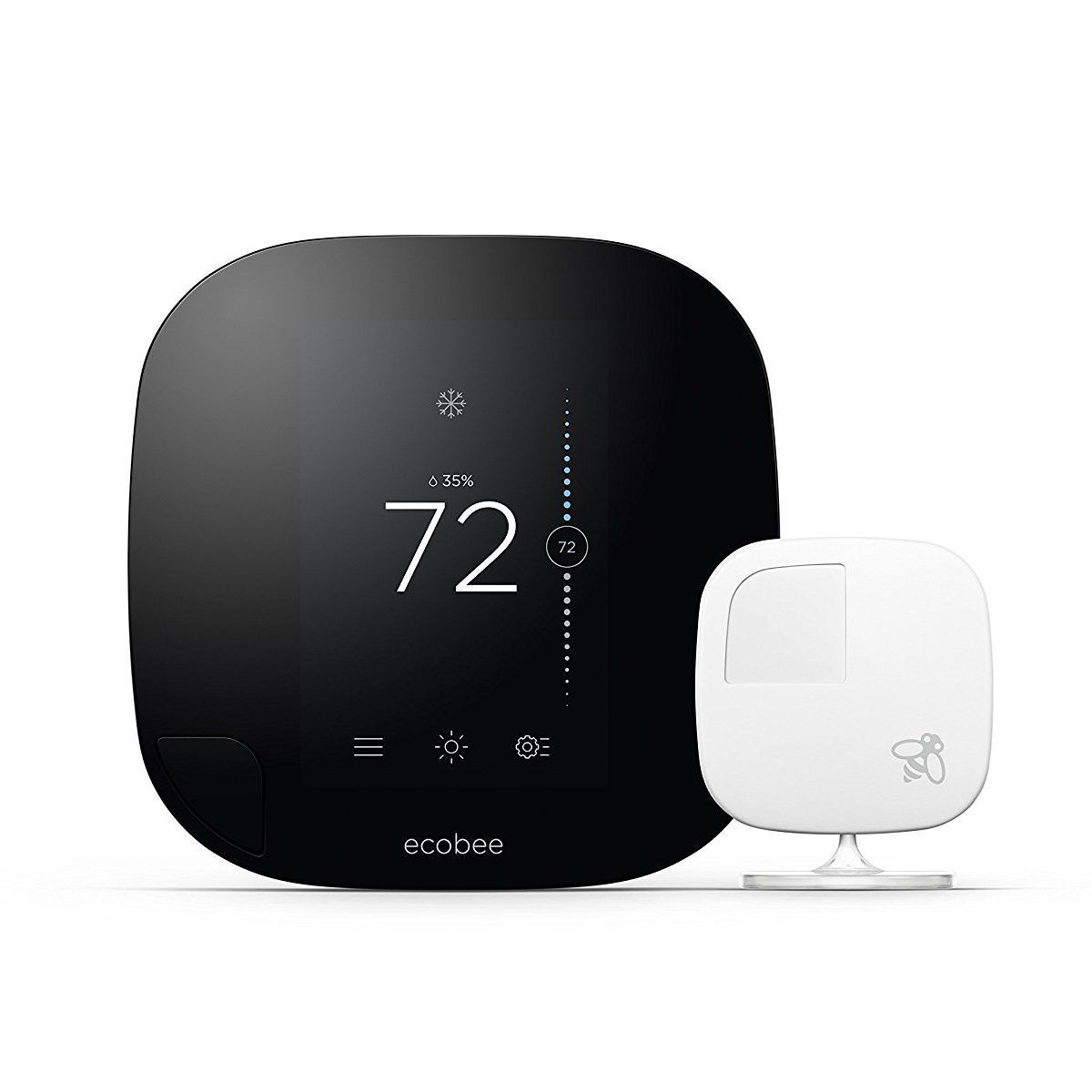
Ecobee Smart Thermostat

The  Ecobee smart thermostat  does everything but the dishes around the house it seems. It works well with Amazon’s Alexa and claims to save homeowners an average of 23 percent annually. It can tell when someone’s home and which rooms are occupied. Find out if a  WiFi thermostat is right for you.

Photo: Courtesy of  Amazon

Nest Protect

Nest Protect

Nest has got it right with the second-generation model of its Protect smoke and carbon monoxide detector. It integrates with Nest’s Learning Thermostat and Nest Cam. It will test for low batteries and communicate with other Nest devices in a home. It can tell you where the problem is and uses two wavelengths of light to look for both fast and slow burning fires. Find out  how to maintain smoke alarms  in your home.

Photo: Courtesy of  Amazon


Lutron Serena Remote Controlled Shades

Lutron Serena Remote Controlled Shades

Let  Lutron  handle the hassle of opening and closing shades with its remote-controlled shades. The insulated honeycomb model has a R rating for insulation of 4.3 whereas a typical double-pane window has an R-value of 2. The shades can be controlled anywhere through the Luton App and Smart Bridge. It can even compensate for battery voltage like if one shade has new batteries and the shade next to it has older batteries they will still move at the same speed.

Find out  how to stop window drafts in your home.

Photo: Courtesy of  Lutron

Sonos Wireless Speaker System

Sonos Wireless Speaker System

Sonos wireless speakers  allow you to stream music in any room with these speakers and works great with Amazon’s Alexa. The set is fairly simple: just plug it in, download the free app and connect it to your WiFi network. It makes entertaining easier and doesn’t require a bunch of wiring work in your ceiling. If you like the challenge of a  DIY project like installing audio in every room, learn how to do it.

Photo: Courtesy of  Amazon


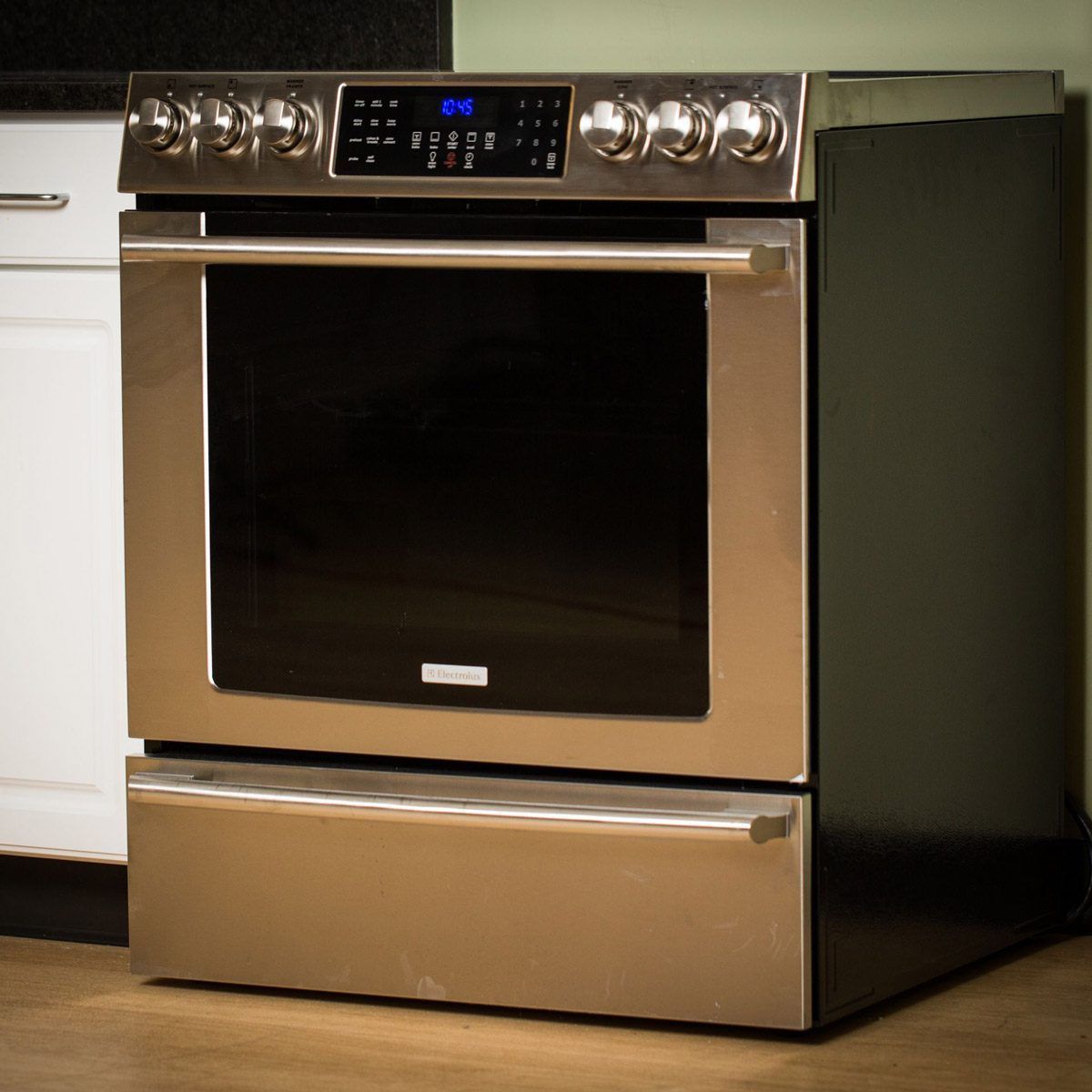
Electrolux IQ Touch Electric Range

Electrolux IQ Touch Electric Range

Those in search of that  modern house feel  will want to upgrade to the  Electrolux IQ Touch Electric Range. The front control design, Flex-2-Fit heating elements and Perfect Taste Dual Convection will make cooking everything from the weeknight meal to holiday dinners easier. The easy-to-clean cooktop surface and seven cooking modes will help even the most novice chefs prepare marvelous meals.

Photo: Courtesy of  Electrolux


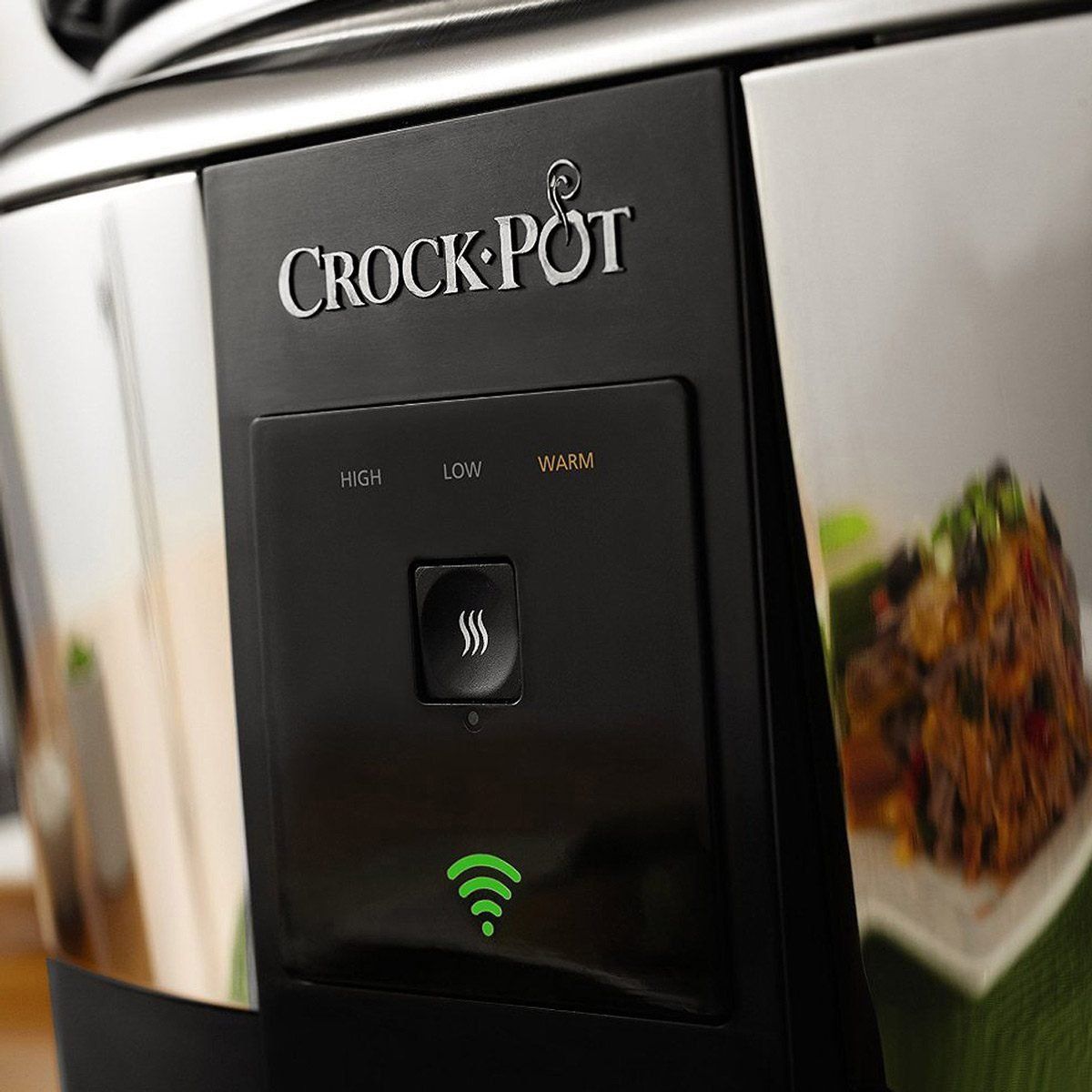
Crock-Pot WeMo Enabled Smart Slow Cooker

Crock-Pot WeMo Enabled Smart Slow Cooker

Give your  oven a break  and control your dinner from anywhere with the  WeMo Crock-Pot slow cooker.  Just use your smart device and the WeMo App (free) to adjust or schedule cooking time and temperature. Dinner will be ready when you are!

Photo: Courtesy of  Crock-Pot

HAPIfork

HAPIfork

The  HAPIfork  is an electric fork that helps you monitor and track your eating habits. It alerts you with the help of indicator lights and gentle vibrations when you’re eating that  grilled steak  too fast. The information is then uploaded via USB or Bluetooth to your online dashboard on HAPI.com to track your progress.

Photo: Courtesy of  HAPIfork

GeniCan

GeniCan

Get organized  in the kitchen with the  GeniCan , which easily installs into your existing garbage can or recycle bin and allows you to add items to your grocery list automatically as you dispose of them. You’ll never forget to add items to your list again. Photo: Courtesy of  GeniCan


Perfect Drink Pro

Perfect Drink Pro

You’ll make the perfect drink every time with the  Perfect Drink Pro.  Great for your  home bar , tell the Perfect Drink Pro via the app what you have in your liquor cabinet. Choose a recipe and this bar-top appliance will help you measure out just the right proportions for your drink. Then shake or stir. Photo: Courtesy of  Perfect Company

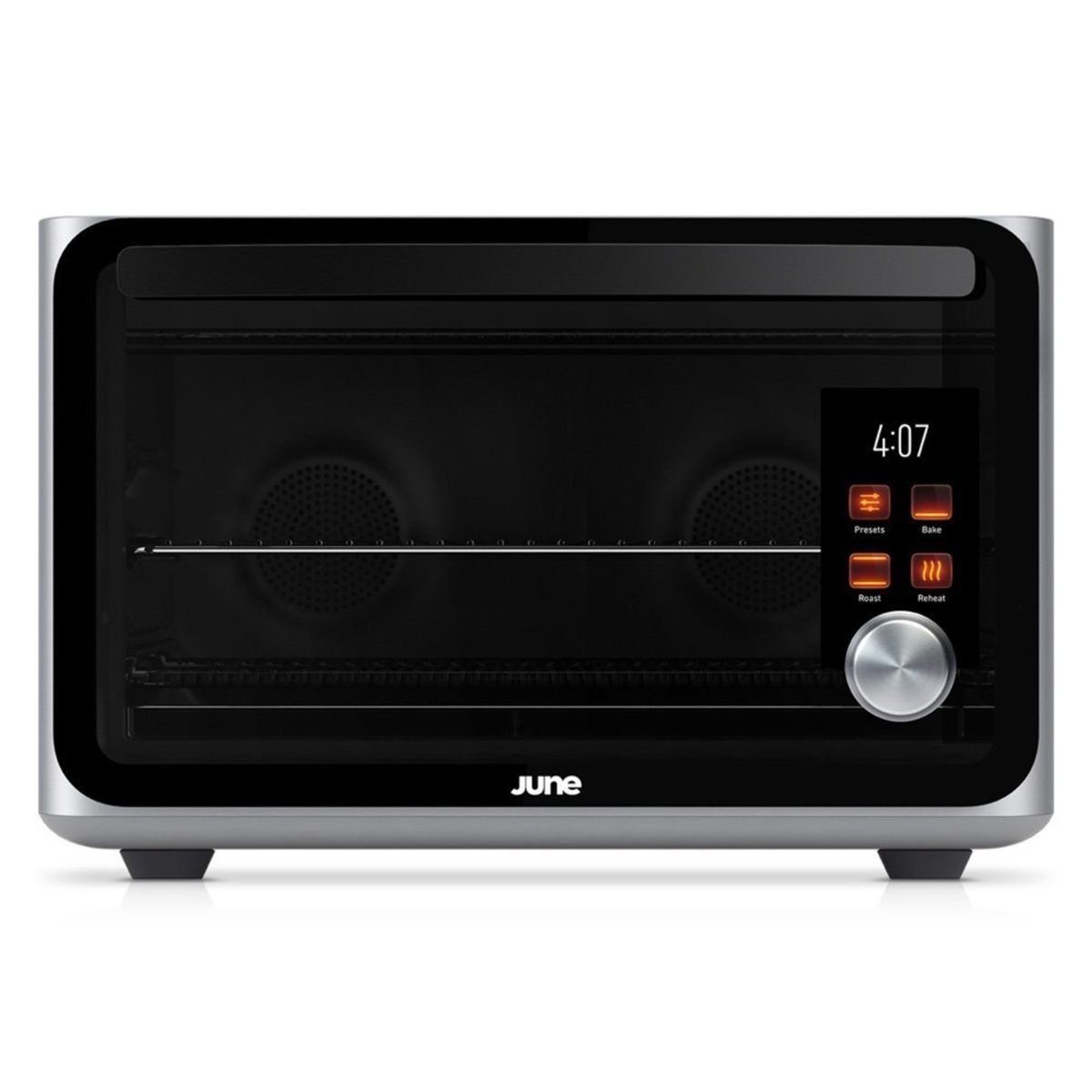
June Intelligent Oven

Make cooking a breeze with the  June Intelligent Oven.  The countertop convention oven comes with a built-in camera that recognizes more than 20 foods and cooks them automatically. And the oven also boasts that it’s  easy to clean. Photo: Courtesy of  June


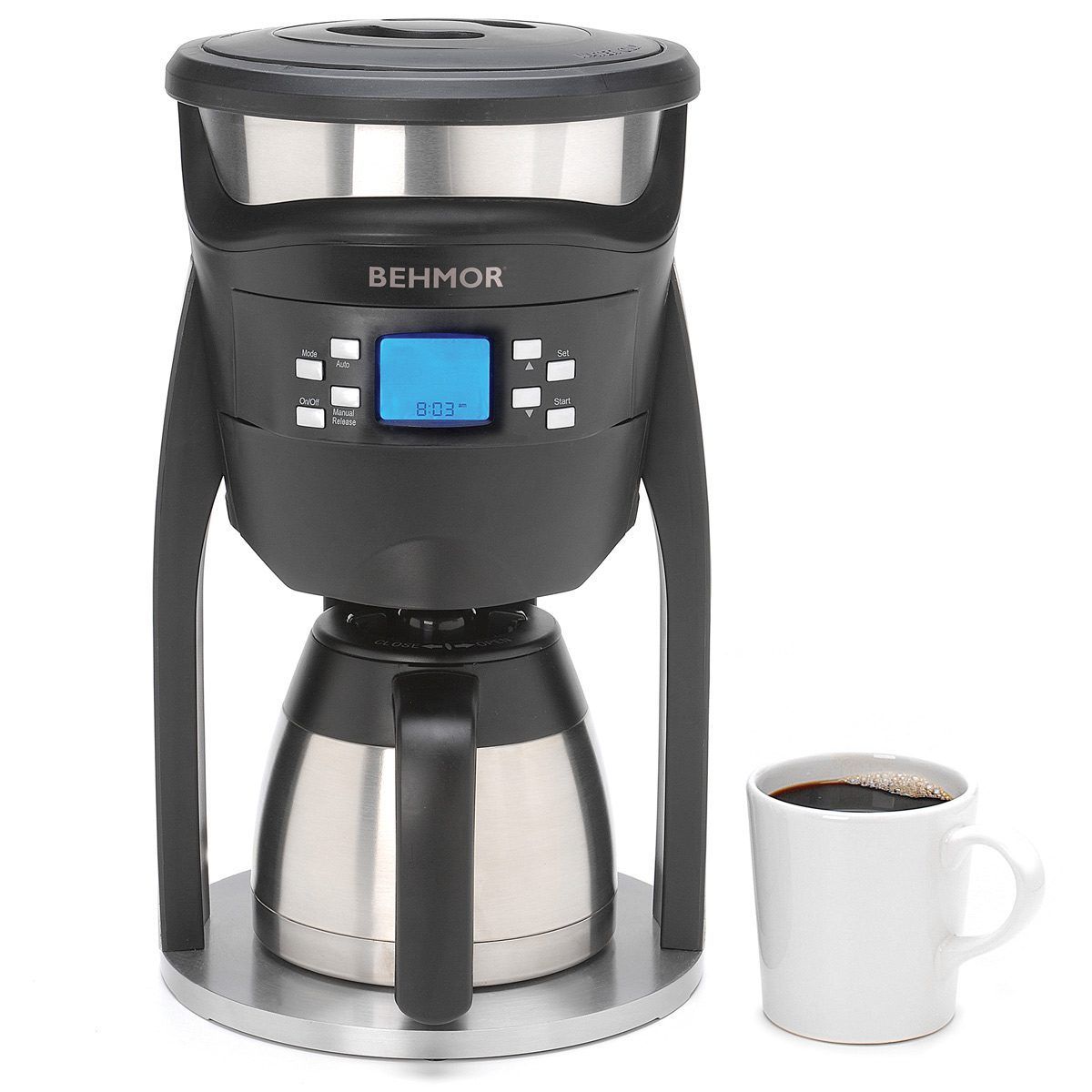
Behmor Brazen Plus Coffee Maker

Behmor Brazen Plus Coffee Maker

The  Brazen Plus Coffee Maker  features adjustable settings for water brewing temperature and pre-soak, and guarantees brewing temperature to within 1 degree of your setting. The oversize shower head and pulsed water flow ensures complete coffee bed saturation for the perfect cup every time. And use a permanent filter or paper filters, and don’t forget to use those leftover grounds for  pest control.

Photo: Courtesy of  Behmor

Pantelligent Frying Pan

Pantelligent Frying Pan

Want perfectly cooked burgers, fish fillets and steaks every time? The  Pantelligent Frying Pan  has a temperature sensor inside and connects to an app which will tell you when to flip the food, stir the ingredients or adjust the heat on your stove. And when you’re not cooking, just store it with the rest of your  pots and pans.

Photo: Courtesy of  Pantelligent


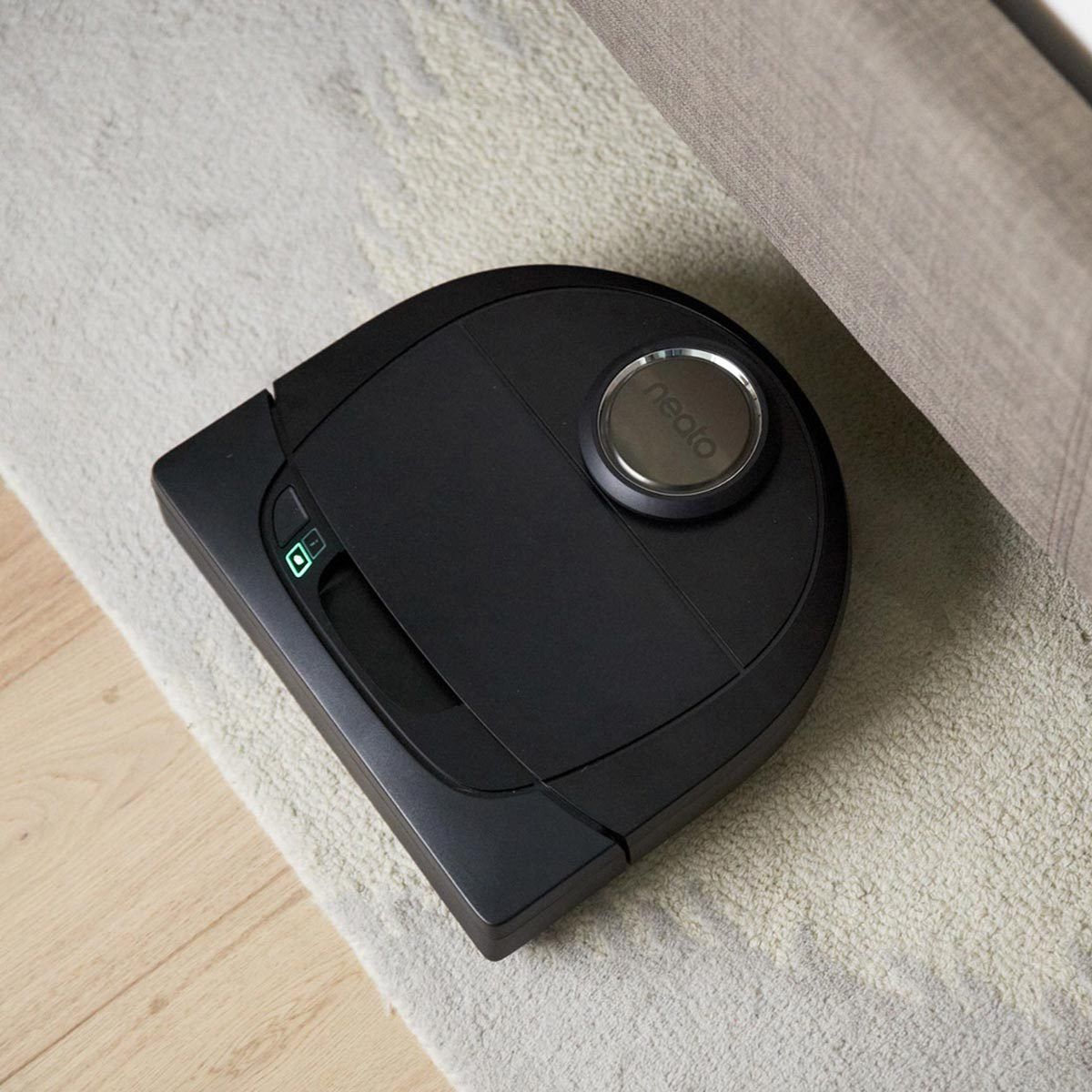
Neato Botvac Vacuum

Tired of  vacuum repair?  The  Botvac Wi-Fi connected robot vacuum from neato  lets you control the vacuum from wherever you are. Have last-minute company coming over for dinner? Start the robot vacuum before you leave work. And, it has two cleaning modes and includes an ultra-performance filter which makes it easy-to-clean.

Photo: Courtesy of  Neato Robotics

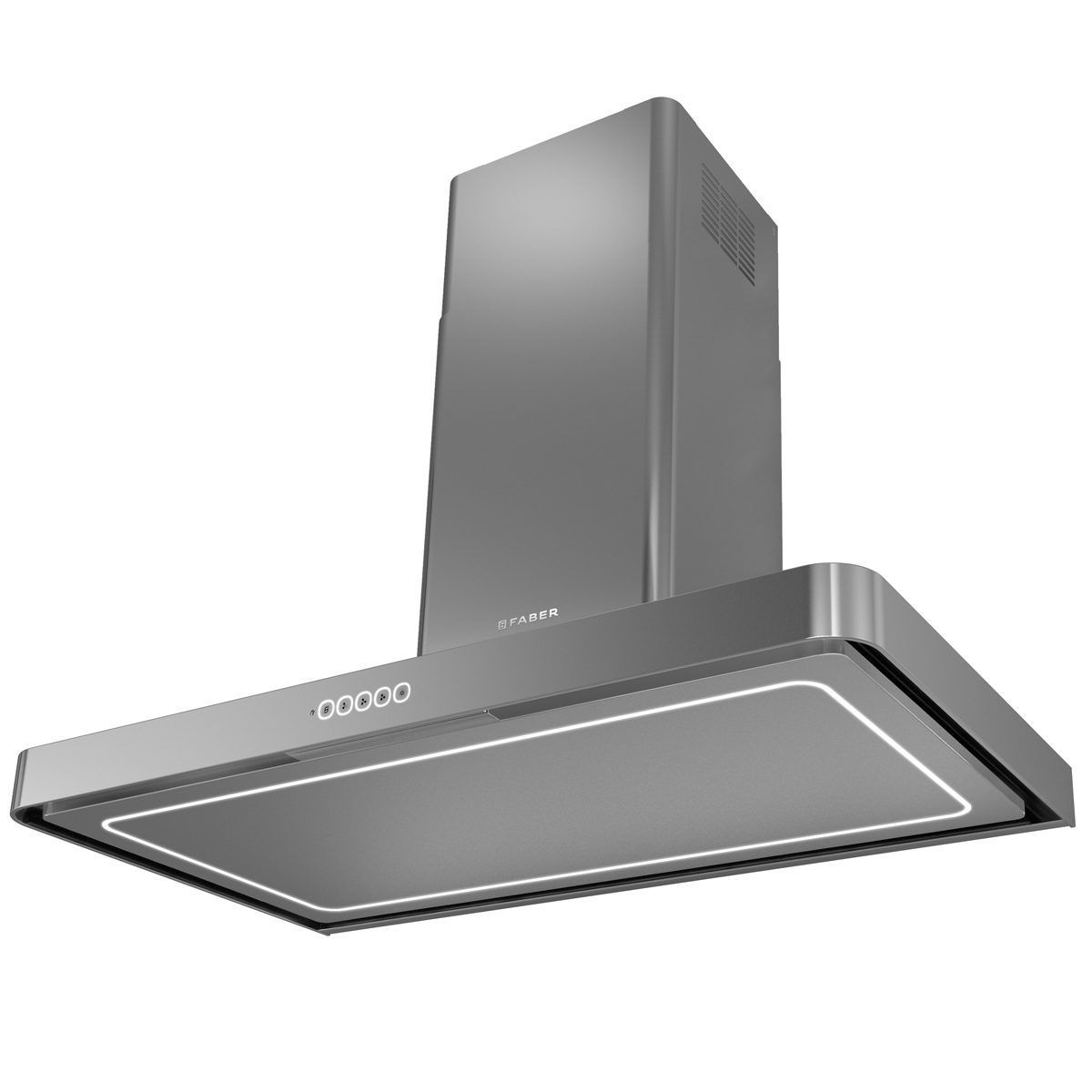
Faber Hood T-Light

Faber Hood T-Light

new vent hood  can quickly transform a kitchen and the  T-Light from Faber  stands out with clean lines and bright LED light. With five models, smart appliances powerful Evo Motor guarantees better results in terms of energy efficiency and reduced noise.

Photo: Courtesy of  Faber


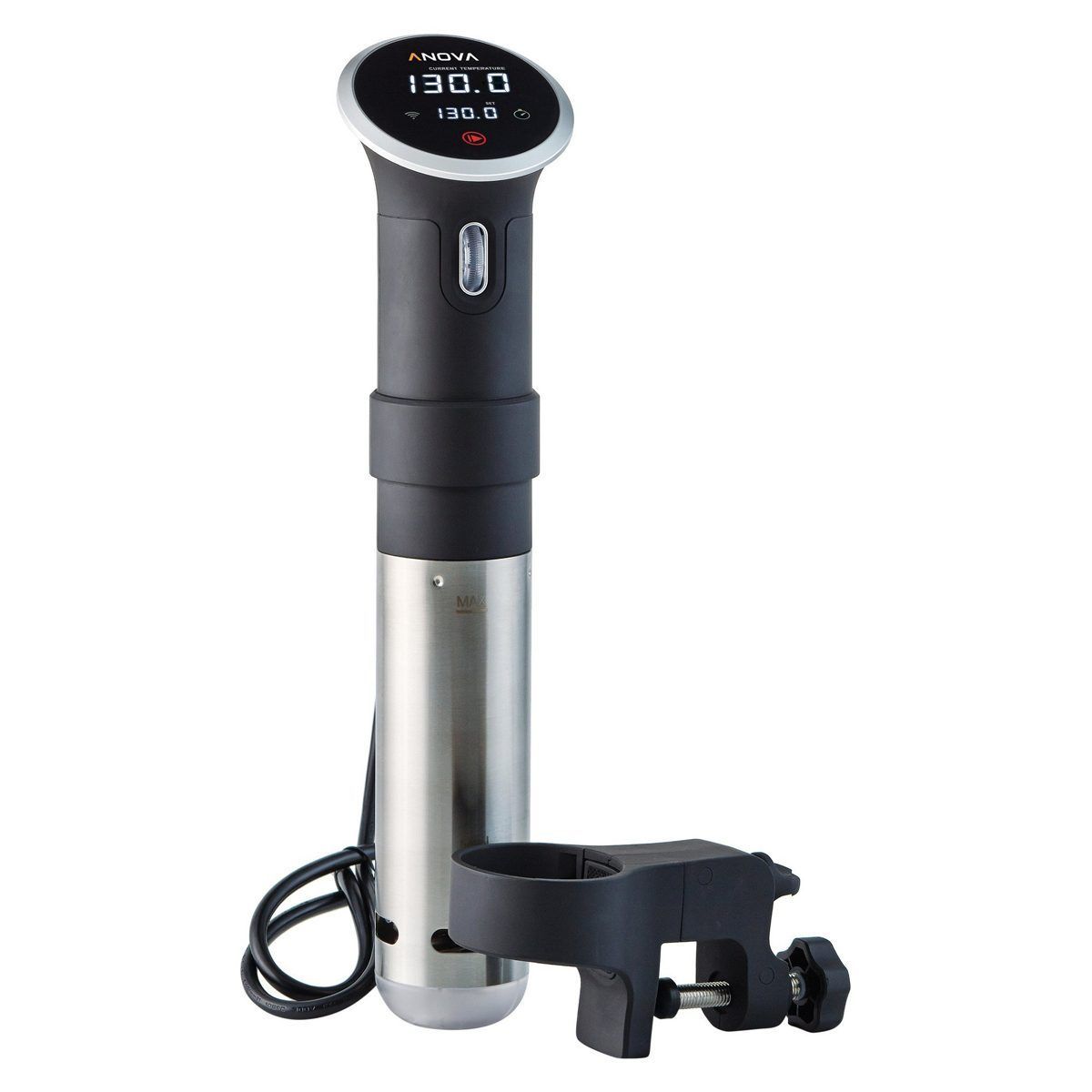
Anova Sous Vide with Bluetooth

Anova Sous Vide with Bluetooth

If it’s  too cool outside to grill , try cooking in the  Anova Sous Vide with Bluetooth.  And this sous vide (a method of cooking food slowly in a vacuum-sealed pouch at a low temperature so as to retain most of the juice and aroma) precision cooking device will cook that roast or steak to the perfect temperature every time, and you can keep track of the cooking process via its Bluetooth system.

Photo: Courtesy  Anova Culinary


Samsung Family Hub Refrigerator

Samsung Family Hub Refrigerator

According to Samsung, the company’s new  Family Hub Refrigerator  lets you “find what you need, faster.” If your  kitchen needs a makeover , this fridge will certainly make it smarter. It features a touchscreen system and apps that are easy-to-use, and has a camera feed to help you track contents. The refrigerator comes in three unique designs.

Photo: Courtesy of  Samsung

Bluetooth Headphones

Bluetooth Headphones

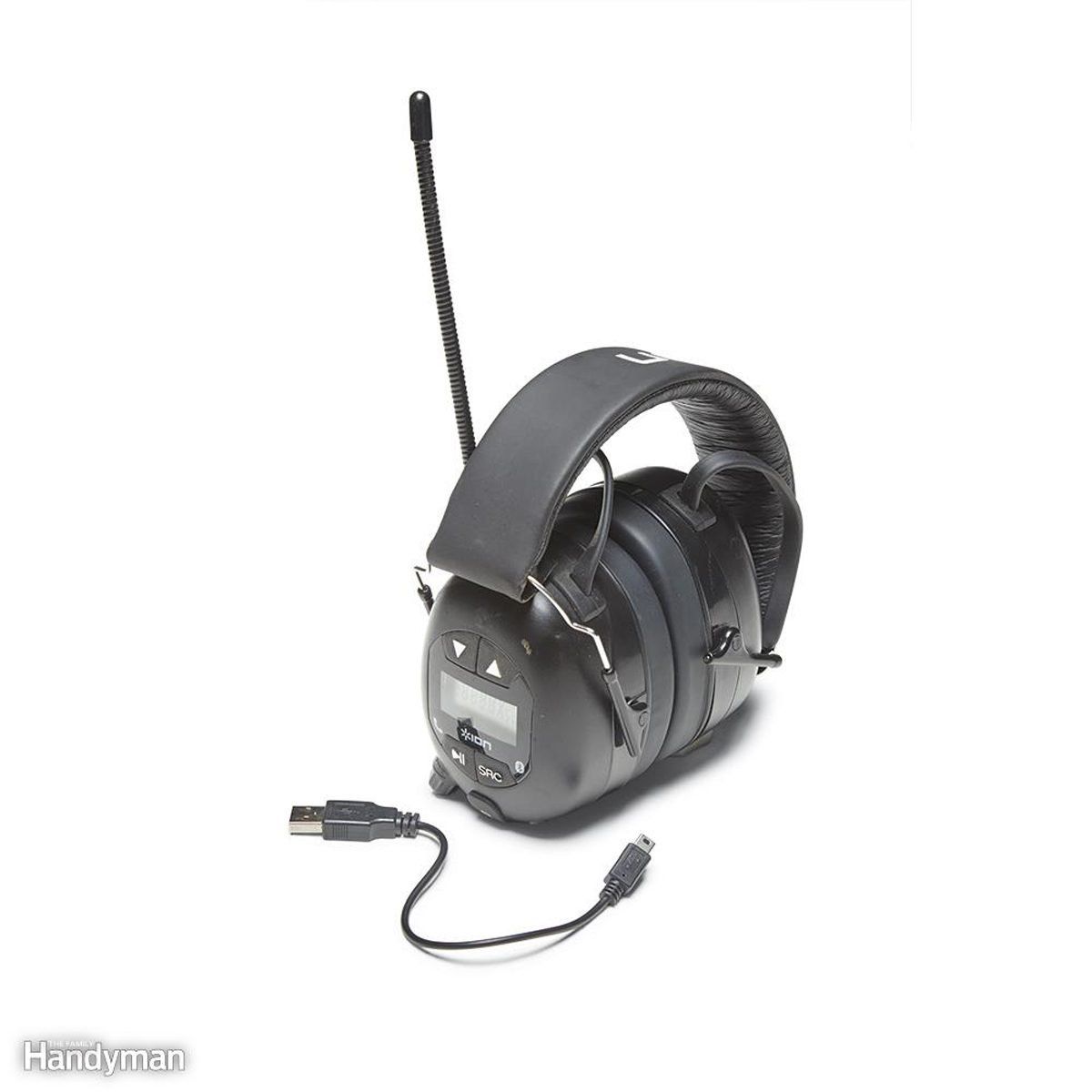
Protective headphones equipped with a radio have been around for a while. Some models offer an auxiliary jack so you can plug in your phone or MP3 player, but good luck keeping that irritating cord plugged in for more than five minutes at a time. ION has solved that little problem with its  Tough Sounds Hearing Protection Headphones with Bluetooth & Radio. Now, while mowing the lawn or running a chain saw, you can tap into your Bluetooth-equipped device and listen to your own tunes or a podcast. These headphones have a built-in rechargeable battery that lasts up to 20 hours per charge.


Surge Protection is Cheap Insurance

Surge Protection is Cheap Insurance

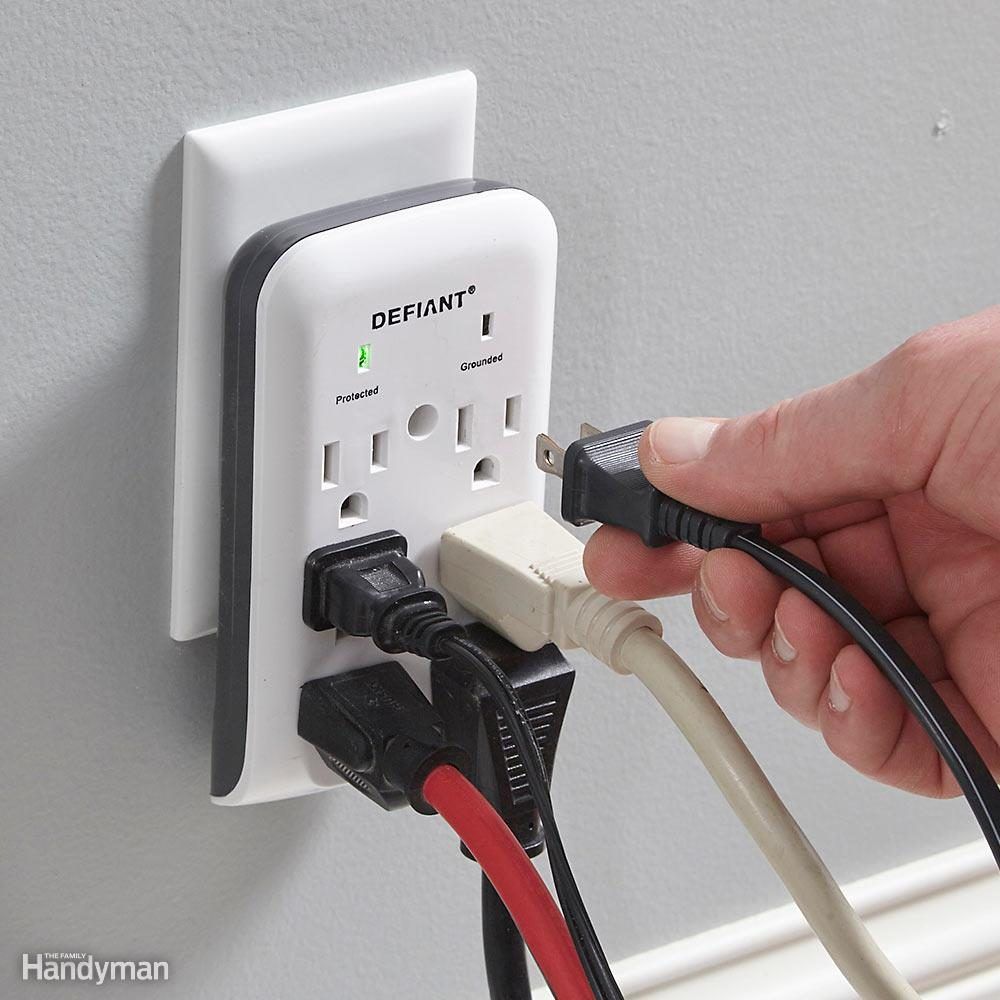
There’s a bunch of surge protectors to choose from at home centers these days, and they’re more affordable than ever. The six-outlet model shown here, made by Defiant, is available at The Home Depot. It’s so inexpensive, there’s no reason not to install them throughout the whole house. And don’t forget about your larger appliances. Today’s washers, dryers and refrigerators have electronic circuit boards that can be destroyed by surges.

Wixey Digital Angle Gauge

This Wixey Digital Angle Gauge is 21st-century fun! Yeah, you could adjust your saw’s angle using other methods and eventually get it perfect, but this gizmo saves lots of time, and did we mention it was fun? Just crank the blade up, set the magnetic base on the blade and square up the blade to the table (the body of the tool is absolutely square). Then push the zero button to calibrate the tool. Once it’s calibrated, you can adjust the blade to the desired angle, all the while getting an accurate digital readout. When you get the desired angle, whether it’s 22-1/2 or 45 degrees, you know it’s right on, and you can proceed with your project instead of spinning your wheels micro-adjusting.


Power, Cubed: E-More Cube

Power, Cubed: E-More Cube

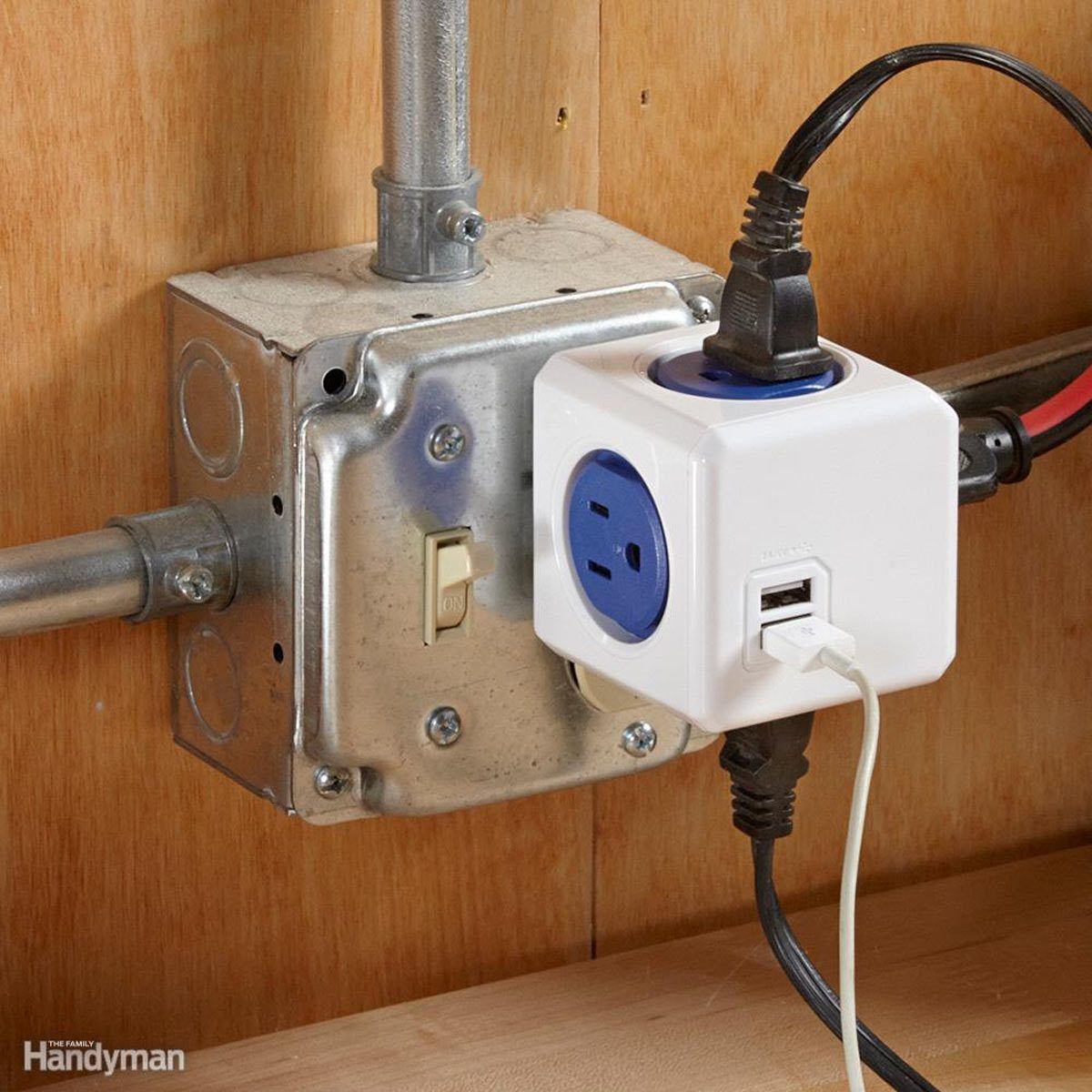
Long power strips are a great invention, but some electrical plugs are such space hogs that you can’t use all the available outlets. And what about your phone, tablet and other USB devices? The E-More Cube has four three-prong power outlets as well as two USB charging ports. The outlets are configured so there’s no competition for charging space. The Cube is power-surge protected and takes up less space than a strip on a workshop or countertop. Plus, it looks cool!

Marcia Roepke, Art Director


Best Night-Light in History: SnapRays Guidelight

Best Night-Light in History: SnapRays Guidelight

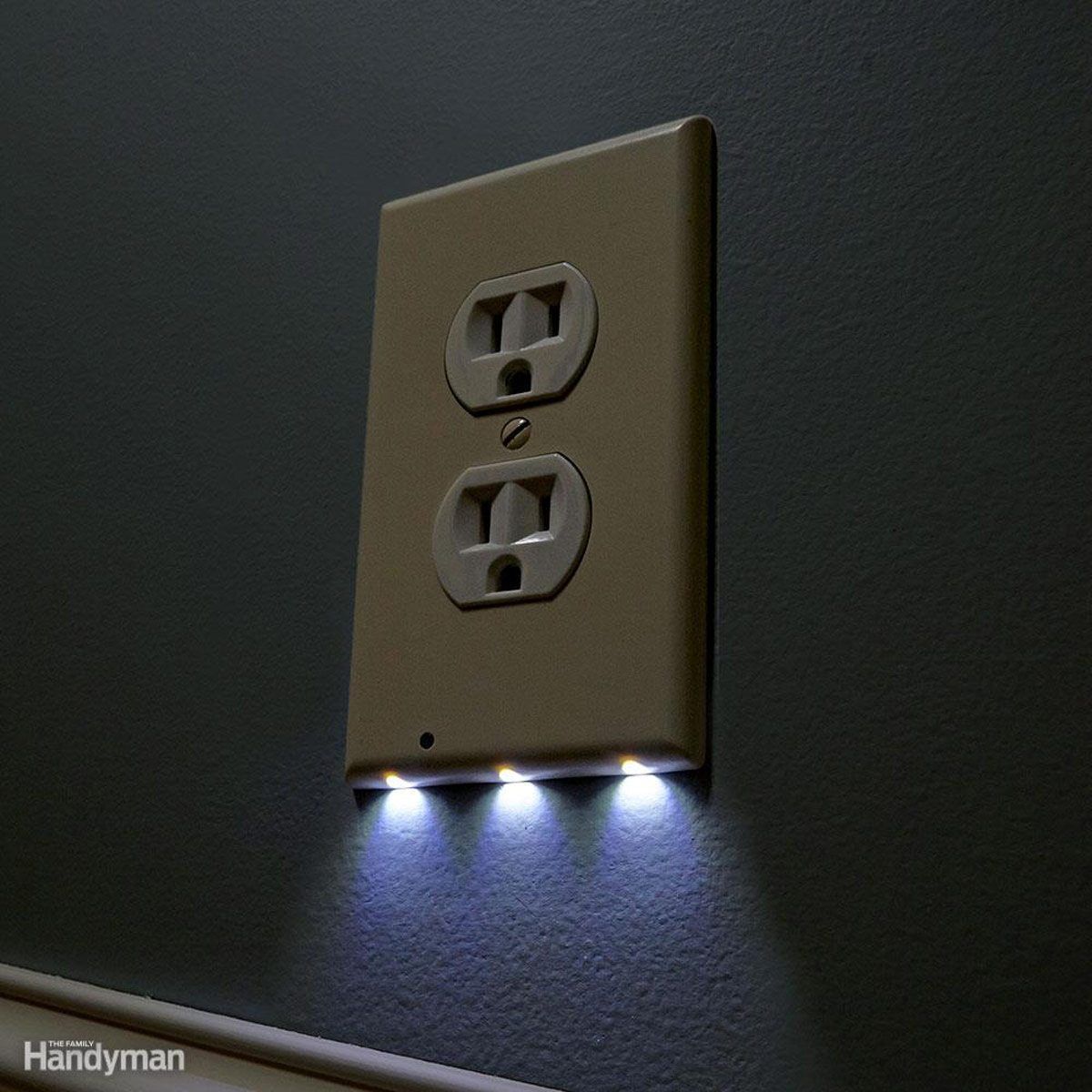
About once a year here at the office, we encounter ‘The Perfect Product.’ This year the title winner has to be the SnapRays Guidelight. Even though it’s just a lowly night-light, it’s practically perfect in every way. Here’s why:

  • Everyone needs it: If the sun goes down where you live, you need a few night-lights, right?
  • Anyone can install it: It takes all of 60 seconds. Remove the single screw on the old cover plate, snap in the Guidelight and reinstall the screw. That’s it.
  • It’s inexpensive to operate: The three tiny LEDs come on only when it’s dark, thanks to the light sensor built into the cover.
  • It’s not an ugly plug-in. It looks exactly like an ordinary cover plate. The LEDs at the bottom light up the floor right where you need it.
  • The price is reasonable and they cost even less per light if you buy a bunch.

The Guidelight is powered by two little prongs that snap over the terminal screws on the receptacle. Brilliant! No batteries, no wiring, no nuthin! You have a choice of two outlet cover types in ivory, almond or white.


Hands-Free Tablets and Phones: GoGear Automotive Universal Tablet Holder

Here’s a simple gadget that makes it easier to entertain your backseat passengers. The  GoGear Automotive Universal Tablet Holder  straps onto the back of a headrest and uses rubberized elastic cords to keep a firm grip on tablets and phones. Now you can let your kids watch a movie on your iPad or phone without having to worry about them trashing it. At The Home Depot, the GoGear Automotive Universal Tablet Holder is $16.


World's Coolest Hose Reel: RoboReel Water Hose Reel

World’s Coolest Hose Reel: RoboReel Water Hose Reel

It’s crazy-expensive, but if you’re a serious gardener, it’s crazy-cool, too. Frankly, there’s nothing like the RoboReel Water Hose Reel. Its looks may be otherworldly, but its function is totally down to earth. Here are the neatest features. One hundred feet of high-quality 5/8-in. hose (or 150 ft. of 1/2-in. hose) retracts with the push of a button either on the top of the cover or on the remote. So, no cranking?a big onboard rechargeable battery does the heavy lifting. The remote switch snaps onto the end of the hose (it features quick-disconnects on all the accessories), and that allows you to turn the water off or on from wherever you are. Attach it to a handheld sprinkler for hand watering, or use it separately to control the lawn sprinkler. No more running back and forth to the spigot.

The water shuts off automatically after one hour, so you never have to worry about it running all night if you forget to shut it off. The RoboReel system has lots more features that are worth checking out if you think this awesome hose reel might be for you. Believe it?if you’re a hard-core gardener with money to spend on your passion, you’ll absolutely love this thing. Learn more, find a dealer and watch the videos at the manufacturer’s website.


Soil Testing Made Easy: General 4-in-1 Soil Condition Meter

Soil Testing Made Easy: General 4-in-1 Soil Condition Meter

For the aspiring gardener or a lawn enthusiast, check out the General 4-in-1 Soil Condition Meter. Stick it in the ground and you can measure soil pH, moisture content and temperature. Plus, it’ll tell you how much sunlight falls on any particular spot in the course of a day. The pH meter isn’t as reliable as having samples tested in a lab, but General claims an accuracy rate of within .5 percent, which is close enough for most plants and grass. Serious gardeners and turf lovers use that information to get the most out of their gardens and lawns. This little tool might add a bit more green to your thumb too.

Prevent Port Damage to Your Smartphone or Laptop

My 3-year-old granddaughter thought the USB ports on my son’s laptop would be a great place to hide her hairclips. It was powered up at the time, and the clips shorted out the $800 main board (he had to remind himself how precious she is).

The service guy said port damage is common, and not just from little gremlins jamming hairclips in them. Dust, dirt and metal fragments can accumulate in the ports and cause damage when you jam the plug in. So my son sealed his smartphone and laptop ports with silicone anti-dust stoppers. It’s really cheap insurance against costly repairs.

Rick Muscoplat, Contributing Editor


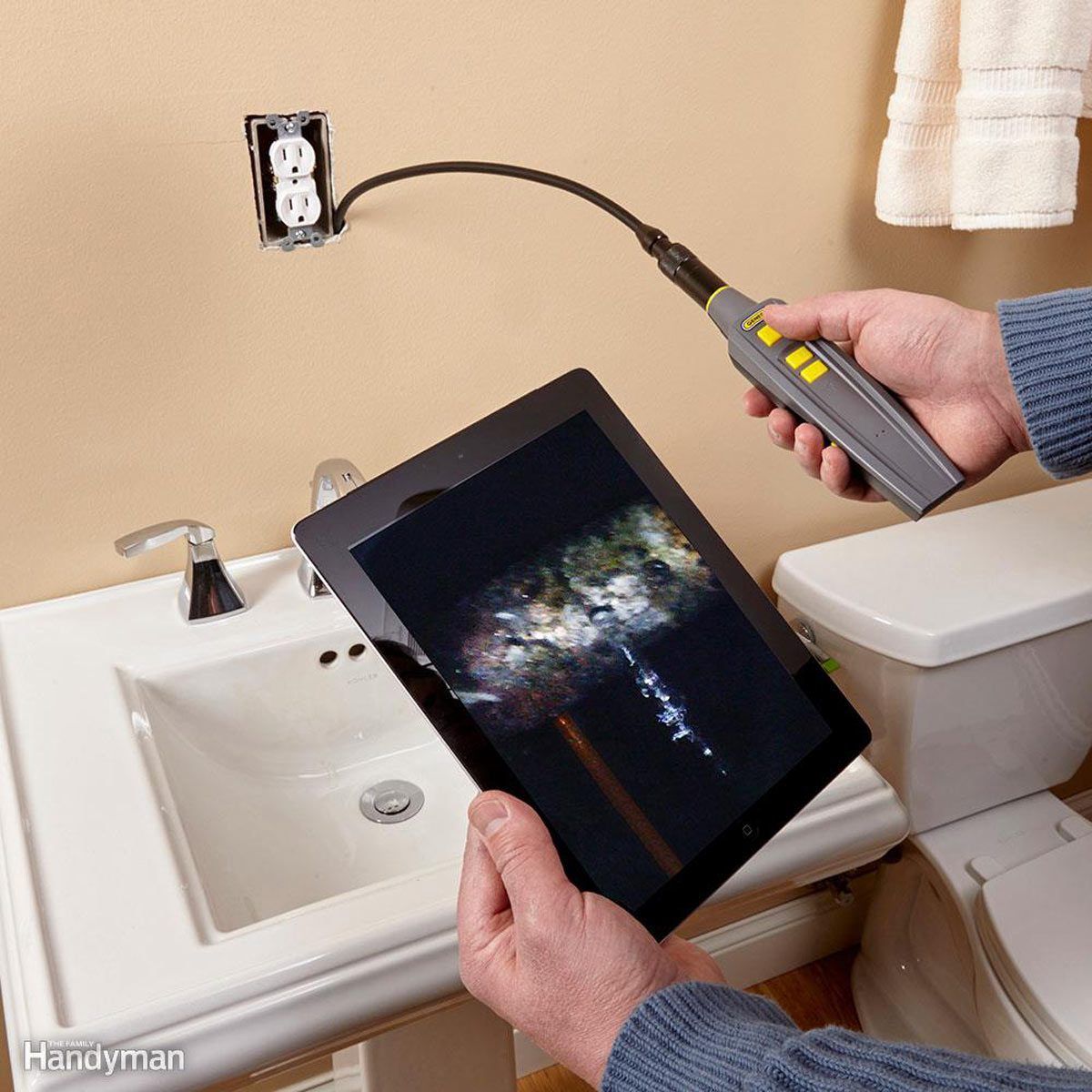
See Inside your Walls with General iBorescope

See Inside your Walls with General iBorescope

Unless you have X-ray vision, it can be tough to figure out what’s inside a wall. That’s where a ‘borescope’ comes in handy. It’s basically a small camera on the end of a snake. You just fish it through a hole or tight space to view what’s inside on a video monitor. Several companies make borescopes, but the General iBorescope line is a little different in that it lets you use the display on your smartphone or tablet as a wireless video monitor. The borescope acts as a Wi-Fi hot spot, letting you connect your mobile device to it without a Wi-Fi router or Internet access. A free app lets you snap photos and record video, and the camera is waterproof so you can safely use it in areas that may be wet.

More Than A Garage Door Opener: Ryobi GD200

More Than A Garage Door Opener: Ryobi GD200

This  game-changing garage hub is called the Ryobi GD200. It has a powerful 2-hp motor under the hood, instead of a 1/2-hp like most other openers. It features a super-quiet, steel-reinforced belt drive rather than a noisy chain or screw drive. It also has an LED light, which should last as long as the opener itself. The light is activated by a motion detector and turns on whenever you enter the garage. But what really sets this unit apart are the seven ports. Each port receives a module of your choosing, including a fan, a CO and temperature sensor, a Bluetooth speaker that broadcasts and receives music or phone calls from your smartphone, a retractable electrical cord, a battery backup, and even a laser system that tells you when your car is parked in exactly the right spot.

Robotic Lawn Mower: Automower


Robotic Lawn Mower: Automower

The  Automower from Husqvarna  works great. The guide wire that runs around the perimeter of your yard is held down with stakes, so no trenching was necessary, and programming is simple. The whole setup took less than 90 minutes. What makes this machine excel is the retractable, razor-like cutting blades. They’re just a fraction of the size of thick steel blades, which results in clean cuts, longer run-times and super-quiet operation.

Smarter Smart Bulbs: GE's C Light Bulbs

Smarter Smart Bulbs: GE’s C Light Bulbs

The new  line of LED lightbulbs from GE , simply called ‘C,’ can be directly controlled with a smartphone or tablet via Bluetooth — no central hub necessary. There are two types of bulbs in the ‘C’ line: The ‘C Life’ is an all-purpose light perfect for the kitchen, living room or office. The ‘C Sleep’ bulb has been designed to support the body’s natural circadian rhythms, which can help you sleep more soundly. It emits a traditional soft light for the day; a warm, calming light before bedtime; and a crisp, energizing light in the morning. Using an app, the lights can be dimmed and set to a timer as a group or individually. When run for three hours a day, the bulbs should last 20 years! Smartphone-friendly Garage Door Opener: Chamberlain HD950WF


Smartphone-friendly Garage Door Opener: Chamberlain HD950WF

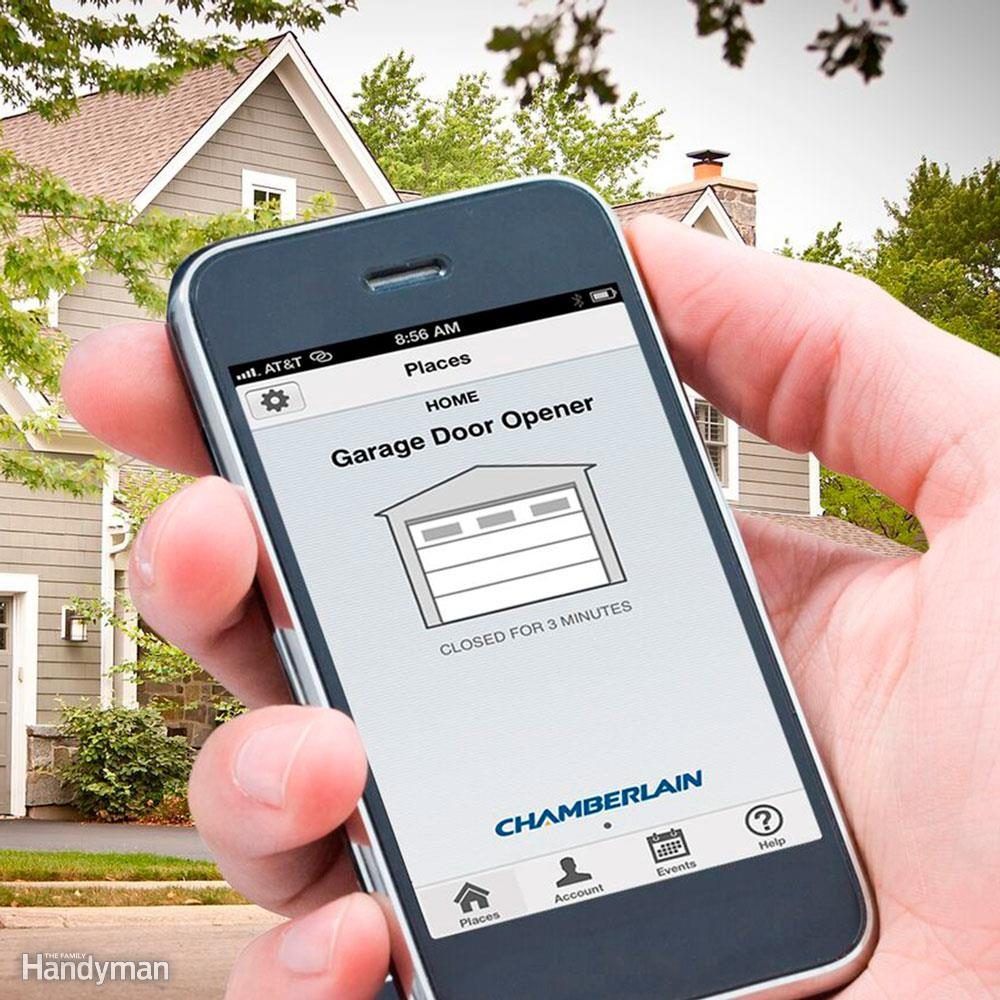
This  Chamberlain HD950WF garage door opener  includes a few very useful ‘bells and whistles.’ It has a hefty 1-1/4-hp motor and a battery backup (so it’ll work even if the power is out). The door starts out slowly, picks up speed, and then slows down before reaching the top or bottom. That, in conjunction with the belt drive, makes it super quiet. And, with the included smartphone app, you can open and close your garage door (or check it you left the door open) from nearly anywhere.

Keep Your Components Cool: CabCool 1202-M

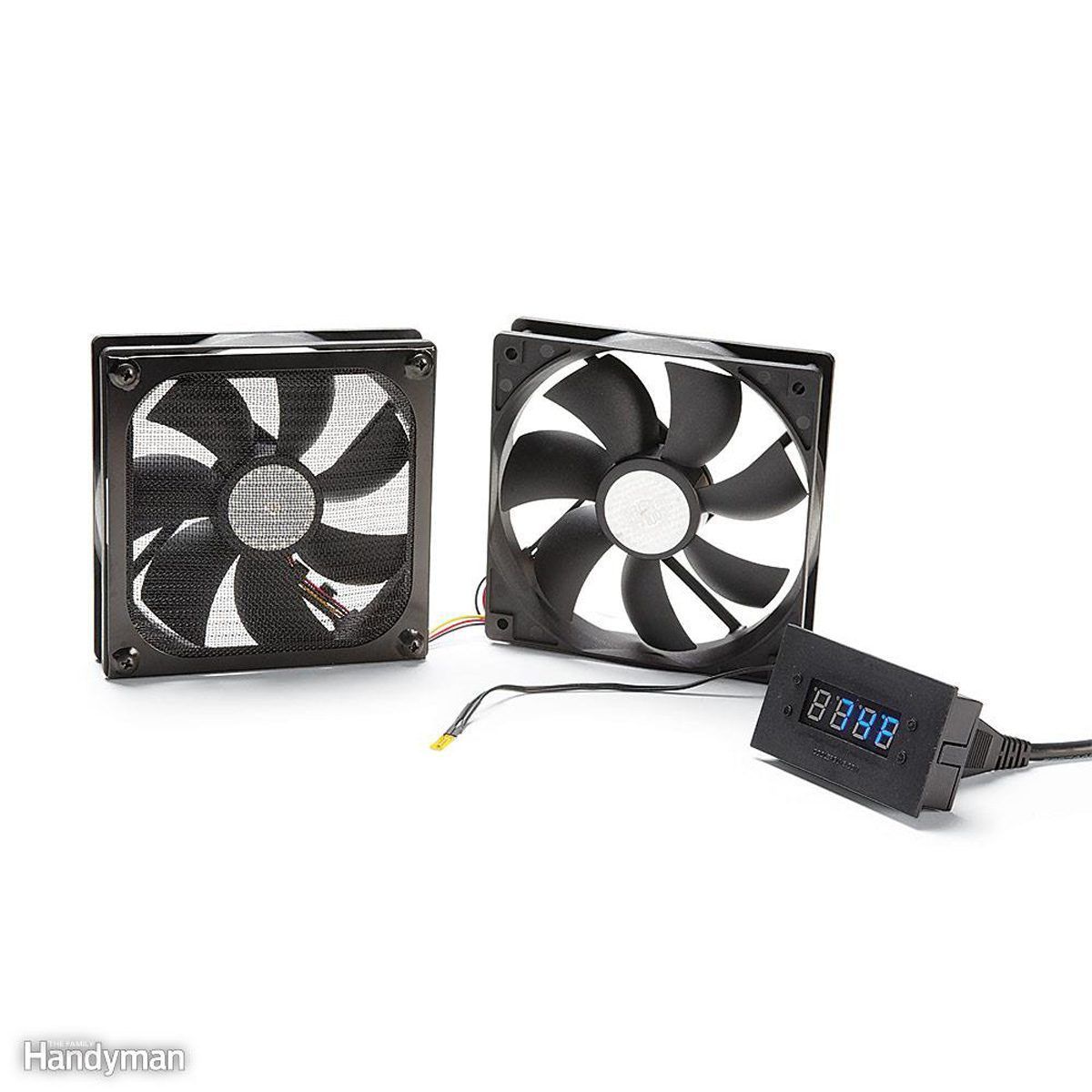
The hard drives in DVR-type cable or satellite boxes run full time and can really pump out the heat. If you keep yours behind closed doors in your entertainment center, you risk overheating all the electronic devices you store there. But there’s an easy solution—tiny fans like the CabCool 1202-M. The kit comes with two 120mm cooling fans, an assortment of grilles, a power supply and a preset thermal controller. The controller turns the fans on and off when needed. Or upgrade to the programmable LED thermal controller and set your own on/off temperatures and keep track of cabinet temps on the LED screen.

Hide TV Wires: Power Jumper kit

Hide TV Wires: Power Jumper kit

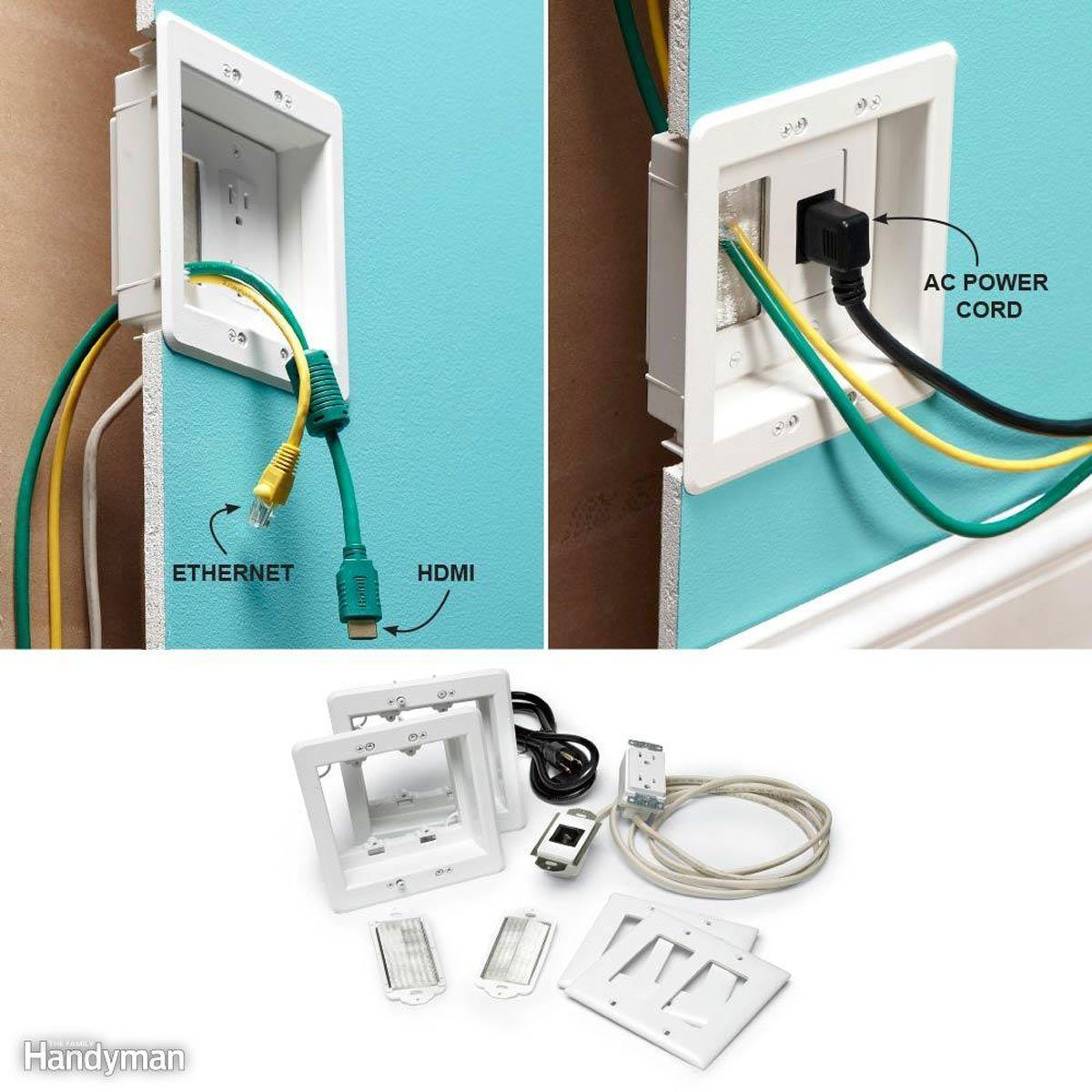
A flat panel TV looks great on the wall, but all those wires leading to it don’t. If there’s an outlet near the TV, the Power Jumper kit (No. 22APJW-7R) lets you get power and digital cable up to your TV invisibly. The outlet and plug are prewired. Just cut a hole near the TV and another below it in the same stud cavity. Then drop the prewired unit and signal cables down from the top opening.

LED Retrofit for Recessed Lighting: Halo RL560

LED Retrofit for Recessed Lighting: Halo RL560

If you think you can pop an off-the-shelf LED bulb into a recessed fixture, think again. It may not survive the heat buildup in a small space. Plus, it may not provide the same beam pattern or color as your current bulb. So if you’re serious about reducing your electric bill, look for a retrofit module made especially for recessed lights. The Halo RL560, for example, fits most existing 5-in. and 6-in. housings. Just screw the threaded adapter into the existing socket, connect the ground wire and snap in the module. The RL560 uses 10 watts and provides 600 lumens (65-watt equivalent). Estimated life is 50,000 hours. It’s rated for damp and wet locations and is dimmable. Find the module at home centers, lighting showrooms and online. It’s available in white or a satin nickel finish.

Save 10 Percent on Your AC Bill with QwikSEER+ WattSaver

Most furnaces and heat pumps run the air-conditioning blower motor at a fixed speed regardless of the conditions inside your home. But the QwikSEER+ WattSaver add-on controller board makes your AC system more efficient by running the blower motor at the optimal speed to match the temperature and humidity levels in your home. It’s proven to save at least 10 percent on your annual AC bill. You can install the unit yourself if you can follow an electrical schematic and feel comfortable cutting a small hole in the sheet metal plenum to mount a sensor on the evaporator coil. Don’t want to do it yourself? An HVAC pro can do it in less than an hour. The QwikSEER+ WattSaver pays for itself in about two years, depending on your AC usage and the electric rates in your area. For more information, visit the manufacturer’s site.

Reduce Cord Clutter with a PowerTap Grommet

Reduce Cord Clutter with a PowerTap Grommet

This power and data port is a neat, convenient way to provide a computer plug-in spot on you desk. The port rotates inside its housing. So you can instantly flip it open to plug in, or close it for a clean, uncluttered look. And no more reaching behind your desk to plug into a wall receptacle. The downside is that you have to cut a big hole (more than 4 in. in diameter) in your desktop. There are two versions: one with outlets and Ethernet ports, the other with outlets and USB ports. To browse or buy, search online for ‘PowerTap Grommet.’

WaterCop: Automatic Water Shutoff

WaterCop: Automatic Water Shutoff

A little leak can lead to huge costs and headaches. That’s why there are water shutoff systems like the WaterCop control valve. Install it right after your main shutoff valve, then locate water sensors (sold separately) near the most likely leaks (water heater, toilets, dishwasher, etc.). If a sensor detects water, it wirelessly signals the valve to shut off. You can also install a temperature sensor that shuts off the water when indoor temperatures fall to 38 degrees F. That won’t prevent the pipes from bursting if they freeze, but it will prevent a flood. Visit the manufacturer’s site for more information. Find you water main and gas shut off  when you move in to a first home or new home.

Digital Fence Gauge

This digital height gauge (Wixey WR25 Mini Digital Height Gauge) lets you set your table saw blade to a precise height. But we found another great use for it: It’s the perfect tool for setting the fence on your router table. Zero the meter and pull the gauge until the depth you want shows on the screen. Then lock the fence in place, precisely where you want it.

Vacuum Dustpan Saves Your Back

Vacuum Dustpan Saves Your Back

You may think this Crowley Jones EV1850 Eye-Vac Pro Electric Dustpan represents the ultimate in laziness. But if you have back issues, this smart vacuum/dustpan is for you. Just set the unit to automatic mode and sweep the debris toward it. The motion sensor detects when your broom is within range and starts up the vacuum. Aim the dirt pile toward the suction port and the vacuum will suck it up. If you have pets, they may activate the motion detector when they walk by. That’s why there’s a switched manual mode to activate the vacuum. Discover  vacuum attachment uses for dust collection in the workshop.


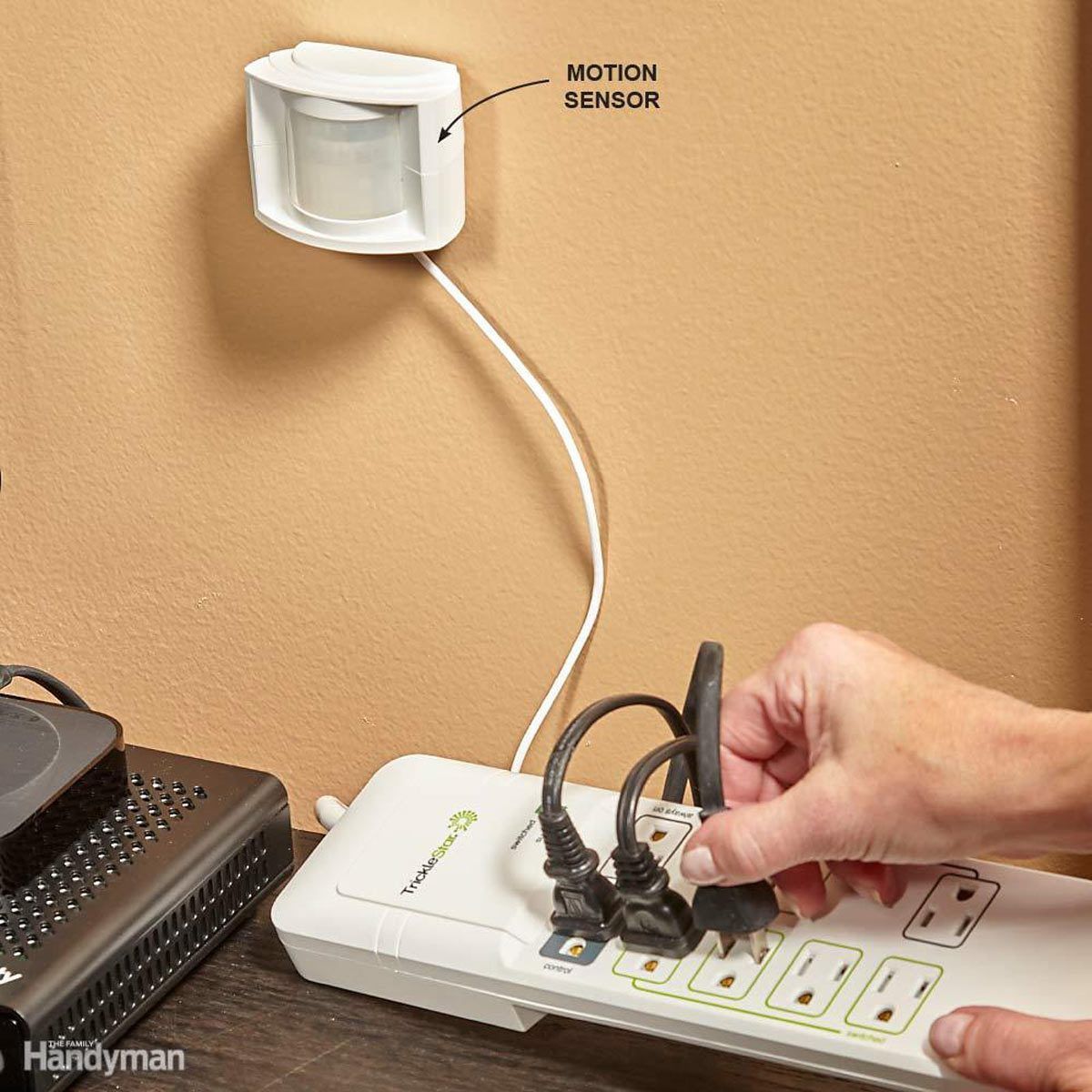
TrickleStar Motion-Sensor Power Strip Trims Your Electric Bill

TrickleStar Motion-Sensor Power Strip Trims Your Electric Bill

Your cable/satellite box, Blu-ray player, TV sound system and streaming devices all draw power 24/7, even when the TV is off. It’s the same with your computer and its attached printer, scanner and accessory speakers. The TrickleStar Motion Sensor PowerStrip shuts off those power-sucking devices when they’re not being used. It takes its cues from whatever device (TV or computer) is plugged into the ‘control’ receptacle, along with input from the attached motion sensor. Here’s how it works. When you turn on the TV or computer, the power strip immediately powers up three switched receptacles for your accessories/peripherals. When you turn the TV or computer off, it shuts off the switched receptacles. And, if the TV or computer is on, but you leave the room for 30 minutes or longer, the motion sensor shuts off the switched receptacles. Come back and it powers them back up. The unit has one control receptacle, three switched receptacles and three always-on receptacles, along with built-in surge protection (1080 joules) for all outlets.


Answer or Open the Door From Any Phone with Viking Electronics

You get packages and you don’t want them sitting on your doorstep. Or, you need to open the door for housecleaners and contractors when you’re not at home. Forget the spare keys. Forget the dead bolt codes. These two products from Viking Electronics allow you to answer the door, speak with the visitor from any phone anywhere, and even open the door remotely. Install the C-250 controller between the landline demarcation box and your home phones or between your router and your VoIP box. Connect the controller to the Viking E-40-BN-EWP door box. Then program the controller to dial up to five family cell phone numbers. When a visitor presses the button, the controller rings your home phone with a double ring so you know it’s a visitor at the door and not a regular phone call. Answer the door and open the door from any home phone.

When you leave the house, simply program the controller to forward the door box calls to your cell phone. If you don’t have land or VoIP service, leave the controller in call forwarding mode and it’ll send all door box calls to a portable phone. The forwarded call will show up on your portable phone’s screen as your front door. Answer the call and enter a code to activate your door strike or Wi-Fi?enabled dead bolt. The Viking units are a bit pricey, but they’re commercial-grade products, so they’ll last much longer than cheaper consumer-grade versions.

Control Your Tools With Your Phone

Control Your Tools With Your Phone

Milwaukee’s ONE-KEY line of tools is a new generation of ‘connected tools’ that can be programmed to suit the job. Let’s say you’re installing metal vent using self-drilling screws. Just use the Milwaukee app to find the setting for the gauge and type of metal and the size of the screw. Then program the drill or impact driver using your phone’s Bluetooth. When you squeeze the trigger, the tool will start at a low rpm to prevent the tip from walking across the metal. The electronic torque monitoring senses when the screw bites in and boosts the speed to drive the screw in. Then it’ll slow down and cut off power when the screw reaches the programmed torque—all with a single trigger pull.

The ONE-KEY system also has an inventory management and tool reporting feature for pros to keep track of tools and monitor their workers’ productivity.


Super-Fast Wi-Fi Router

Super-Fast Wi-Fi Router

If you’re into wireless home video streaming or gaming, or home automation, you need a Wi-Fi router with the best range and fastest speed. Most Wi-Fi routers have a hard time delivering all the available bandwidth when multiple users are online. That’s because they deliver data to only one device at a time. So everyone’s speed is based on the speed of the oldest and slowest device in use at the time. The Netgear Nighthawk X6 Tri-Band Wireless Router solves that problem by adding an extra traffic lane. When the router sees a slowpoke device come online, it diverts the faster devices to the new traffic lane, so everybody gets the fastest possible speed. The Nighthawk router also uses six antennas and Beamforming software to locate and direct the signal toward each device. Together with a fast dual-core processor and a powerful amplifier, this Wi-Fi router gets you the strongest signal at almost every spot in your house.

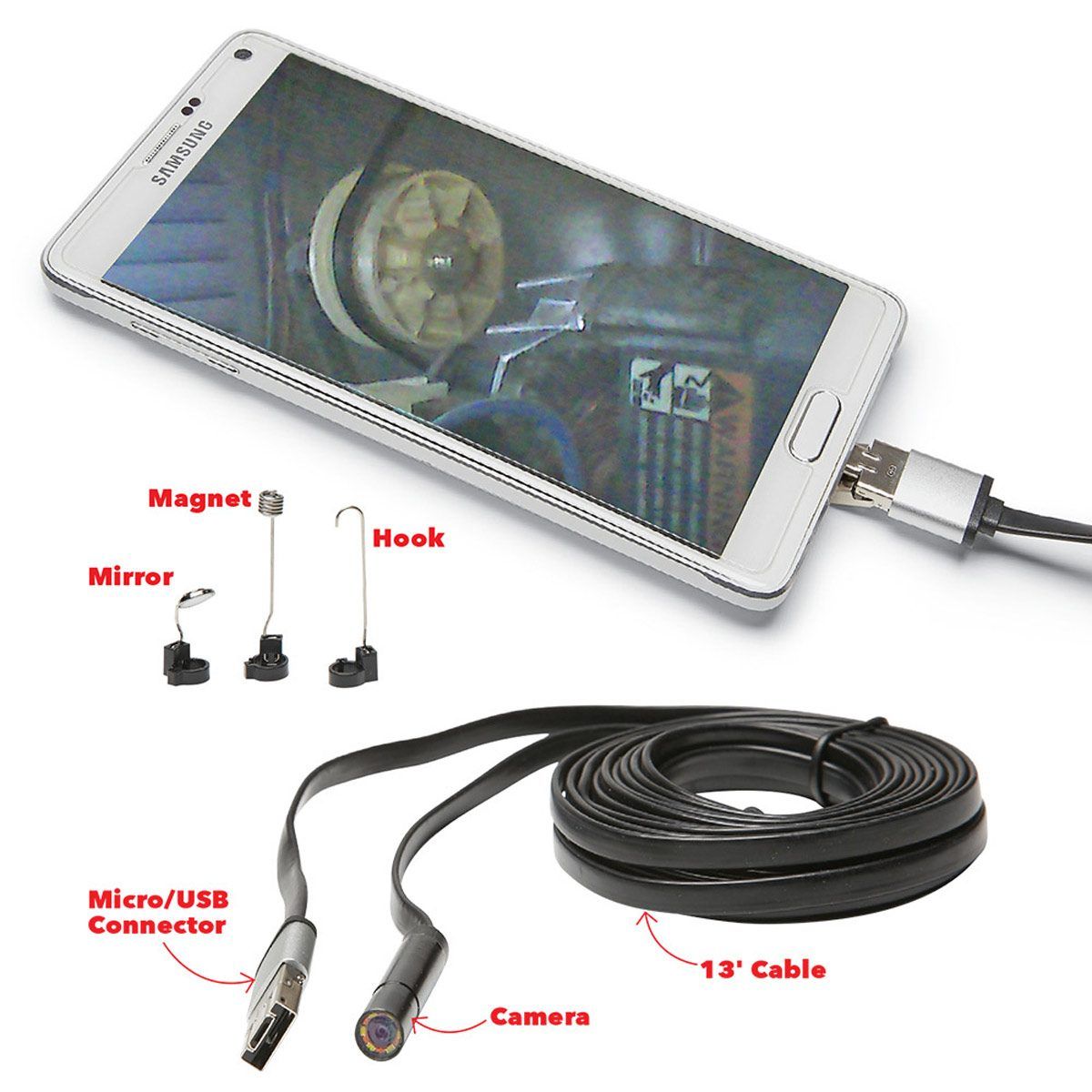
Smartphone Inspection Camera

This Distianert Endoscope Inspec­tion Camera has a 13-ft. cable that lets you snake behind walls and peek inside appliances—even grab wires or retrieve nuts and bolts from tight quarters. Just download the app and plug the 2.0-megapixel inspection camera into any on-the-go (OTG) compatible Android smartphone or tablet or into a USB port on a Mac laptop. Move the camera into position and adjust the light intensity switch to get the proper illumination. Watch your screen to get the camera into the right spot. Then snap a still shot or shoot video. For long runs, tape the cable to a stick to feed and aim the camera head. The unit comes with a cloth storage bag and three attachments: a 90-degree mirror, a hook and a magnetic tip. The video quality is good enough to get the job done; just don’t expect 1080 resolution for this price. You can find the camera for about $23 at  amazon.com.


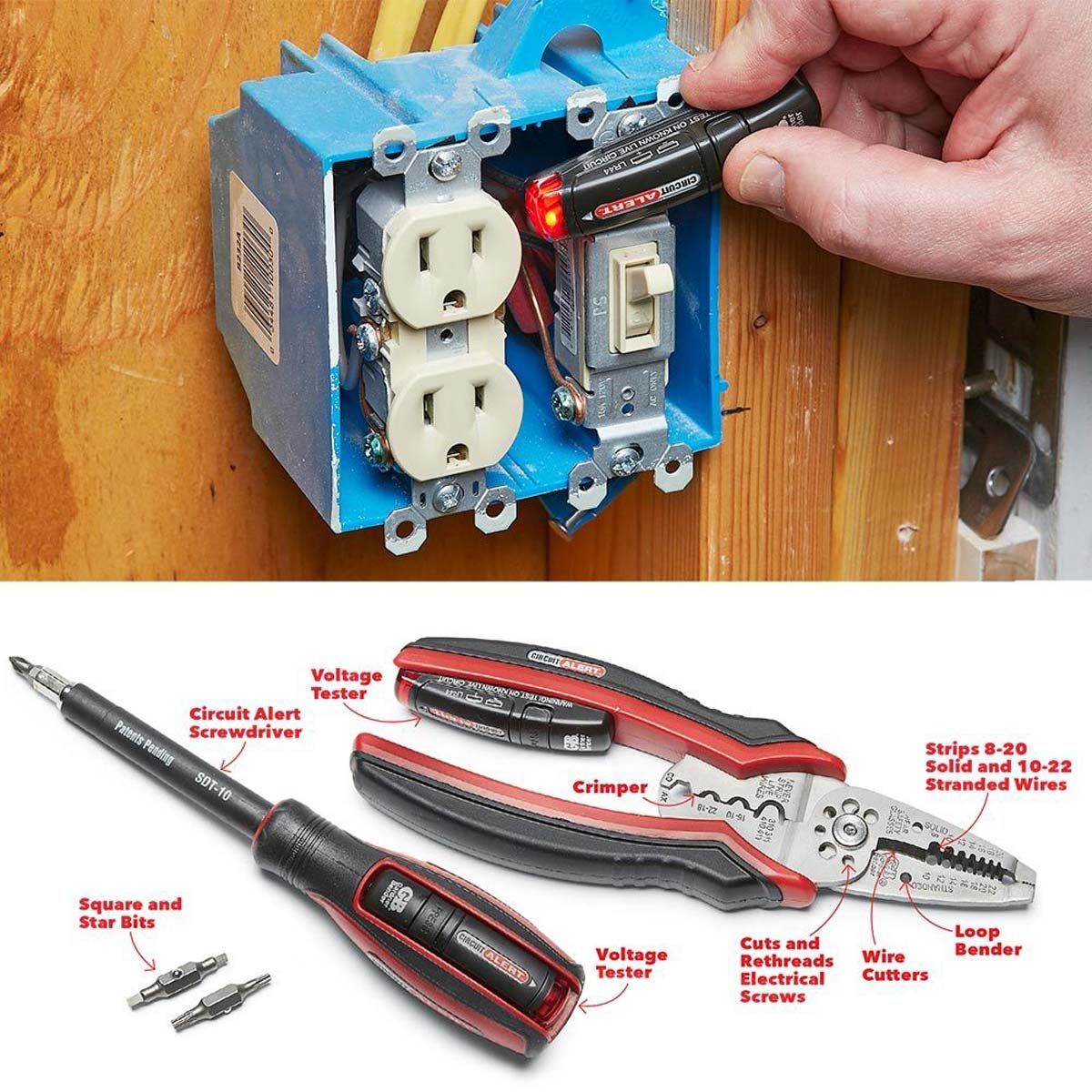
Electrical Tools with Onboard Voltage Tester

Electrical Tools with Onboard Voltage Tester

Non-contact voltage testers are great for making sure the power is off before you start an electrical project. But the testers are easy to lose track of and misplace—which pocket is it in? Tool manufacturer Gardner Bender solves the problem of lost testers by incorporating a tester right into the handles of its wire stripper and screwdriver—tools you’re bound to have on hand whenever you’re doing electrical work. Simply press the button and move the tool handle near the wires to test before touching. Or, slide the tester off the tool handle to use it as a freestanding unit.

Find the  GST-70M Circuit Alert Voltage sensing stripper and SDT-10 screwdriver  at home centers and online.

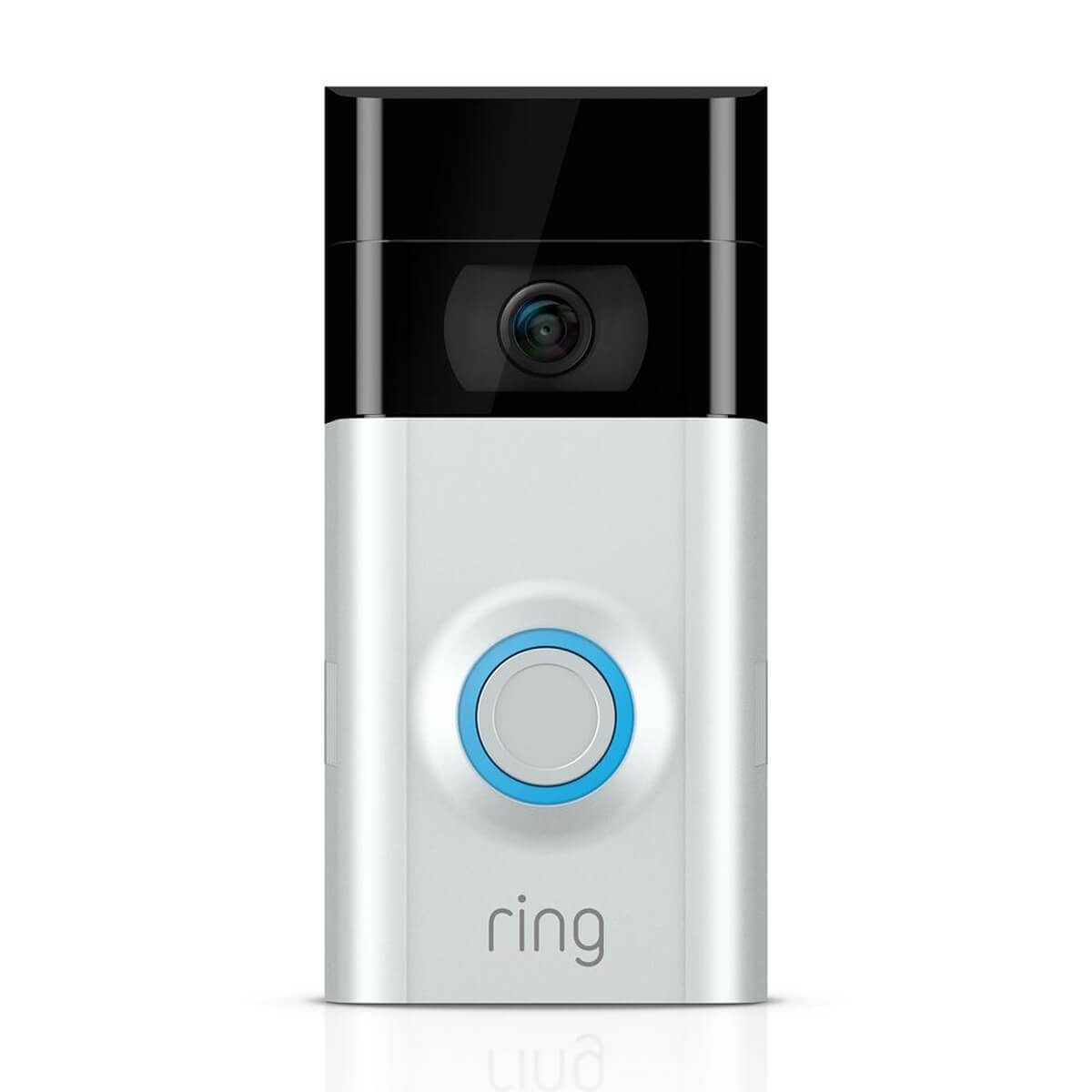
Ring Doorbell

Ring Doorbell

It was only a matter of time before someone brought the traditional doorbell into the 21 st  century. With the  Ring Video Doorbell  you can enhance your home security and just make your life easier in general. The Ring Doorbell connects to your home Wi-Fi network and takes HD video of the area directly outside of your door. You can then access the camera’s video feed through an app on your phone from anywhere in the world, whether you are in your backyard or in another country. The doorbell even has a two-way audio channel so you can have a full conversation with whoever is at your door. The Ring Doorbell can be set to send you a notification every time someone walks up to your house so you can check out any unwanted or surprise guests. In terms of design, the Ring Doorbell is not much bigger than other doorbells and comes in a variety of colors so that it works with any paint scheme. The Ring Video Doorbell is sold online and in stores starting at $179.00, with an upgraded “Pro” version available for $249.00.

Bluetooth Padlock

We had a problem with strangers disposing of their garbage in our dumpster here at work. On a few mornings, it was completely full of construction debris! We could either start locking the dumpster at night or keep paying the $80 early pickup fees. I bought a  Master Lock Bluetooth padlock  because I didn’t want to carry any more keys in my pockets or try to remember a combination. The app on my phone lets me open the lock remotely (within Bluetooth range). I can also use the app to set combinations that my coworkers can use. If I give out individual codes, I can track who opened it and when—not that  I don’t trust my coworkers. I can give out single-use codes as well. I bought the  heavy-duty outdoor model No. 4401DLH online. — Josh Risberg, Lead Carpenter

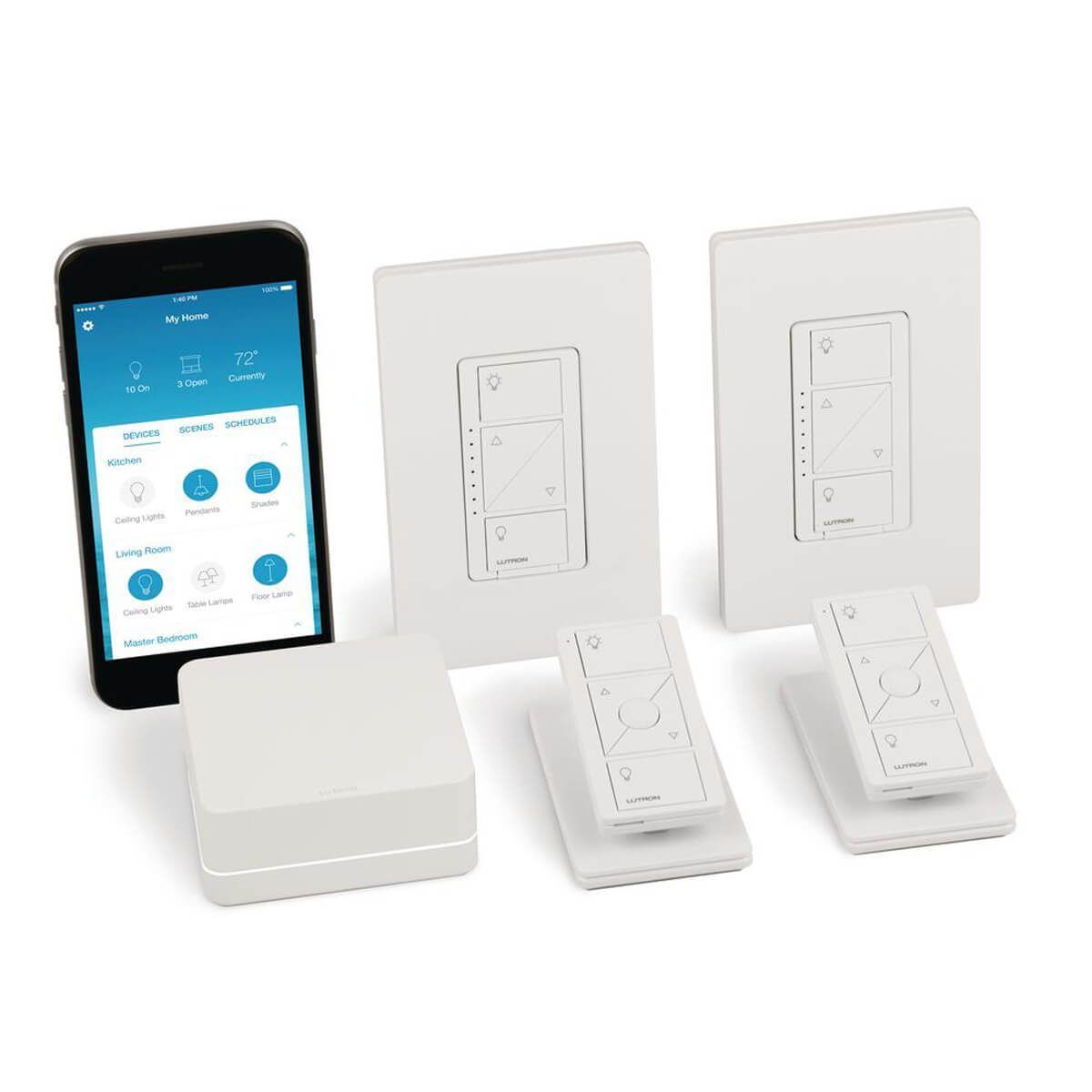
Lutron Caseta Wireless Lighting Starter Kit

Lutron Caseta Wireless Lighting Starter Kit

Get your home on the path to automation with the  Lutron Caseta Wireless Lighting Starter Kit. Photo: Courtesy of  Home Depot


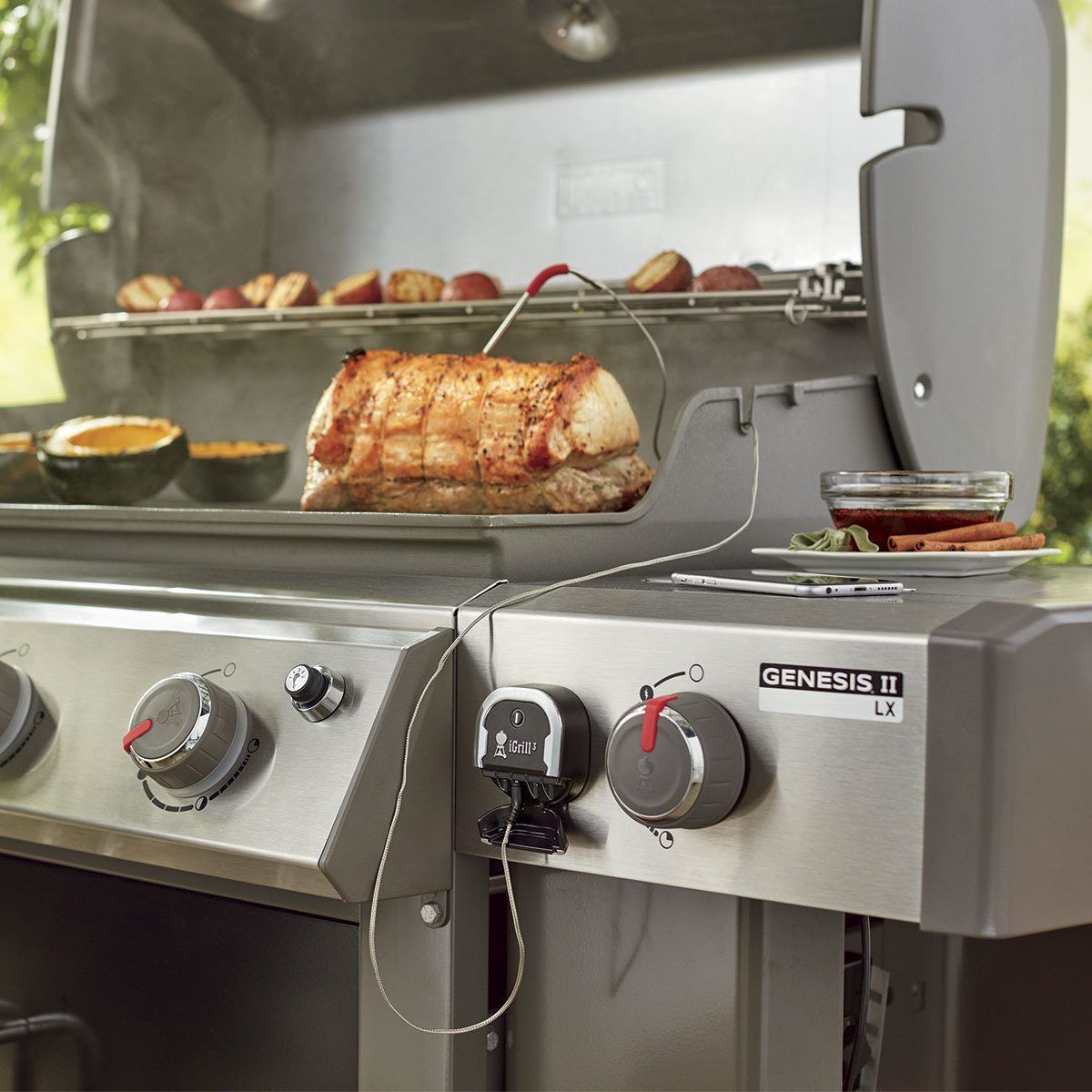
Weber iGrill 3

Weber iGrill 3

The  Weber iGrill 3 , which is compatible with the brand’s Genesis II and Genesis II LX gas grills, allows you to closely monitor your food so you get perfect results every time. The Bluetooth-enabled device supports up to four probes and sends information such as food temperature, cook time and even propane tank levels to your smartphone or tablet via the Weber iGrill app.

Smartphone with Thermal Imaging

The  CAT S60 Android smartphone  ( catphones.com ) is far more rugged than a consumer-grade phone. It’s shatterproof up to a 6-ft. drop onto concrete, dustproof, shockproof and waterproof down to 5 meters for up to an hour. This phone works in temps from minus 13 to 131 degrees F, and the touch screen has glove-on and wet-finger tracking ability, so it operates in any weather. The  CAT S60 has a 13-megapixel camera  as well as an infrared (FLIR) camera. Use the FLIR camera throughout your house to measure surface temperatures and find air leaks and temperature differences behind walls, electrical problems and even beehives. The S60 works with AT&T and T-Mobile and affiliated GSM networks using a nano sim card. It comes with 32GB internal memory and accepts a microSD card for extended storage up to 128GB.


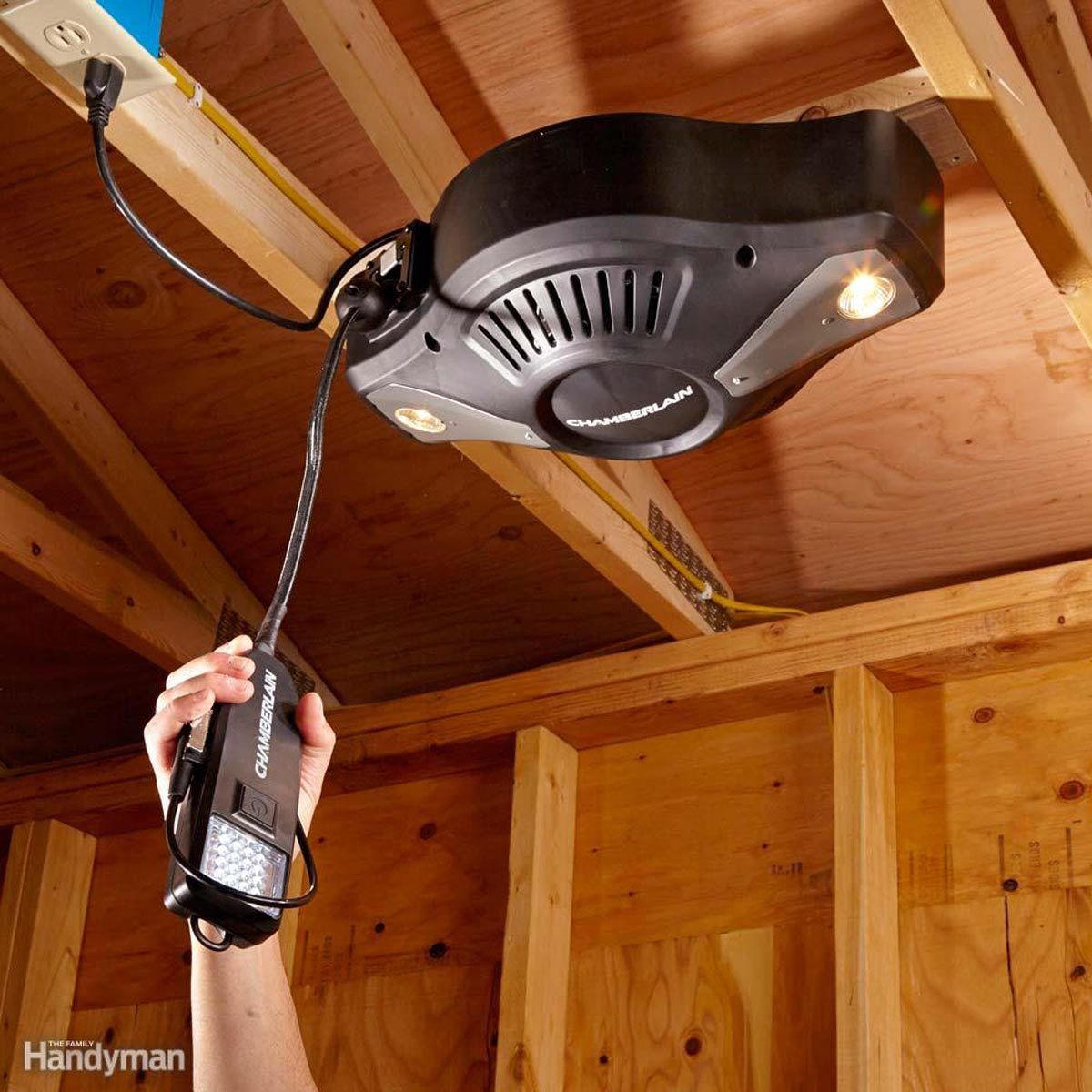
Pull Power, Light and Compressed Air From Your Ceiling

Pull Power, Light and Compressed Air From Your Ceiling

When auto mechanics need a trouble light, receptacle or compressed air, they just reach for the ceiling and pull down whatever hose or cord they need. Now you can too. The Chamberlain Garage Power Station mounts on your ceiling and has a 25-ft. multifunction pull-down/retractable ‘hose’ to provide light, power and compressed air. The base unit plugs into a nearby receptacle and houses an air compressor capable of putting out 100 psi (great for bike tires). Pop two MR16 halogen bulbs into the ceiling unit to get 100 watts of area lighting in addition to the LED work light on the retractable hose. 

By Andi Dyer April 2, 2026
One of the most common questions sellers ask before listing is whether they can start high and reduce later if needed. It sounds like a reasonable strategy — test the market, see what happens, and adjust from there. The reality is a little more complicated, and understanding why can save you time, stress, and money. The short answer: yes, you can reduce the price later. But price reductions come with costs that aren't always obvious upfront, and in most cases a well-chosen starting price outperforms an optimistic one followed by a correction. What's Really Going On When You Reduce a Price A price reduction isn't a neutral event. It sends a signal to every buyer and agent watching your listing — and in today's market, a lot of people are watching. When a price drops, buyers notice. Some of them saw your home when it first listed and passed on it. The reduction might bring them back, but it also raises a question in their minds: why did it sit? Is there something wrong with it? Is the seller desperate? These aren't always fair questions, but they're the ones buyers ask. The other dynamic worth understanding is that a price reduction triggers new alerts for buyers whose search parameters now include your home. That's genuinely useful — it can bring in a fresh wave of interest. But that wave is typically smaller than the one you got at launch, because the most motivated buyers in any price range are usually the ones who were watching from the beginning. What This Looks Like in Bellingham and Whatcom County In the Bellingham market, days on market are visible to buyers and their agents. A home that has been listed for five or six weeks before reducing carries that history into every subsequent showing. Buyers will ask about it. Their agents will factor it into any offer strategy. In practice, this often means that a home which reduces its price by $25,000 after six weeks on market doesn't necessarily attract offers at the new price. Buyers who have been watching may wait to see if another reduction follows. Others may use the listing history as justification for offering below the reduced price.  In smaller Whatcom County communities where buyer pools are thinner — Lynden, Everson, rural areas outside Bellingham — this dynamic is even more pronounced. There are fewer buyers to re-engage with a price reduction, which means the reset has less impact than it would in a more active market. When a Price Reduction Makes Sense Price reductions aren't always a sign that something went wrong. Markets shift. A home listed in a period of strong activity may find itself sitting if rates rise or inventory increases mid-listing. Adjusting to reflect a changed market is a legitimate and sometimes necessary response. Reductions also make sense when a seller has received consistent feedback pointing to a specific number. If five buyers have toured the home and their agents have all communicated that the price feels $15,000 to $20,000 high, that's a data point worth acting on rather than dismissing. The key is to act decisively when a reduction is warranted rather than making a series of small adjustments. A single meaningful reduction — one that genuinely repositions the home in the market — tends to perform better than two or three token reductions that signal hesitation without creating real momentum. What I Advise Clients When sellers ask me whether they can price high and reduce later, I usually answer with a question of my own: what do you think that strategy costs if it doesn't work? We walk through the math together. Six weeks on market at the carrying cost of mortgage, taxes, insurance, and utilities. The negotiating leverage lost because buyers know the home has been sitting. The final sale price that often ends up below where an accurate launch price would have landed. And the stress of a prolonged process that most sellers didn't anticipate when they chose the higher number. In most cases, that conversation lands differently than a general warning about overpricing. The numbers make it concrete. I also remind sellers that pricing accurately from the start doesn't mean leaving money on the table. It means putting yourself in the strongest possible position to attract serious buyers, generate early interest, and negotiate from confidence rather than from a need to move a stale listing. Why Planning and Timing Matter Sellers who take the time to understand their market before listing — reviewing recent comparable sales, assessing their home's condition honestly, and setting a price grounded in data — rarely need to reduce. They launch with confidence and move through the process on their terms. Sellers who skip that step and rely on a test-and-adjust approach often find themselves reacting to the market rather than leading it. That reactive posture tends to produce worse outcomes, even when the eventual sale price ends up in roughly the same range. Timing also plays a role. A well-priced home listed in spring, when buyer activity in Whatcom County typically peaks, has the best chance of generating the kind of early interest that makes a price reduction unnecessary. The same home listed in a slower season may need more patience — but accurate pricing still outperforms optimistic pricing in any season. The Bottom Line You can reduce your price later. But every reduction carries a cost — in time, in perception, and often in the final number you walk away with. The sellers who do best in Bellingham's current market are the ones who price accurately from the start, generate strong early interest, and move through the process without needing to course-correct. That starts with a clear, honest understanding of what your home is worth in today's market — not last year's, and not the number that would be most convenient for your next move. If you're trying to balance patience with smart action, start here: 👉 Start with a low-pressure home value and seller planning tool: https://www.andidyerrealestate.com/seller/valuation/ About the Author Andi Dyer is a Bellingham-based real estate broker with REMAX Whatcom County, specializing in helping longtime homeowners and sellers make confident, well-informed decisions. With a calm, data-driven approach and strong negotiation expertise, Andi focuses on protecting equity, reducing stress, and guiding sellers through the process with clarity and care. 📍 Serving Bellingham and all of Whatcom County 📞 Call or text: 360 • 734 • 6479 📧 Email: andi [at] andidyer [dot] com Zillow · Realtor.com · Homes.com · Google Business · Facebook · Instagram

By Andi Dyer April 1, 2026
If you're asking whether aging in place is realistic in Bellingham, the answer is yes — and for many homeowners in Whatcom County, it's the right choice. With the right home modifications, local support services, and a little planning, staying in the home you love is not only possible but genuinely sustainable. This guide covers four practical tips for aging in place in Bellingham, including local resources specific to Whatcom County that many residents don't know about. What Does Aging in Place Mean? Aging in place means continuing to live independently in your own home as you get older, rather than moving to an assisted living facility or care community. It typically involves making targeted modifications to your home and connecting with support services that help maintain your safety, comfort, and quality of life. In Bellingham and Whatcom County, aging in place is supported by a strong network of local programs, walkable neighborhoods, and a tight-knit community that makes independent living more achievable than in many other regions. Tip 1: Start With Safety Modifications — These Make the Biggest Difference The most impactful aging in place changes are often the least expensive. Safety modifications reduce fall risk — the leading cause of injury among older adults — and make daily navigation significantly easier. Start with these high-priority changes: Bathrooms — Install grab bars near the toilet and inside the shower or tub. Add a walk-in shower if budget allows, along with anti-slip flooring in the tub or shower pan. Replace standard toilets with comfort-height models, which are several inches taller and meaningfully easier to sit down on and rise from. Lighting — Brighten dark hallways with higher-lumen bulbs. Place nightlights in outlets along every main traffic path, particularly between the bedroom and bathroom. Flooring — Remove loose rugs that can shift underfoot. Replace long-pile carpet with tight, low-pile or Berber styles that are easier to navigate with walkers or mobility aids. Hardware — Swap round door knobs for lever-style handles throughout the home. These require no grip strength and are far easier to operate for anyone with arthritis or limited hand mobility. If you need referrals to local contractors or handypersons in Whatcom County who specialize in these modifications, I maintain an updated list of trusted local tradespeople and am happy to connect you. The Whatcom Council on Aging (WCOA) is also an excellent resource for vetted local referrals and programs that help seniors live safely at home. Tip 2: Use Bellingham's Local Support Services — Most Residents Don't Know What's Available Whatcom County has an unusually strong network of services specifically designed to help older adults live independently. These aren't last-resort options — they're practical tools that make aging in place more sustainable. Whatcom Council on Aging (WCOA) — Provides transportation, home care coordination, housing guidance, and wellness programs for older adults throughout Whatcom County. Northwest Regional Council (NWRC) — Connects residents with vetted caregivers, home services, and Area Agency on Aging resources. A strong starting point if you're not sure what kind of help you need. Meals on Wheels of Whatcom County — Delivers nutritious meals to homebound residents and provides regular wellness contact — often the only daily check-in some seniors receive. Bellingham at Home — A volunteer-based, non-clinical in-home care program available to Whatcom County residents. Volunteers help with everyday tasks that make independent living easier, at no cost. Using these services isn't a sign of decline. It's smart planning — the same kind of planning that keeps people in their homes longer. I've seen firsthand how connecting with the right local resources early makes a genuine difference in how long and how comfortably longtime homeowners are able to stay in the homes they love. Tip 3: Stay Socially Connected — It's as Important as Physical Safety Social isolation is one of the most underestimated risks for older adults aging in place. Research consistently links social engagement with better cognitive health, lower rates of depression, and longer independent living. In Bellingham, the most accessible option is the Bellingham Senior Activity Center , which is open to anyone 50 and older for just $60 per year. Membership includes access to classes, events, wellness programs, social mixers, walking groups, and drop-in activities at Boulevard Park and elsewhere. If you're in another part of Whatcom County, the Whatcom County Senior Centers directory lists activity hubs in communities throughout the region, including Lynden, Ferndale, and Blaine. Staying connected doesn't require a big commitment. Even one regular activity — a weekly card game, a walking group, a class — creates the kind of routine social contact that supports long-term wellbeing. Tip 4: Build Your Support Network Before You Need It Aging in place works best when it's planned rather than reactive. Building a network of trusted people and services before a specific need arises gives you options and reduces the stress of figuring things out under pressure. Your network might include family members or neighbors who can check in regularly, a handyperson who knows your home and can address maintenance issues quickly, and one or two of the local services listed above that match your current or anticipated needs. The Northwest Regional Council is a good first call if you're not sure where to start. Their aging specialists can assess your situation and connect you with the specific combination of services that makes the most sense for your household. The goal isn't to ask for help with everything. It's to have help available for the things that matter — so that the rest of your daily life stays exactly as you want it. Frequently Asked Questions About Aging in Place in Bellingham How much does it cost to modify a home for aging in place in Whatcom County? Basic safety modifications — grab bars, lever handles, lighting upgrades, and rug removal — typically cost a few hundred to a few thousand dollars depending on scope. More significant changes like walk-in showers or stair lifts range from $3,000 to $15,000 or more. The Whatcom Council on Aging can connect residents with programs that may offset some of these costs. What local resources help seniors stay in their homes in Bellingham? The Whatcom Council on Aging, Northwest Regional Council, Meals on Wheels, and Bellingham at Home are the four most commonly used local resources. Each serves a different aspect of independent living, from nutrition and transportation to volunteer in-home care. Is aging in place better than moving to assisted living? For many people, yes — especially those with strong community ties, family nearby, and a home that can be reasonably modified. The right answer depends on individual health needs, home layout, and personal preference. A home evaluation by a certified aging in place specialist (CAPS) can help clarify what's realistic for a specific situation. The Bottom Line Aging in place in Bellingham is realistic, supported, and — for many homeowners — genuinely the best choice. It takes some planning, some targeted home modifications, and a willingness to connect with the excellent local resources Whatcom County has to offer. The four things that make the biggest difference: address safety first, use local support services, stay socially connected, and build your network before you need it. If you'd like local contractor referrals, help evaluating your home's aging-in-place potential, or simply want to talk through what your options look like — I'm happy to connect. This is exactly the kind of conversation I have with longtime Whatcom County homeowners, and there's no pressure and no agenda. Just good information. If you're trying to balance patience with smart action, start here: 👉 Start with a low-pressure home value and seller planning tool: https://www.andidyerrealestate.com/seller/valuation/ About the Author Andi Dyer is a Bellingham-based real estate broker with REMAX Whatcom County, specializing in helping longtime homeowners and sellers make confident, well-informed decisions. With a calm, data-driven approach and strong negotiation expertise, Andi focuses on protecting equity, reducing stress, and guiding sellers through the process with clarity and care. 📍 Serving Bellingham and all of Whatcom County  📞 Call or text: 360 • 734 • 6479 📧 Email: andi [at] andidyer [dot] com Zillow · Realtor.com · Homes.com · Google Business · Facebook · Instagram

By Andi Dyer April 1, 2026
If you're planning a move and trying to work backward from a closing date, one of the first questions you need answered is how long the process actually takes. The honest answer is that it depends — but in Bellingham and Whatcom County right now, there are some reliable patterns worth understanding before you start planning. The short answer: a well-priced, well-prepared home in Bellingham is typically going under contract somewhere between two and six weeks after listing. Add another three to five weeks for closing after an accepted offer, and you're looking at a total timeline of roughly six to eleven weeks from list date to keys changing hands — assuming things go smoothly. What's Really Going On in the Current Market A few years ago, homes in Bellingham were routinely going under contract in days — sometimes hours. Multiple offers, waived inspections, and above-asking prices compressed the timeline dramatically. That environment is largely behind us. Today's market moves at a more deliberate pace. Buyers are taking time to compare options, run their numbers carefully, and in many cases negotiate rather than compete. That doesn't mean homes aren't selling — they are — but the process has returned to something closer to a normal rhythm. The current median days on market in Whatcom County varies depending on price point, condition, and neighborhood, but most well-positioned homes are finding buyers within the first month. Homes that are overpriced or underprepared are sitting considerably longer — sometimes two to three months or more before either selling or being withdrawn. What This Looks Like in Bellingham and Whatcom County In Bellingham's more active neighborhoods — areas like Barkley, Cordata, Fairhaven, and the Lettered Streets — well-priced homes tend to move faster simply because buyer demand is more consistent there. Proximity to amenities, schools, and commute routes concentrates interest. In outlying areas of Whatcom County — Sudden Valley, rural Ferndale, properties with acreage outside city limits — the buyer pool is naturally smaller, and timelines tend to be longer. That's not a reflection of the home's quality; it's just a function of how many buyers are actively looking in those areas at any given time. Price point also matters. Homes in the $500,000–$650,000 range in Bellingham currently tend to see the most consistent buyer activity. Move-in ready homes in the $650,000–$800,000 range can move quickly when priced accurately, but they're more sensitive to condition and presentation. Above $800,000, the buyer pool narrows and timelines generally extend. When This Works Differently Seasonal patterns affect timelines in Whatcom County more than some sellers expect. Spring — roughly late February through June — typically brings the highest concentration of active buyers. Homes listed during this window often sell faster than the same home listed in November or January. That said, fall and winter listings aren't necessarily slow. Buyers who are looking in those months tend to be more motivated — they often have a specific reason to move rather than casually browsing. A well-priced home in October can sometimes find a serious buyer faster than an overpriced home listed in April. New construction also affects resale timelines in certain parts of Whatcom County. In areas where builders are active — parts of Ferndale, Lynden, and northern Bellingham — resale homes sometimes compete directly with new inventory, which can extend the time it takes to find a buyer. What I Advise Clients When a seller asks me how long it will take, I try to give them a realistic range rather than an optimistic number. Planning around a best-case timeline and then experiencing a longer process is stressful and can create problems — especially if you're trying to coordinate a purchase on the other end. I typically advise sellers to plan for a six to ten week process from the time they're ready to list, and to build some buffer into any downstream plans. If you're buying another home contingent on your sale, your lender and your agent on the buying side both need to understand that timeline. I also remind sellers that the first two weeks of a listing are the most valuable. If you're not getting showings in that window, it's usually a pricing or presentation issue — and the sooner you address it, the less time and leverage you lose. Why Planning and Timing Matter One of the most common mistakes sellers make is underestimating how long preparation takes before the home even hits the market. Getting the home ready, completing any priority repairs, arranging professional photography, and reviewing pricing data all take time. Sellers who rush that process often list before they're truly ready — and pay for it in days on market. A seller who gives themselves three to four weeks of preparation time before listing typically has a smoother, faster experience than one who decides to list and goes live within a week. The preparation time isn't wasted — it's what makes the active listing period shorter and more effective. The Bottom Line How long it takes to sell a home in Bellingham right now depends on price, preparation, location, and timing — but for a well-positioned home, the process from listing to closing typically runs six to eleven weeks. Homes that are overpriced or need significant attention take longer, sometimes considerably so. The sellers who move through the process most efficiently are the ones who go in with realistic expectations, prepare thoughtfully before listing, and price accurately from the start. That combination doesn't guarantee a fast sale, but it gives you the best possible chance of one. If you're starting to think through your timeline and want to understand where your home stands in today's market, a good first step is a realistic valuation. If you're trying to balance patience with smart action, start here: 👉 Start with a low-pressure home value and seller planning tool: https://www.andidyerrealestate.com/seller/valuation/  About the Author Andi Dyer is a Bellingham-based real estate broker with REMAX Whatcom County, specializing in helping longtime homeowners and sellers make confident, well-informed decisions. With a calm, data-driven approach and strong negotiation expertise, Andi focuses on protecting equity, reducing stress, and guiding sellers through the process with clarity and care. 📍 Serving Bellingham and all of Whatcom County 📞 Call or text: 360 • 734 • 6479 📧 Email: andi [at] andidyer [dot] com Zillow · Realtor.com · Homes.com · Google Business · Facebook · Instagram

By Andi Dyer March 31, 2026
Most sellers spend weeks thinking about price and very little time thinking about what a buyer actually experiences the moment they walk through the front door. That's understandable — price feels quantifiable and controllable. But the first impression a buyer forms inside your home happens in seconds, and it shapes everything that follows. The good news is that what buyers notice first isn't usually expensive to address. It's mostly about clarity, cleanliness, and how a space feels — not how much was spent on it. What's Really Going On in a Buyer's First Minutes Buyers make emotional decisions and justify them rationally afterward. That's not a criticism — it's just how people work. When a buyer walks into a home, they're not consciously running through a checklist. They're forming a feeling. Does this feel like home? Can I picture my life here? Does something feel off? That feeling gets formed fast — often within the first thirty to sixty seconds. And once it's formed, it's surprisingly hard to change. A buyer who walks in and immediately feels at ease will spend the rest of the showing looking for reasons to love the home. A buyer who walks in and feels vaguely uncomfortable will spend the rest of the showing looking for problems. Your job as a seller is to make that first thirty seconds work in your favor. What This Looks Like in Bellingham and Whatcom County I n the Pacific Northwest, buyers tend to be attuned to a specific set of sensory cues that reflect the region's character. Light matters enormously here. Bellingham doesn't always have abundant sunshine, so when a home feels bright and open — curtains pulled back, windows clean, dark corners addressed with lamps — it registers immediately and positively. Smell is the other major factor that local sellers sometimes underestimate. Homes in the Pacific Northwest can carry moisture, pet odors, or the subtle mustiness of older construction. Buyers notice this the instant they step inside, often before they've consciously registered anything else. A home that smells clean and neutral — not heavily perfumed, just fresh — starts the showing on solid footing. Beyond light and smell, buyers in Whatcom County are practical. They notice the condition of floors, the state of trim and paint, and whether the entryway feels welcoming or cluttered. These aren't luxury considerations — they're baseline signals about how well a home has been maintained. When This Works Differently Higher-end buyers in the $650,000–$800,000 range in Bellingham tend to have sharper eyes for finish quality. They'll notice if hardware is dated, if paint is scuffed, or if fixtures feel mismatched. For homes in that range, presentation needs to be a step above basic cleanliness — it needs to feel intentional and cohesive. At lower price points, buyers are often more forgiving of cosmetic imperfections, but they're still forming that same emotional first impression. A well-organized, clean, light-filled home at any price point outperforms a cluttered or dark one, almost without exception. Vacant homes present their own challenge. Without furniture and personal items, a home can feel cold and echo-y in a way that makes it harder for buyers to connect emotionally. In those cases, even minimal staging — a few pieces of furniture, some basic decor — can make a meaningful difference in how the space is perceived. What I Advise Clients When I prepare a seller for listing, I ask them to walk through their home as if they've never seen it before. Come in through the front door. Stand in the entryway for a moment. What do you see? What do you smell? Where does your eye go first? Most sellers are surprised by what they notice when they make that shift in perspective. A pile of shoes by the door that felt invisible for years. A smell they'd stopped registering. A dark hallway that sets a tone they hadn't considered. The fixes are usually simple. Declutter the entry. Clean the windows. Address any odors honestly and neutrally. Make sure every room has adequate light. Remove enough furniture that the space feels open rather than full. None of this requires a renovation. It requires attention. Why Planning and Timing Matter Sellers who give themselves two to three weeks before listing to walk through their home with fresh eyes — and address what they find — consistently report better early showing feedback than sellers who list quickly without that preparation. Early showing feedback matters more than most sellers realize. If the first five buyers through the door all mention the same thing, that's information you can act on. But if those five buyers came and went in the first week of your listing — your highest-traffic window — the opportunity to make a strong first impression on the most motivated buyers has already passed. Preparing before you list, rather than adjusting after feedback comes in, is almost always the better approach. The Bottom Line What buyers notice first when they walk into a home isn't usually the kitchen renovation or the updated bathrooms — those matter, but they come later in the showing. What buyers notice first is light, smell, and the overall feeling of the space. They decide in the first minute whether they're looking for reasons to love the home or reasons to leave. The sellers who understand this — and who take the time to address it before listing — give themselves a meaningful advantage in a market where buyers have options and aren't in a hurry. A thoughtful preparation process starts with understanding where your home stands today. If you're trying to balance patience with smart action, start here: 👉 Start with a low-pressure home value and seller planning tool: https://www.andidyerrealestate.com/seller/valuation/ About the Author Andi Dyer is a Bellingham-based real estate broker with REMAX Whatcom County, specializing in helping longtime homeowners and sellers make confident, well-informed decisions. With a calm, data-driven approach and strong negotiation expertise, Andi focuses on protecting equity, reducing stress, and guiding sellers through the process with clarity and care. 📍 Serving Bellingham and all of Whatcom County 📞 Call or text: 360 • 734 • 6479 📧 Email: andi [at] andidyer [dot] com Zillow · Realtor.com · Homes.com · Google Business · Facebook · Instagram
By Andi Dyer March 29, 2026
If you're planning a move and trying to work backward from a closing date, one of the first questions you need answered is how long the process actually takes. The honest answer is that it depends — but in Bellingham and Whatcom County right now, there are some reliable patterns worth understanding before you start planning.  The short answer: a well-priced, well-prepared home in Bellingham is typically going under contract somewhere between two and six weeks after listing. Add another three to five weeks for closing after an accepted offer, and you're looking at a total timeline of roughly six to eleven weeks from list date to keys changing hands — assuming things go smoothly. What's Really Going On in the Current Market A few years ago, homes in Bellingham were routinely going under contract in days — sometimes hours. Multiple offers, waived inspections, and above-asking prices compressed the timeline dramatically. That environment is largely behind us. Today's market moves at a more deliberate pace. Buyers are taking time to compare options, run their numbers carefully, and in many cases negotiate rather than compete. That doesn't mean homes aren't selling — they are — but the process has returned to something closer to a normal rhythm. The current median days on market in Whatcom County varies depending on price point, condition, and neighborhood, but most well-positioned homes are finding buyers within the first month. Homes that are overpriced or underprepared are sitting considerably longer — sometimes two to three months or more before either selling or being withdrawn. What This Looks Like in Bellingham and Whatcom County In Bellingham's more active neighborhoods — areas like Barkley, Cordata, Fairhaven, and the Lettered Streets — well-priced homes tend to move faster simply because buyer demand is more consistent there. Proximity to amenities, schools, and commute routes concentrates interest. In outlying areas of Whatcom County — Sudden Valley, rural Ferndale, properties with acreage outside city limits — the buyer pool is naturally smaller, and timelines tend to be longer. That's not a reflection of the home's quality; it's just a function of how many buyers are actively looking in those areas at any given time. Price point also matters. Homes in the $500,000–$650,000 range in Bellingham currently tend to see the most consistent buyer activity. Move-in ready homes in the $650,000–$800,000 range can move quickly when priced accurately, but they're more sensitive to condition and presentation. Above $800,000, the buyer pool narrows and timelines generally extend. When This Works Differently Seasonal patterns affect timelines in Whatcom County more than some sellers expect. Spring — roughly late February through June — typically brings the highest concentration of active buyers. Homes listed during this window often sell faster than the same home listed in November or January. That said, fall and winter listings aren't necessarily slow. Buyers who are looking in those months tend to be more motivated — they often have a specific reason to move rather than casually browsing. A well-priced home in October can sometimes find a serious buyer faster than an overpriced home listed in April. New construction also affects resale timelines in certain parts of Whatcom County. In areas where builders are active — parts of Ferndale, Lynden, and northern Bellingham — resale homes sometimes compete directly with new inventory, which can extend the time it takes to find a buyer. What I Advise Clients When a seller asks me how long it will take, I try to give them a realistic range rather than an optimistic number. Planning around a best-case timeline and then experiencing a longer process is stressful and can create problems — especially if you're trying to coordinate a purchase on the other end. I typically advise sellers to plan for a six to ten week process from the time they're ready to list, and to build some buffer into any downstream plans. If you're buying another home contingent on your sale, your lender and your agent on the buying side both need to understand that timeline. I also remind sellers that the first two weeks of a listing are the most valuable. If you're not getting showings in that window, it's usually a pricing or presentation issue — and the sooner you address it, the less time and leverage you lose. Why Planning and Timing Matter One of the most common mistakes sellers make is underestimating how long preparation takes before the home even hits the market. Getting the home ready, completing any priority repairs, arranging professional photography, and reviewing pricing data all take time. Sellers who rush that process often list before they're truly ready — and pay for it in days on market. A seller who gives themselves three to four weeks of preparation time before listing typically has a smoother, faster experience than one who decides to list and goes live within a week. The preparation time isn't wasted — it's what makes the active listing period shorter and more effective. The Bottom Line How long it takes to sell a home in Bellingham right now depends on price, preparation, location, and timing — but for a well-positioned home, the process from listing to closing typically runs six to eleven weeks. Homes that are overpriced or need significant attention take longer, sometimes considerably so. The sellers who move through the process most efficiently are the ones who go in with realistic expectations, prepare thoughtfully before listing, and price accurately from the start. That combination doesn't guarantee a fast sale, but it gives you the best possible chance of one. If you're starting to think through your timeline and want to understand where your home stands in today's market, a good first step is a realistic valuation. If you're trying to balance patience with smart action, start here: 👉 Start with a low-pressure home value and seller planning tool: https://www.andidyerrealestate.com/seller/valuation/ About the Author Andi Dyer is a Bellingham-based real estate broker with REMAX Whatcom County, specializing in helping longtime homeowners and sellers make confident, well-informed decisions. With a calm, data-driven approach and strong negotiation expertise, Andi focuses on protecting equity, reducing stress, and guiding sellers through the process with clarity and care. 📍 Serving Bellingham and all of Whatcom County 📞 Call or text: 360 • 734 • 6479 📧 Email: andi [at] andidyer [dot] com Zillow · Realtor.com · Homes.com · Google Business · Facebook · Instagram
By Andi Dyer March 29, 2026
Most sellers don't set out to overprice their home. It usually happens gradually — a neighbor's sale that felt high, an optimistic estimate, a number that works better for your next move. The intention is reasonable. The result, unfortunately, often isn't. Overpricing is one of the most common and costly mistakes sellers make in Whatcom County right now. Not because the market is unforgiving, but because buyers are informed, patient, and have enough options to simply wait you out. What's Really Going On When a Home Is Overpriced The hidden cost of overpricing isn't just a slower sale. It's a series of compounding problems that tend to get worse the longer the home sits. It starts with the launch window. When your home first hits the market, it gets more attention than it will at any other point in its listing life. Buyers with saved searches, agents monitoring new inventory, and motivated shoppers who've been waiting — they all see it in that first week or two. If the price doesn't match what the market supports, most of them move on without ever scheduling a showing. What follows is a quiet but damaging stretch of time. Days on market accumulate. Buyers start to notice. In Whatcom County, where many buyers are working with experienced local agents, a listing that has been sitting for three or four weeks starts to raise questions. Is something wrong with it? Is there an inspection issue? Why hasn't it sold? The home hasn't changed. But its reputation in the market has. What This Looks Like Specifically in Whatcom County In the Bellingham area, buyer activity tends to be concentrated. There are only so many buyers looking in any given price range at any given time. When a home is priced above where the market places it, it gets filtered out of searches, skipped in favor of better-priced competition, and quietly deprioritized by agents who know their clients won't bite at that number. Communities like Lynden, Ferndale, and Blaine have even smaller buyer pools than Bellingham proper. In those markets, the cost of a slow start is amplified. There simply aren't as many buyers cycling through, which means each week of sitting carries more weight. The $650,000–$800,000 range in Bellingham is particularly price-sensitive right now. Buyers at that level are typically well-researched and financially stretched enough that they're not inclined to pay above market. They'll wait. When Pricing High Can Make Sense There are legitimate situations where listing above recent comps is a reasonable strategy. If your home has meaningful upgrades — a recently renovated kitchen, a finished basement, a new roof, or exceptional outdoor space — that genuinely distinguish it from comparable sales, a higher price may be supportable. Unique properties with waterfront access, acreage, or panoramic views also operate differently. The buyer pool is smaller, but those buyers are often willing to pay for what they can't find elsewhere. Patience in those cases can be a genuine strategy rather than a mistake. The key distinction is whether the higher price reflects real, demonstrable value — or hope. One is a pricing strategy. The other is a liability. What I Advise Clients When I work with sellers on pricing, I try to reframe the question. Instead of asking "what do we want for this home," I ask "what will a buyer actually pay, given what else is available right now?" Those two questions often produce different numbers. And the gap between them is where overpricing lives. I also walk sellers through what a price reduction actually costs — not just emotionally, but financially. A home that sits for eight weeks and then reduces by $25,000 has often cost the seller more than that in carrying costs, negotiating leverage lost, and the stigma of a stale listing. In many cases, pricing accurately from the start would have produced a higher net proceeds than the optimistic launch followed by a reduction. The math usually makes the case better than anything I can say. Why Planning and Timing Matter Sellers who invest time upfront in understanding their market — reviewing genuine recent comparables, honestly assessing their home's condition, and setting a price anchored in data rather than hope — consistently do better than sellers who price high and plan to negotiate down. Part of this is psychological. A well-priced home that generates early interest gives the seller confidence and leverage. Multiple showings in the first week, even without multiple offers, signal that the price is right and that the seller is in a strong position. Timing plays into this too. Listing in a period of stronger buyer activity — typically spring in Whatcom County — gives an accurate price the best possible environment to perform. Overpricing in a strong season wastes the advantage. Overpricing in a slow season compounds it. The Bottom Line The hidden cost of overpricing isn't always visible on a spreadsheet. It shows up in the weeks that pass without showings, the price reduction that feels like defeat, the buyer who lowballs because the listing has been sitting, and the final sale price that ends up below where an accurate launch would have landed. Pricing well from the start isn't about leaving money on the table. It's about putting yourself in the best position to protect it. If you're thinking about selling in Whatcom County and want an honest, data-grounded look at what your home is worth today, that's exactly what the tool below is designed for. If you're trying to balance patience with smart action, start here: 👉 Start with a low-pressure home value and seller planning tool: https://www.andidyerrealestate.com/seller/valuation/ About the Author Andi Dyer is a Bellingham-based real estate broker with REMAX Whatcom County, specializing in helping longtime homeowners and sellers make confident, well-informed decisions. With a calm, data-driven approach and strong negotiation expertise, Andi focuses on protecting equity, reducing stress, and guiding sellers through the process with clarity and care. 📍 Serving Bellingham and all of Whatcom County 📞 Call or text: 360 • 734 • 6479 📧 Email: andi [at] andidyer [dot] com Zillow · Realtor.com · Homes.com · Google Business · Facebook · Instagram
By Andi Dyer March 29, 2026
If you've noticed homes staying listed longer than they used to, you're not imagining it. In Bellingham and across Whatcom County, some properties are sitting on the market for weeks — occasionally months — without selling. That's a shift from the frenetic pace of the past few years, and it's understandably making some sellers nervous. The short answer: homes are sitting when they're overpriced, underprepared, or both. The longer answer involves a market that has quietly reset, and buyers who now have the time and leverage to be selective. What's really going on in the market right now For much of 2020 through 2022, almost anything listed in Bellingham sold quickly — often with multiple offers and above asking price. That environment trained a lot of sellers (and some agents) to assume the market would do the heavy lifting. That's no longer the case. Mortgage rates have been elevated compared to the historic lows buyers enjoyed a few years ago, which means monthly payments are significantly higher on the same purchase price. Buyers are more cautious. They're running the numbers carefully, and they're walking away from homes that feel overpriced or that need more work than they're budgeted for. At the same time, more inventory has come onto the market. Sellers who waited out the pandemic years are now listing. That means buyers have more choices — and more choices means more homes getting passed over. What this looks like specifically in Bellingham and Whatcom County In the Bellingham area, the homes sitting longest tend to fall into a few recognizable categories. Homes priced at the top of their neighborhood range, or priced based on what a neighbor sold for eighteen months ago, are often sitting. The market has shifted enough that yesterday's comps don't always support today's asking price. Homes that need significant work — deferred maintenance, dated kitchens, older roofs — are also lingering, especially at higher price points. Buyers who are already stretching their budget for a mortgage don't have a lot left over for repairs. If the price doesn't reflect the condition, they'll move on. And in some cases, homes are sitting simply because of presentation. Poor photos, limited showing availability, or a cluttered online listing can cause buyers to skip over a home entirely, even if the price is fair. In areas like Ferndale, Lynden, and Blaine, the dynamics are similar but can vary based on how much new construction is competing for the same buyers. When this works differently Not every home in Bellingham is sitting. Well-priced, well-presented homes in desirable neighborhoods are still selling — some of them fairly quickly. Move-in ready properties in the $450,000–$650,000 range, in particular, tend to attract attention when they're priced accurately and marketed well. Unique properties — homes with acreage, waterfront access, or strong views — operate in their own micro-market and don't always follow the same patterns as typical residential listings. These homes often take longer even in strong markets, simply because the buyer pool is smaller by nature. If your home is in excellent condition and priced accurately, the current market is more forgiving than the headlines might suggest. Buyers are out there. They're just more deliberate. What I advise clients When a seller comes to me asking why homes are sitting, I typically walk through three things with them. First, we look at pricing honestly. Not what you hope the home is worth, not what it sold for in 2022 — what comparable homes have actually sold for in the past sixty to ninety days. That number matters more than any other. Second, we look at condition and presentation. A home that needs work isn't unsellable, but it needs to be priced to reflect that reality. Buyers will factor in repair costs and then some. Pricing as though the home is move-in ready when it isn't is one of the most common reasons homes stall. Third, we look at marketing. In a market where buyers have time to be selective, first impressions matter more than they did when inventory was tight. Professional photos, accurate and compelling copy, and strong digital visibility all make a measurable difference. The homes sitting longest right now are often the ones where one or more of these three things is off. The good news is that all three are fixable. Why planning and timing still matter Sellers who take a few weeks to prepare — pricing thoughtfully, handling high-priority repairs, and presenting the home well — are consistently outperforming sellers who list quickly without much preparation. There's a real cost to sitting on the market. Beyond the carrying costs of mortgage payments, taxes, and utilities, a home that lingers accumulates a stigma. Buyers start to wonder what's wrong with it. Price reductions become necessary, and those reductions often feel larger than the amount you might have saved by pricing accurately from the start. Timing still plays a role too. Spring typically brings more buyer activity in Whatcom County. Listing with a plan — and with realistic expectations — tends to produce better outcomes than listing in a hurry and hoping for the best. The bottom line Some homes are sitting in Bellingham right now because the market has shifted, and not every seller or listing has caught up to that reality. Buyers have more choices and less urgency. They're prioritizing value, condition, and move-in readiness in ways they simply didn't have to a few years ago. The sellers doing well are the ones who've taken an honest look at their price, prepared their home thoughtfully, and marketed it professionally. That approach isn't complicated — but it does require some planning. If you're thinking about selling and want a realistic picture of where your home stands today, a good first step is understanding your current value in this market. Find out what your home is worth today → About the author Andi Dyer is a Bellingham-based real estate broker with RE/MAX Whatcom County, specializing in helping longtime homeowners make confident, well-informed decisions. Her approach combines clear market insight, thoughtful planning, and strong negotiation to protect equity and reduce stress. 📍 Bellingham + all of Whatcom County  📞 360 • 734 • 6479 📧 andi [at] andidyer [dot] com If you're trying to balance patience with smart action, start here: 👉 Start with a low-pressure home value and seller planning tool Zillow · Realtor.com · Homes.com · Google Business · Facebook · Instagram
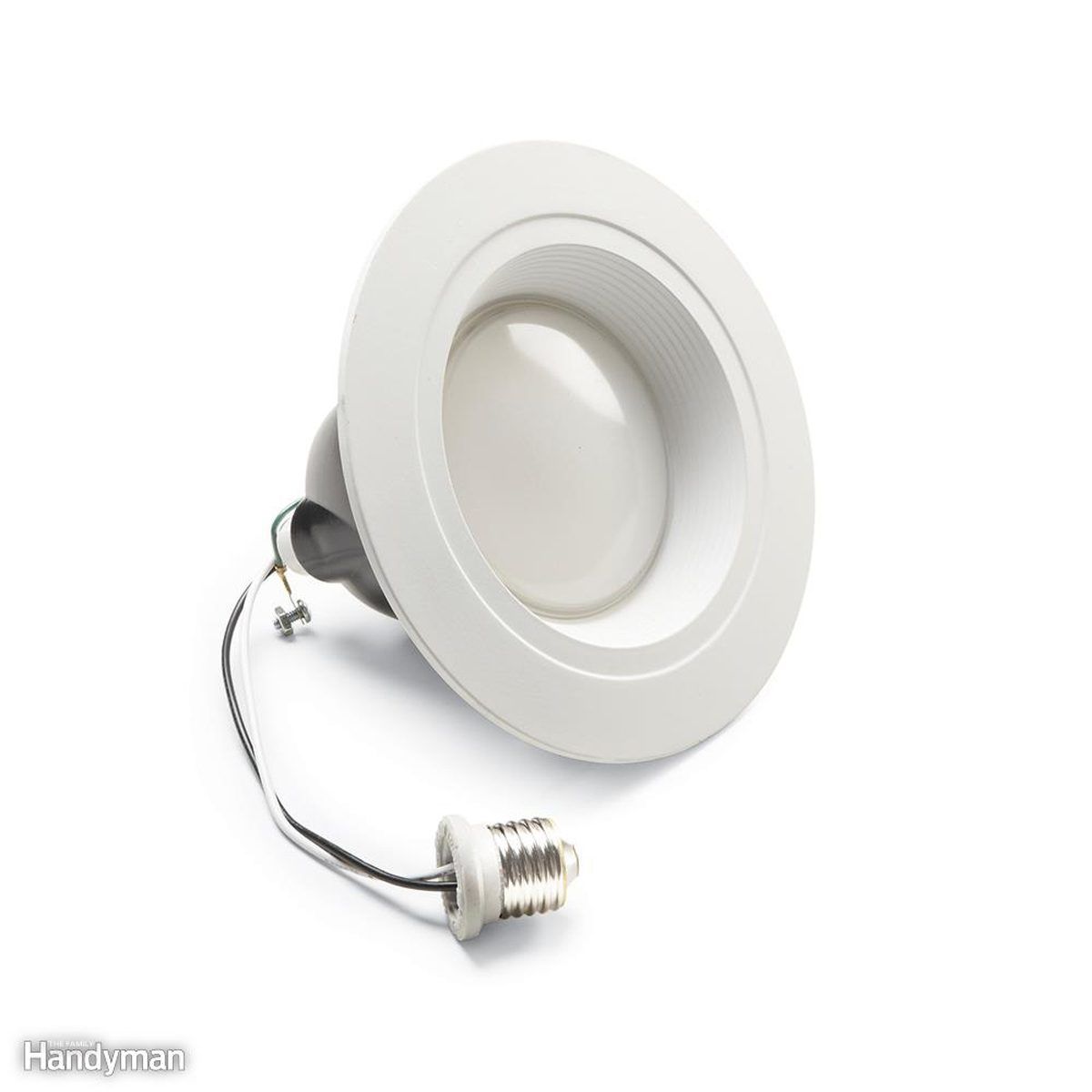
By Andi Dyer March 24, 2026
Patience is often recommended to sellers, but it’s rarely explained. There’s a meaningful difference between patience that protects your leverage and passivity that slowly gives it away. Understanding that difference helps sellers remain calm and effective at the same time. Why patience can quietly turn into inaction When activity slows, sellers are often told to “wait it out.” Waiting can be appropriate, but without intention it can turn into avoidance. Weeks pass. Feedback piles up. Momentum fades. By the time action is taken, the market has already formed an opinion. Patience should be active, not inert. What active patience looks like Active patience means monitoring signals, not just time. It means watching showing patterns, listening for repeated feedback themes, and tracking how competing listings are performing. It also means preparing mentally for next steps rather than being surprised by them. Sellers who practice active patience feel steady without feeling stuck. What passive waiting looks like Passive waiting usually shows up as hoping something changes without changing anything. Sellers may resist adjustments because “it hasn’t been that long,” even when early signals are clear. This approach often leads to deeper changes later, when leverage has already shifted. Why steady sellers outperform reactive ones Sellers who stay engaged without overreacting tend to make better decisions. They adjust deliberately rather than emotionally. That steadiness is felt by buyers, even if it’s never spoken aloud. Confidence, even quiet confidence, attracts action. A planning-forward reframe Instead of asking, “Should we just wait?” ask: “What would we be watching for if waiting stopped being the right move?” That question keeps patience purposeful. ABOUT THE AUTHOR Andi Dyer is a Bellingham-based real estate broker with RE/MAX Whatcom County, specializing in helping longtime homeowners and sellers make confident, well-informed decisions. With a calm, data-driven approach and strong negotiation expertise, Andi focuses on protecting equity, reducing stress, and guiding sellers through the process with clarity and care. 📍 Serving Bellingham and all of Whatcom County 📞 Call or text: 360 • 734 • 6479 📧 Email: andi [at] andidyer [dot] com If you’re trying to balance patience with smart action, start here: 👉 Start with a low-pressure home value and seller planning tool here: https://www.andidyerrealestate.com/seller/valuation/ Zillow: https://www.zillow.com/profile/AndiDyer Real t or.com: https://www.realtor.com/realestateagents/andi-dyer Homes.com: https://www.homes.com/real-estate-agents/andi-dyer Google Business Profile: https://g.page/andi-dyer-real-estate Facebook: https://www.facebook.com/AndiDyerRealEstate Instagram: https://www.instagram.com/andi.dyer
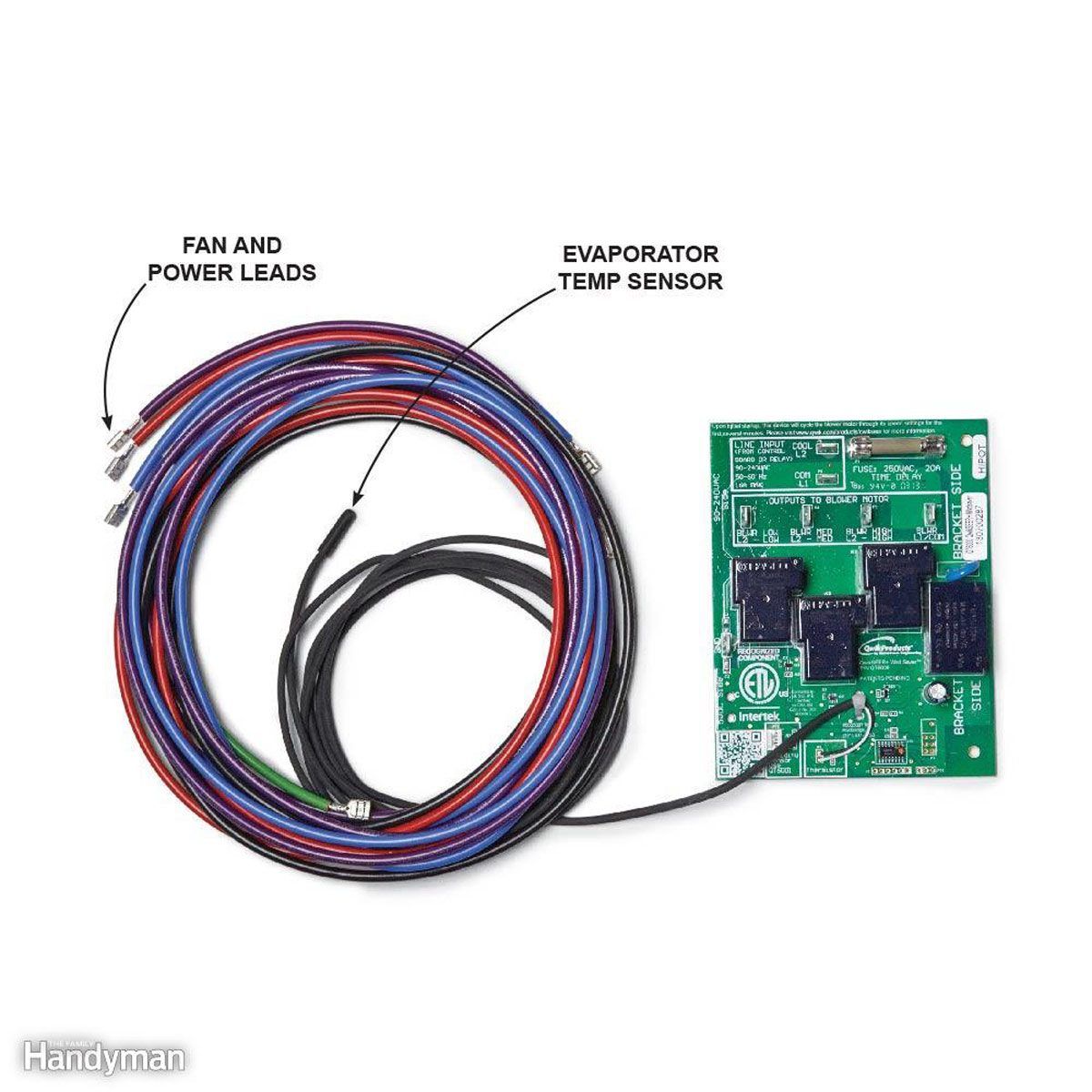
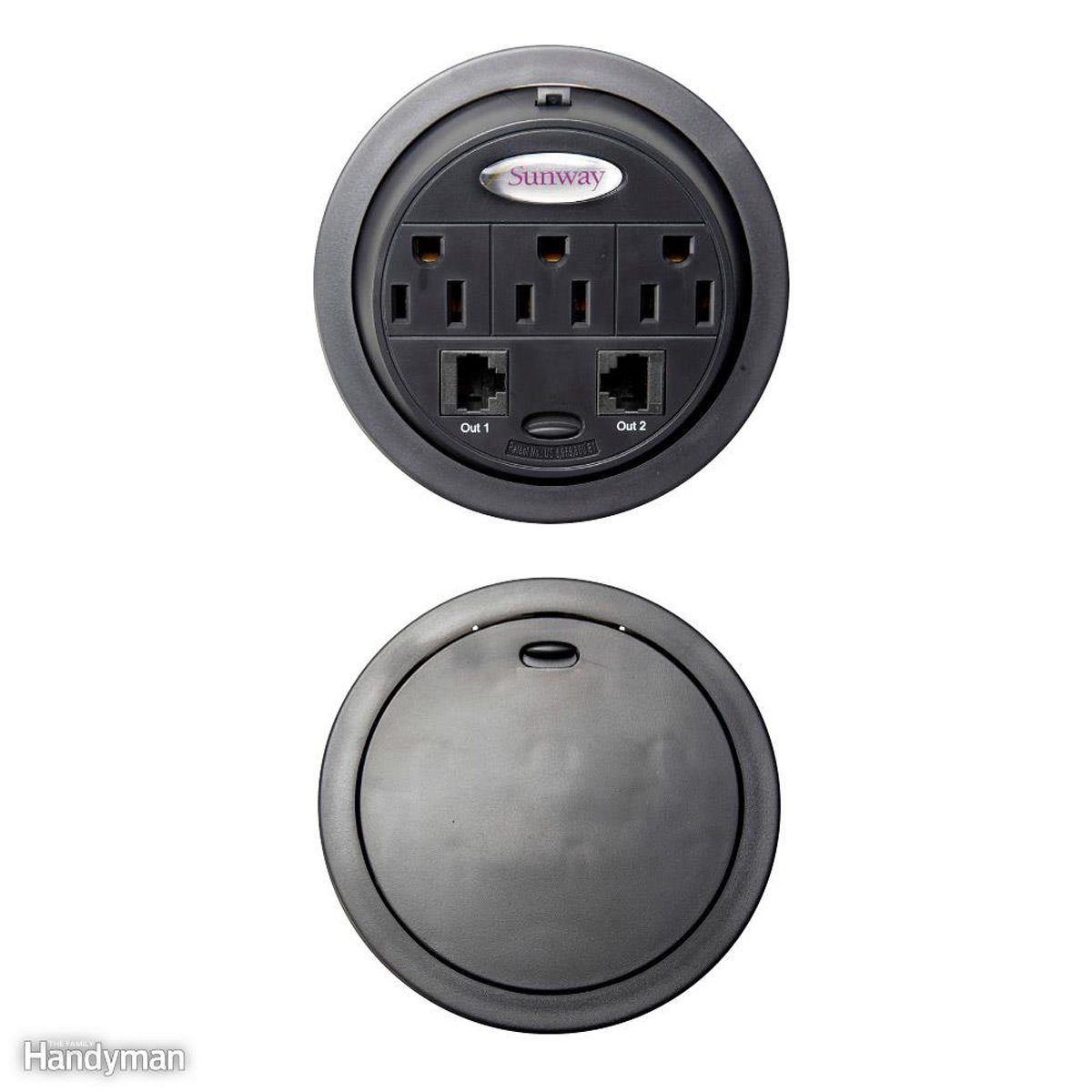
By Andi Dyer March 23, 2026
The phrase “sell as-is” sounds simple. For many sellers, it’s deeply appealing because it promises less work, fewer decisions, and a faster path to closing a chapter. But “as-is” doesn’t actually mean the same thing to sellers, buyers, and the market, which is why this choice can feel confusing even for confident homeowners. In Whatcom County, this decision often comes down to something more practical than pride or perfection: how much uncertainty you’re willing to carry into negotiations. Repairs and improvements aren’t only about making a home nicer. They can also be about reducing buyer fear and preventing small issues from becoming big leverage points later. What “as-is” really means in practice Selling as-is typically means you’re not committing to make repairs after the inspection. It does not mean a buyer can’t inspect, and it doesn’t prevent buyers from asking. It simply sets an expectation about your willingness to address issues. That expectation can attract the right buyer or scare off the wrong one, depending on the home and price point. A common misconception is that “as-is” is only for distressed properties. In reality, some well-maintained homes still sell as-is because the seller values simplicity and the home is priced in a way that makes the condition clear. The key is that the market has to feel the story makes sense. When repairs tend to be worth it Repairs are most worth considering when they reduce uncertainty around health, safety, or water intrusion. In Bellingham and the county, this often includes things like active leaks, electrical concerns that look scary on paper, or deferred maintenance that buyers interpret as “what else am I not seeing?” Even if a repair isn’t expensive, the fear it creates can be. In these cases, a seller who handles a few key items up front often gets a smoother path through inspection negotiations. The home doesn’t need to be perfect. It needs to feel responsibly cared for. When “as-is” can be the smarter move “As-is” can be smart when repairs would be expensive, disruptive, or unlikely to return value. If a home needs major work, trying to do partial fixes sometimes creates a weird middle ground where the home still feels like a project but now carries a higher price tag. Buyers can be oddly allergic to that. “As-is” also makes sense for sellers who prefer certainty and simplicity, especially if the pricing and marketing set expectations clearly. The right buyers aren’t scared by an honest home. They’re scared by surprises. A planning-forward way to decide Instead of asking, “Should I fix things or not?” try asking: “Which items would become a negotiation problem later if I leave them alone?” That approach keeps you focused on leverage, not perfection. It also helps you spend time and money where it actually improves your outcome. ABOUT THE AUTHOR Andi Dyer is a Bellingham-based real estate broker with RE/MAX Whatcom County, specializing in helping longtime homeowners and sellers make confident, well-informed decisions. With a calm, data-driven approach and strong negotiation expertise, Andi focuses on protecting equity, reducing stress, and guiding sellers through the process with clarity and care. 📍 Serving Bellingham and all of Whatcom County 📞 Call or text: 360 • 734 • 6479 📧 Email: andi [at] andidyer [dot] com If you’re wondering what’s worth repairing and what’s just going to drain your energy, start here: 👉 Start with a low-pressure home value and seller planning tool here: https://www.andidyerrealestate.com/seller/valuation/ Zillow: https://www.zillow.com/profile/AndiDyer Re a ltor.com: https://www.realtor.com/realestateagents/andi-dyer Homes.com: https://www.homes.com/real-estate-agents/andi-dyer Google Business Profile: https://g.page/andi-dyer-real-estate Facebook: https://www.facebook.com/AndiDyerRealEstate Instagram: https://www.instagram.com/andi.dyer
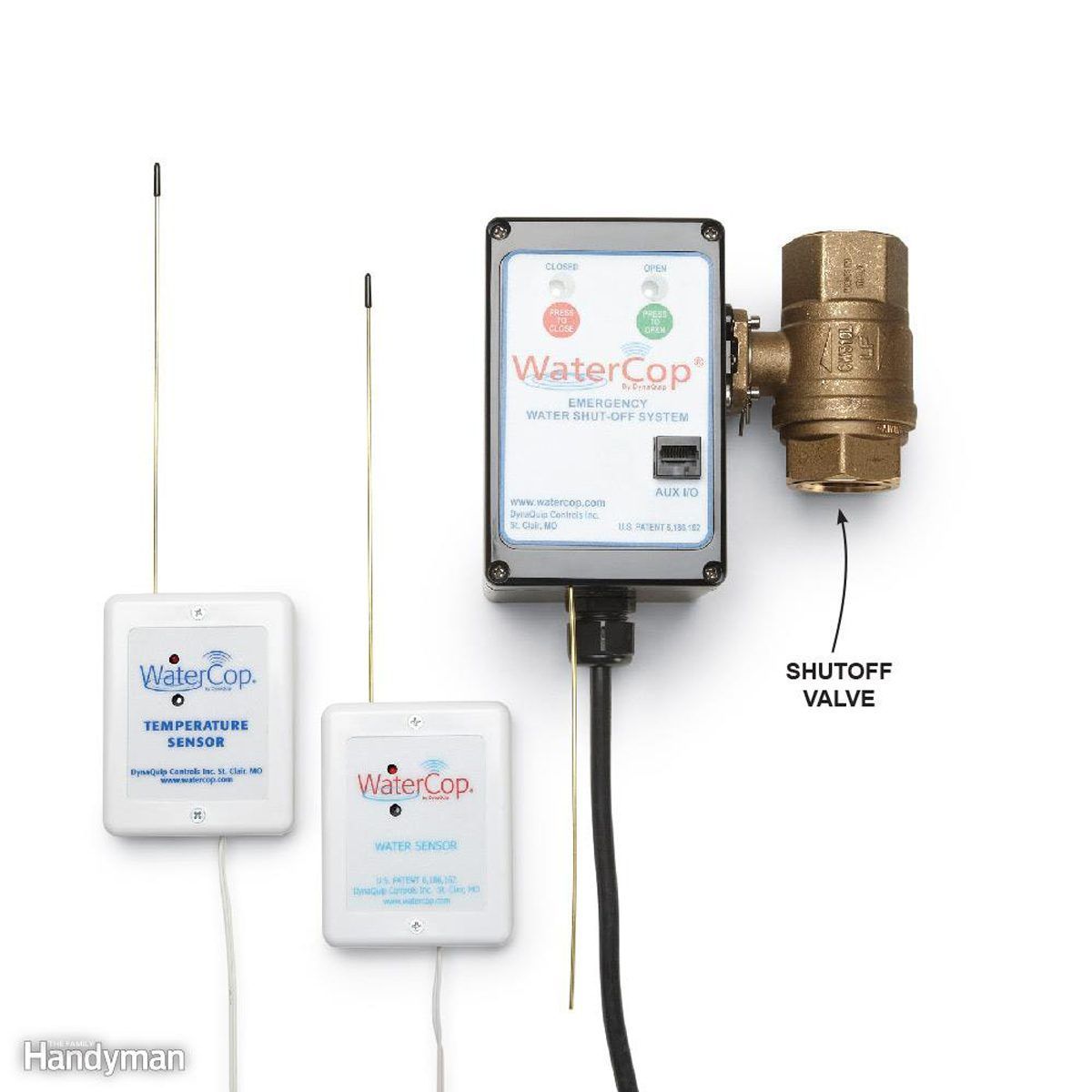

By Andi Dyer March 22, 2026
Many sellers say they’re “just not ready yet,” and often that’s true. But sometimes what’s holding people in place isn’t a clear strategy. It’s comfort. Familiarity. The quiet reassurance of staying where things are known. There’s nothing wrong with comfort. The challenge is mistaking it for a long-term plan. Why comfort is such a powerful force Homes are predictable. You know the quirks, the neighbors, the routines. Even when a home is more space than you need or more work than you want, it offers emotional certainty. Change, on the other hand, introduces questions. Where will I go? Will I like it? Will I regret this? Comfort keeps those questions at bay. When comfort quietly becomes costly Over time, comfort can carry hidden costs. Maintenance increases. Stairs become harder. Space that once felt expansive can start to feel like a burden. None of this happens overnight, which is why it’s easy to ignore. But comfort that delays thoughtful planning can eventually limit options. How to tell whether staying is a choice or a default A helpful distinction is whether staying feels like an active decision or a passive one. If you’ve considered alternatives, understand the tradeoffs, and still choose to stay, that’s strategy. If staying happens because planning feels overwhelming or emotionally charged, that’s something worth exploring gently. Why exploring doesn’t force action Many sellers avoid thinking about alternatives because they fear it will push them into a decision. In reality, exploring options often creates more peace, not less. Information rarely forces action. It usually creates choice. A planning-forward reframe Instead of asking, “Should I sell?” try asking: “If I stay, what am I choosing to carry forward?” That question brings clarity without pressure. ABOUT THE AUTHOR Andi Dyer is a Bellingham-based real estate broker with RE/MAX Whatcom County, specializing in helping longtime homeowners and sellers make confident, well-informed decisions. With a calm, data-driven approach and strong negotiation expertise, Andi focuses on protecting equity, reducing stress, and guiding sellers through the process with clarity and care. 📍 Serving Bellingham and all of Whatcom County 📞 Call or text: 360 • 734 • 6479 📧 Email: andi [at] andidyer [dot] com If you’re thinking about staying put but want to understand what that choice really means long-term, start here: 👉 Start with a low-pressure home value and seller planning tool here: https://www.andidyerrealestate.com/seller/valuation/ Zillow: https://www.zillow.com/profile/AndiDyer Rea l tor.com: https://www.realtor.com/realestateagents/andi-dyer Homes.com: https://www.homes.com/real-estate-agents/andi-dyer Google Business Profile: https://g.page/andi-dyer-real-estate Facebook: https://www.facebook.com/AndiDyerRealEstate Instagram: https://www.instagram.com/andi.dyer
More Posts